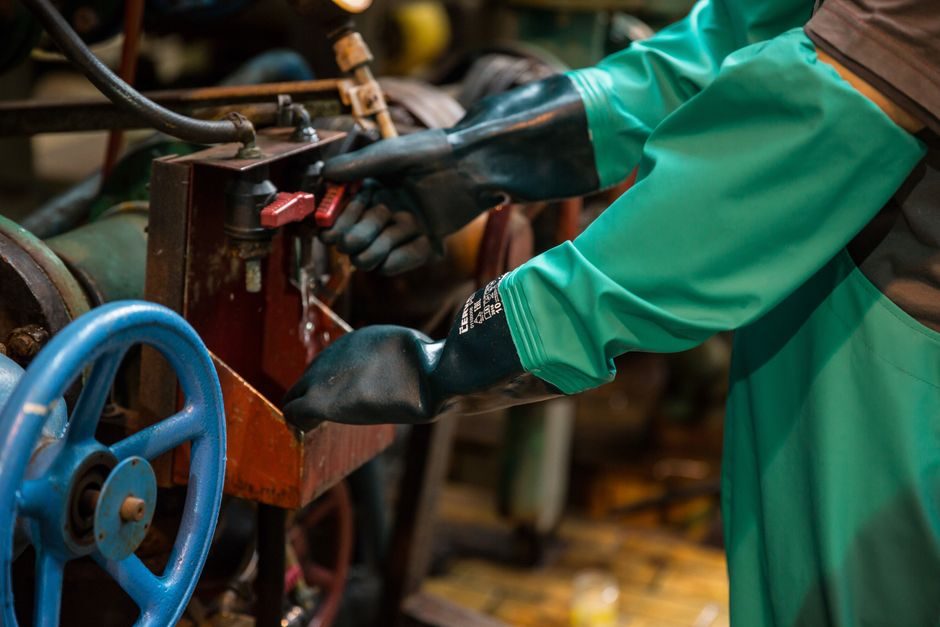
Needle valves specified for mining service in 2026 are graded on three axes: 316 stainless or alloy 400/825 body for corrosive water and H₂S exposure, 6000 psi pressure class for hydraulic and high-pressure water service, and metal-to-metal seating with graphoil or PTFE packing for thermal cycling on mill and process lines [S1][S5].
The category overlaps with the broader needle valve family used in instrumentation and chemical metering, but mining duty adds abrasion, vibration, and outdoor ambient swing that a laboratory or semiconductor-spec valve cannot survive [S1][S2].
Body Material and Sour-Service Compliance
316 stainless steel remains the default mining body material, with brass held in low-pressure air and water service and alloy 400 (Monel) or alloy 825 (Incoloy) reserved for H₂S-bearing process water and acidic leachate lines [S1]. NACE MR0175 compliance is the line most often drawn between "process needle valve" and "mining needle valve" — sour-service grades require hardenable alloys restricted to 22 HRC maximum and stress-relieved at 1150 °F per the standard's material annex, while standard 316 stainless is acceptable only for non-sour service [S5].
Chinese OEM Nantong Luoke publishes a 6000 psi stainless pneumatic ball valve alongside its needle-valve line, signalling that 6000 psi (≈413 bar) is the de facto working-pressure ceiling for Asian-built process needle valves sold into oil, gas, and slurry service [S5]. For lower-pressure panel and instrument air, Beswick's NV miniature needle valve caps at 34.7 bar (503.3 psi) with a metal-to-metal seal positive shut-off down to 25 in Hg vacuum, illustrating the precision-instrument end of the same family [S1].
Orifice, Resolution, and Flow Control Curve
The needle-and-seat geometry gives the needle valve its defining characteristic: flow is proportional to stem lift multiplied by the square root of the pressure differential, so the trim profile (standard, high-resolution, or high-flow) dictates usable resolution [S1][S6]. Beswick's NV datasheet shows the three trim choices numerically — standard needle 0–0.8 mm orifice for 0–1 SCFM air at 50 psig, high-resolution needle on the same orifice with 8.25 turns full-close versus 2.25 turns for standard, and high-flow needle 0–1.5 mm for 0–3 SCFM at 50 psig [S1].
MATLAB's hydraulic needle-valve block documents the same physics with a sharp-edged orifice model: q = C_d · A(h) · √(2·Δp/ρ), where A(h) is the area exposed at stem lift h — useful for engineers who want to predict metering behaviour before specifying [S6]. For mining hydraulic panels this matters: a 1.5 mm orifice at 200 bar differential can pass roughly 60 L/min of mineral oil, while the same valve at 50 bar drops to under 30 L/min, so picking trim is a duty-cycle decision, not a price decision.
Comparison: Trim, Body, and Pressure Class Options
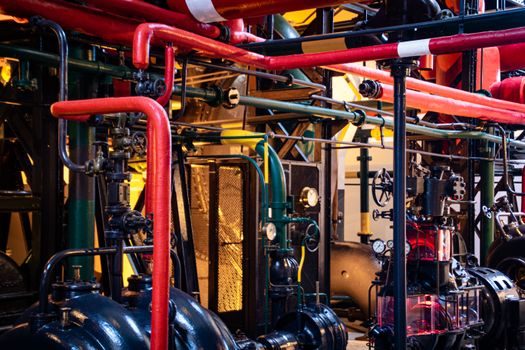
Specifying a needle valve for mining becomes a four-axis decision. The table lines the realistic options against the criteria that drive cost and reliability on site. [S3]
Standard needle trim (0–0.8 mm, 2.25 turns) suits general on/off and coarse throttling on water, air, and low-pressure slurry; high-resolution trim (0–0.8 mm, 8.25 turns) is for instrumentation taps, sample lines, and chemical dosing where repeatability matters more than flow range; high-flow trim (0–1.5 mm, 3.25 turns) is the hydraulic-panel and wash-water choice [S1]. On body material, brass works below 200 psi in clean air and water (Beswick's NV is 10 g in brass versus 303 stainless), 316 stainless covers most wet and mildly corrosive service, and alloy 400 or 825 is mandatory for sour H₂S, chloride-rich process water, and acid-leach circuits [S1][S5].
On pressure class, instrument-grade units stop at ≈500 psig (Beswick NV), general-purpose mining needle valves cluster at 3000–6000 psi, and hydraulic-panel needle valves match the 6000 psi (413 bar) class used on mining dump truck hoists and steering rams [S1][S5]. On packing, PTFE is the budget choice for clean media, graphoil handles steam and thermal cycling, and PTFE/graphite blends balance cost and temperature. Vendor landscape in 2026: Anhui Hongji (parent Tiankang Group, est. 1974) lists 21+ years in needle valves, manifolds, and fittings with 50 CNC machines and 48 high-precision lathes and claims Fortune 500 OEM supply, while Nantong Luoke and similar Jiangsu/Anhui shops push 6000 psi stainless trim on Alibaba and DirectIndustry [S2][S5].
Where Needle Valves Fit — and Where They Don't
Needle valves are the right call on instrumentation taps (pressure gauge isolation, chemical-injection metering, sample lines), hydraulic-panel fine throttling, and low-flow slurry wash-water regulation. They are the wrong call for full-bore slurry isolation (use a ball valve or butterfly valve instead) and for high-cycle on/off service where a needle seat will wear out in weeks. [S3]
On mining dump truck hydraulic systems, needle valves typically appear as load-sensing or counterbalance trim — a related but distinct family that uses the same needle-seat metering principle to control actuator speed under load. For dedicated load-hold and motion-control on those circuits, the correct part is a balancing valve, not a general-purpose needle valve, because the cartridge, pilot ratio, and cracking pressure are engineered for the host machine. Similarly, check valve function is sometimes bodged into a needle-valve body by closing the needle against a reverse flow — workable for a low-pressure water line, unacceptable on a hydraulic ram where a dedicated check valve cartridge gives defined cracking pressure and reseat behaviour.
Standards, Sourcing, and Failure Modes
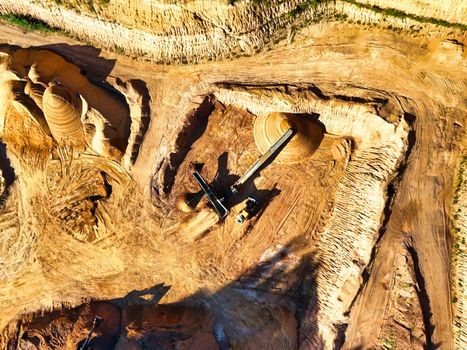
Relevant standards for mining needle-valve specification are NACE MR0175 for sour H₂S service, ASME B16.34 for valve design and testing, and API 602 for compact forged steel gate/globe/needle valves used in hydrocarbon service. For instrumentation needle valves (the Beswick NV class), the governing reference is generally the manufacturer's own pressure/temperature curve rather than a public standard, because the parts are miniature and built to OEM dimensions [S1].
Common failure modes observed on mining sites: stem packing wear under vibration (graphoil packing extends service life versus PTFE in thermal-cycling service), seat galling on metal-to-metal trims run continuously near shut-off (mitigated by specifying high-resolution trim for fine-throttling service and reserving standard trim for on/off only), and body corrosion on brass valves used outside their clean-water envelope (316 stainless is the cheapest insurance on any line that may see chloride, sulfuric acid, or process-water carryover) [S1][S5]. Hongji's published claim of 100+ patents and certifications and 400 pieces of production equipment, including 50 CNC machines, is broadly consistent with the scale of mid-tier Chinese fluid-system OEMs exporting into mining OEM supply chains in 2026 [S2].
Specification Checklist for 2026
Lock these parameters before requesting a quote: media composition (clean water, slurry, hydraulic oil, H₂S-bearing, acid-leach), maximum working pressure and temperature, required flow range at operating Δp, orifice size and turn-count (resolution), body material and NACE MR0175 sour-service compliance, end connections (NPT, BSP, compression, flange), and packing material (PTFE for clean media, graphoil for steam/thermal cycling). [S1]
Pricing on 6000 psi stainless needle valves from Nantong-area OEMs sat around USD 80–110 per unit in mid-2026 listings, materially below equivalent European or US-built parts but with longer lead times on NACE-traced material [S5].
This topic is covered further in Hydraulic Lift Table Suppliers: 2026 Sourcing Map, Capacity Bands, and Spec Boundaries.