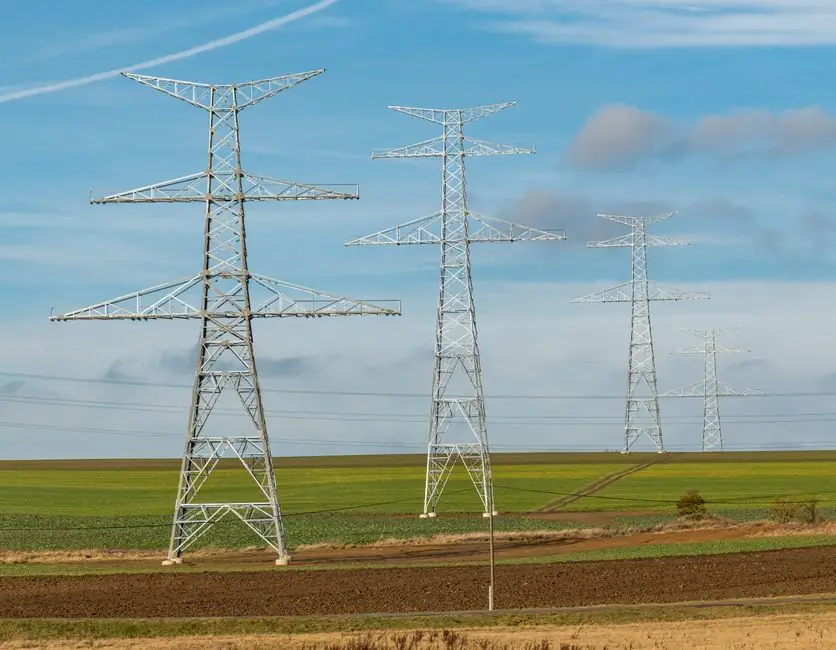
Nearly two-thirds of the non-grain-oriented electrical steel needed for Europe’s new motors and generators now comes from outside the EU, creating a direct supply risk for EV traction-motor programs [S4].
An electrical-steel shortage could slow OEM electrification plans.
What Makes EV Motor Steel Different
Non-grain-oriented electrical steel, also called NGOES or NOES, is an iron-silicon alloy selected for magnetic properties used in rotating machines, rather than for the directional crystallographic structure associated with grain-oriented transformer steel [S1][S4].
For EV motors, NOES is consumed as thin laminations that form stator and rotor cores. Its thickness, magnetic loss, mechanical strength, and forming behavior influence motor efficiency, thermal performance, and the amount of steel required for a given output [S4][S5].
Non-oriented electrical steel for EV motors skips the multi-day 1,200°C grain-orientation anneal. That does not eliminate the bottleneck: NOES still needs specialized production, processing, stamping, die fabrication, and motor-design validation [S3].
Why Supply Remains Structurally Tight
The core constraint is not raw iron or generic steelmaking capacity. NOES production has high entry barriers, manufacturing is geographically concentrated in Asia, material switching is difficult, and only a small number of companies have stamping dies for EV motors [S1].
Europe’s dependence has become measurable: almost 66.7% of the NGOES needed for new electric motors and generators is imported from outside the EU. The cited supply chain also identifies laminations, stators, rotor cores, and complete e-motors as downstream products exposed to trade-policy gaps [S4].
North American manufacturers and suppliers are increasing their requirements for non-grain-oriented electrical steel used in traction motors and related vehicle applications. The regional electrical-steel market is projected to reach USD 7.51 billion by 2035 [S2].
Market Growth versus Qualified Capacity
The global non-grain-oriented electrical steel market was valued at USD 19.45 billion in 2025 and is projected to rise from USD 20.29 billion in 2026 to USD 25.08 billion by 2031, a forecast compound annual growth rate of 4.33% [S5].
The non-grain-oriented electrical steel market was valued at USD 19.45 billion in 2025 and is estimated to grow from USD 20.29 billion in 2026 to reach USD 25.08 billion by 2031, at a CAGR of 4.33% during the forecast period.
Which Buyers Face the Greatest Exposure
Asia-Pacific is the fastest-growing and largest market in the non-grain-oriented electrical steel market. OEMs that approve material late are exposed because changing steel grade can invalidate lamination tooling, motor performance, thermal behavior, and supply qualification.
Large motor builders are not the only vulnerable parties. Generator, wind-turbine, industrial-motor, and transformer-core buyers compete for electrical-steel production and processing resources, and automotive demand can tighten availability for those adjacent applications [S4][S5].
Small buyers without stamping capability face a different constraint: ordering the right coil does not guarantee a finished stator or rotor core. The limited population of specialist stamping and die suppliers makes downstream motor-core conversion a second bottleneck after steel production [S1].
Engineering Responses to Material Scarcity
Four responses address the constraint: broaden manufacturing capacity, redesign motors to reduce NOES scrap, replace NOES with a qualified alternative material, and vertically integrate with steel manufacturers [S1]. Each option has a different cost and validation burden, so treating them as interchangeable would be poor engineering practice.
Motor redesign can reduce scrap, but a new electrical grade must be assessed against core geometry, stamping behavior, loss performance, mechanical integrity, and thermal operating requirements.
Automakers, renewable-energy developers, and grid-equipment makers continue to prioritize thin-gauge, fully processed laminations that cut iron loss, shorten supply chains, and help meet decarbonization targets.
Policy and Trade Measures Shape Availability
Europe’s Carbon Border Adjustment Mechanism began on January 1, 2026, while changes to the EU Tariff Rate Quota system are scheduled for July 2026 [S4]. ArcelorMittal argues that imports of steel derivatives not covered by those measures can erode domestic producers’ competitiveness and weaken the electrical-steel value chain [S4].
The introduction of CBAM on 1 January and upcoming changes to the EU's TRQ system in July 2026 are described as a first step toward a more level playing field for sustainable low-carbon steel in Europe.
These are policy proposals, not confirmed enforcement dates. Procurement teams should not treat the proposed 2027 measures as a guaranteed supply-chain outcome. Physical mill output, conversion capacity, grade qualification, and trade execution remain separate variables [S4].
Signals That Distinguish a True Shortage
A genuine NOES shortage should appear first in qualified material, not in general steel inventory. Track the number of coil grades and thicknesses with binding mill allocations, the lead time for electrical steel distinct from total steel lead time, and the availability of stamping dies for each motor platform [S1][S4].
Second, monitor the share of motors that can use fully processed grades without requalification. The category held 56.11% of the 2025 market, so changes in its allocation and the 5.36% forecast growth rate provide market-level indicators, but they do not reveal plant-specific availability [S5].
Third, separate NOES from GOES. Transformer supply can face 48-to-60-month tier-one backlogs, but transformer-grade constraints do not prove an equivalent shortage for traction-motor laminations because the products require different processing and supply chains [S6].
For procurement and engineering teams, the defensible 2026 response is to lock application-specific grade data, qualify a second source before allocation tightens, model NOES and stamping capacity separately, and establish measurable yield targets for lamination and motor production. The next decision point is not a generic steel-price forecast, but confirmation of mill allocation, conversion capacity, and approval status for each approved motor grade [S1][S4][S5].