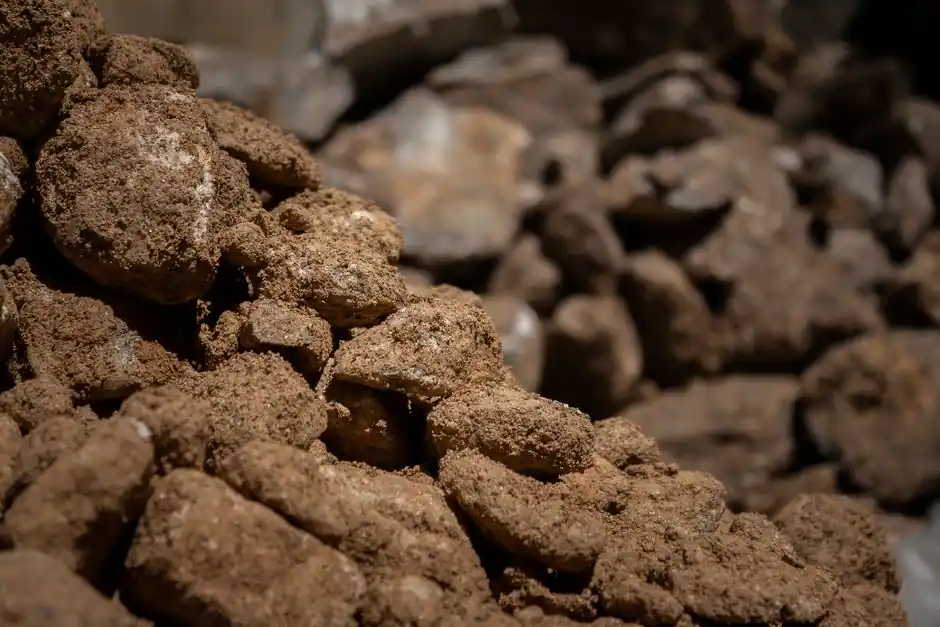
Structural surplus and soft demand were expected to pressure nickel prices in 2026 as new Indonesian capacity intensified competition, with global primary nickel production estimated at 3.7921 million tonnes in 2025, up 11.8% year on year [S2].
Indonesia expanded its capacity from two smelters in 2014 to more than 30 in 2025 [S1].
Laterite capacity is the central oversupply driver
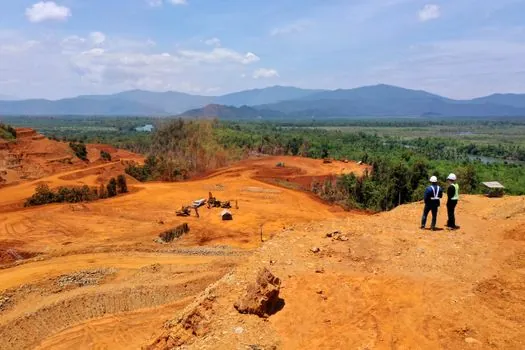
Indonesia accounted for more than 60% of global nickel mining production and 42% of refining in 2025, making its domestic processing policies the decisive variable in the supply balance [S1]. The country’s raw-ore export ban, introduced in 2020, redirected ore into domestic smelting and drew foreign investment into integrated processing facilities [S1].
Indonesia's expansion was fast, with smelter capacity rising from two in 2014 to more than 30 in 2025 [S1]. This is not a single-project issue. It is a geographically concentrated build-out of RKEF, HPAL, MHP and electrowinning routes that can move substantial nickel units into the market.
For processors and equipment buyers, nickel alloy demand depends on both mined and refined nickel availability. A broad surplus can lower raw-material prices, but it does not remove exposure to project delays, quota changes or tighter environmental enforcement.
Price forecasts define a wide 2026 trading band
The 2026 core trading range is forecast at $13,000–$20,000 per tonne on the LME and Yuan 100,000–155,000 per tonne on the SHFE [S2]. The band is materially wider at the upper end than the roughly $14,000 per tonne level expected around the first quarter of 2026 in an earlier market assessment [S1].
Nickel entered January 2026 at $16,500–$18,500 per tonne, its highest level in more than two years, and rose by more than $4,000 per tonne in four weeks to above $18,000 [S3]. By late 2025, however, prices had fallen to approximately $14,000–$15,000 per tonne, with one cited trough near $14,235 [S4].
September 2026 regional assessments were $19.62 per kilogram in Northeast Asia, down 3.4%, and $16.87 per kilogram in Europe, down 2.5% [S7]. The unit conversion is $19,620–$16,870 per tonne, placing those assessments within the forecast LME band but close to its upper boundary [S2][S7].
Indonesia policy can tighten supply faster than capacity closes

Only about 55% of Indonesia’s approved nickel ore production capacity was utilized in 2025, meaning headline approved capacity overstated deliverable output [S3]. The same policy cycle shortened the mining-quota revision period from three years to one year and prohibited new NPI smelters and HPAL plants, while enforcement actions included large fines and a temporary halt to PT Vale Indonesia operations in early January 2026 [S3].
The result was a four-week rally above $18,000 per tonne despite the structural surplus thesis [S3]. This is the key failure mode in price forecasting: installed laterite capacity can remain high while annual quotas, permit timing, utilization rates and environmental enforcement determine actual exports and refinery feed.
Demand is split between stainless steel and batteries
Global primary nickel production reached 3.7921 million tonnes in 2025, up 11.8%, while mainland China consumed an estimated 2.1376 million tonnes of contained nickel, up 4.7% [S2]. Europe consumed 276,200 tonnes of contained nickel, down 1.3%, showing why the stainless-steel cycle still produces regional price divergence [S2].
These figures support battery demand, but they do not eliminate the near-term dominance of stainless steel.
Cost curves and product form shape the downside

This distinction matters for cost control. Lower benchmark nickel prices do not translate one-for-one into lower costs for converters holding fixed ore contracts, paying for toll treatment, financing HPAL assets or processing higher impurity loads. Procurement savings depend on contract structure and product conversion economics, not the LME quotation alone.
Comparison: supply routes, demand fit and cost exposure
RKEF-NPI offers mature, large-tonnage conversion for stainless-steel chains, but its integrated route is exposed to rising nickel ore prices, with the cited estimate at Yuan 125,000 per tonne [S2]. HPAL can produce battery-compatible intermediates but carries greater capital, scale-up and environmental constraints, making its project cost more sensitive to financing and permitting than to short-term benchmark prices [S4].
MHP and electrowinning combine Indonesia’s laterite advantage with cobalt by-product economics, which supports low operating costs and planned capacity releases during 2025–2027 [S2]. Against these routes, recycled nickel and higher-cost non-Indonesian production offer diversification but have less cost advantage when the market remains structurally long [S2][S5].
For industrial users, NPI or matte is normally evaluated on stainless-steel economics, HPAL and MHP on battery-feedstock exposure, and electrowinning on conversion cost and product specification. For battery-chain buyers, battery-grade purity, chemical consistency and contracting structure can matter more than the headline nickel price [S4].
Procurement should track quotas, utilization and realized spreads
The cost drivers for buyers are feedstock conversion, chemistry suitability, contract premiums, inventory financing, freight and qualification of alternative suppliers. Lower global benchmarks may reduce the index component of a contract, but fixed premiums, processing charges and energy costs can remain unchanged. A lower purchase price can also carry higher working-capital, storage and obsolescence costs if the market continues to decline. [S1]
Total cost of ownership depends on installation, maintenance and energy for the downstream process as well as the metal input. For stainless steel converters, lower nickel prices reduce alloy cost when stainless-steel demand holds, but weak construction can reduce operating hours and weaken cost absorption. For battery-material plants, lower metal prices may improve cathode economics, yet idle HPAL or MHP capacity still carries maintenance, staffing and financing costs [S4].
Three measurable signals deserve monitoring: the percentage of Indonesia’s approved ore capacity utilized, the 2026 ore quota relative to the 319-million-tonne 2025 allocation, and the commissioning schedule for MHP capacity planned through 2027 [S1][S2][S3]. For metal-additive buyers, the same volatility is covered in 2026 Metal AM Powder Prices: Titanium, Nickel and Steel.
The 2026 market remains a surplus with policy-driven rallies
The defensible 2026 conclusion is not a single target price. It is a surplus market with a forecast LME range of $13,000–$20,000 per tonne, an SHFE range of Yuan 100,000–155,000 per tonne and repeated risk of sharp rallies when Indonesian quotas or permits tighten [S2]. A move above $18,000 does not by itself prove that the structural surplus has ended, while utilization below approved capacity does not prove that announced laterite projects will disappear [S3].
Buyers should separate benchmark price exposure from product and operating exposure: specify the required nickel form, monitor quarterly quotas and realized treatment charges, avoid treating announced capacity as production, and use staged purchasing when volatility exceeds the value of inventory savings.