
Automotive plants that run mixed duty cycles (exhaust hot-end, alkaline coolant, fuel-system galvanic couples, sensor housings) cannot spec one nickel grade across the line; UNS N02200, N02201, N06022, N06625, N07718, and N04400 each lock to a specific environment, and the wrong call shows up as stress-corrosion cracking or creep within the first 100,000 km [S1][S3].
The 2026 sourcing reality: Indian and Chinese mills now publish full UNS-traceable plate, bar, and tube across this grade set, with ASTM B/SB-qualified Inconel 625 and 718 round bar stocked alongside Ni201 strip at MOQs as low as 10 kg [S5]. Automotive OEM buyers should be looking at NORSOK- and ISO 9001:2015-certified mills first because dual-source qualification (PED + NACE MR0175 traces) is the difference between a 12-week and a 30-week PPAP [S1].
Grade-to-Application Map: Which UNS Number Goes Where
For caustic coolant and alkaline cleaning baths in paint shops and battery-tray lines, UNS N02200 (Nickel 200, 99.2% Ni) and the lower-carbon variant UNS N02201 (Nickel 201) are the workhorses, with N02201 specified wherever service crosses 315 °C to avoid graphitization [S1][S8]. Ni200's corrosion resistance in neutral and alkaline salts, paired with its good dry-turning behavior on carbide CA6515 tooling, makes it the default pick for fastener and instrumentation fitting blanks [S8].
For exhaust manifolds, turbocharger housings, and EGR hot-end, the choice narrows to Inconel 625 (UNS N06625) and Inconel 718 (UNS N07718); 625 carries the corrosion profile (especially to chloride-bearing road salt condensate) and 718 carries the higher tensile/creep strength up to about 700 °C, which is why both appear as standard Inconel 625 round bar and Inconel 718 round bar SKUs at Indian mill warehouses [S1]. For underbody fasteners exposed to chloride de-icer, Hastelloy C276 (UNS N10276) is routinely spec'd, again in flange, fitting, and bar form, when stainless 316 has failed SCC testing [S1].
For sensor housings, inductor cores, and micro-scale magnetic components (ABS rings, MAF sensor shields, EV motor position-sensor pole pieces), Fe-Ni alloys processed through powder routes can reach 97.3% relative density after hydrogen sintering at 1070 °C, with microhardness of 167.8 HV and Young's modulus of 175.4 GPa measured on test coupons [S3]. This matters because the same alloy system supports 85 wt% solid-loading slurries for micro-injection molding, opening a path to net-shape microgears and microwells that stainless cannot match at that thickness [S3].
Comparison: Top Five Nickel Grades on the Auto Line
Criteria-based ranking, drawn from the S1 grade table and the S3/S8 process data, lines up as follows. Corrosion in alkaline / chloride media: N02201 > N06625 > N10276 > N07718 > N04400. High-temperature strength above 600 °C: N07718 (Inconel 718) > N06625 (Inconel 625) > N06600 (Inconel 600) > N08825 (Incoloy 825) > N02200. Machinability on carbide tooling (dry, CA6515): N02200 (best) > N04400 > N06625 > N07718 (most abrasive). Form availability from Indian/Chinese dual-source mills (plate, bar, tube, fittings): N02200/N02201, N06625, N07718, N04400, N10276 all at stock [S1]. Cost per kg typically rises 2.5x from Ni200 to Inconel 718 at August 2026 Shanghai-spot levels [S5].
The point of the table is to make the trade-off visible: a buyer who specs N07718 across the coolant and exhaust systems because it is "the strongest nickel" will overpay roughly 60% versus a split spec of N02201 for coolant and N06625 for mid-temperature exhaust. The split spec is also kinder to machinists, since Inconel 718 work-hardens aggressively and forces lower cutting speeds.
Forms, Standards, and Stocking Realities
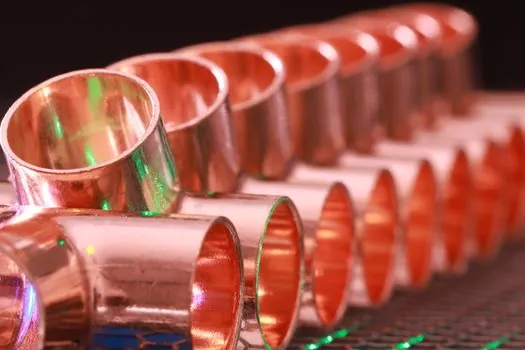
Stocked automotive-relevant forms at the S1 and S5/S6 mill set cover round bar (Hastelloy C276, Monel 400, Inconel 625, Inconel 718), pipe (Inconel 625, Incoloy 825, Nickel 201, Hastelloy C276), tube (heat-exchanger and instrumentation), buttweld and forged fittings (ASTM A234 WPB, ASTM A105, plus the Inconel/Hastelloy equivalents), and fasteners (Hastelloy C276, Duplex, 316, Inconel 718) [S1]. For thinner-gage parts, cold-rolled nickel strip and titanium-clad nickel strip (titanium foil 0.025–0.8 mm thickness on a nickel core) is now standard catalog from Jiangsu mills, which is the route several Chinese EV battery enclosures use for bimetallic corrosion barriers [S6].
Standard references a buyer's drawings should cite: ASTM B160 / B161 / B162 for Ni200/Ni201 rod, bar, and pipe; ASTM B443 / B444 for Inconel 625 plate and pipe; ASTM B637 / B670 for Inconel 718 bar and forging stock; ASTM B164 / B165 for Monel 400 rod and pipe; ASTM B574 / B575 / B619 for Hastelloy C276 bar, plate, and welded pipe. Mill certifications typically bundle ISO 9001:2015, PED 2014/68/EU, and, for sour-service or subsea exposure, NACE MR0175, with Indian suppliers such as Ganpat Industrial additionally holding NORSOK certification [S1].
Machinability, Additive Manufacturing, and Microforming
Dry turning of Nickel 200 on Sandvik CA6515 inserts has been characterized with spindle speed, feed, and depth-of-cut as the dominant factors for surface roughness, MRR, cutting force, and temperature, and the result engineers should remember is that Ni200 without coolant behaves predictably up to roughly 200 m/min, above which tool life falls off a cliff [S8]. This is also why 200/201 bar stock is preferred for instrumentation fittings where thread rolling and drilling dominate; the alternative grades gall and seize.
In laser based additive manufacturing of nickel-based superalloys, the alloy powders undergo a rapid heating, melting, solidification, and cooling process that drives grain growth, making grain growth modeling relevant to predicting the resulting grain morphology [S4]. The 2026 production reality: serial production of laser-AM Inconel 718 turbocharger wheels and 625 hot-end exhaust manifolds is in the tens of thousands per year, not millions, but the design freedom (internal lattice cooling channels) is what is pulling the volume. A practical reference page for nickel alloy families and their forming response is the starting point any AM process engineer should review before locking a powder supplier.
For sub-millimeter features, Fe-Ni slurries at 85 wt% solids and 1070 °C hydrogen sintering give 97.3% RD at linear shrinkage of 12.5%, which is competitive with MIM stainless 316L on the same equipment and is the route Chinese Tier-2s are quoting for micro-sensor bodies [S3]. Additive manufacturing material data sheets for the Fe-Ni system are now published with full TGA sintering profiles, which was not the case two years ago.
Selection Checklist for Automotive Process Engineers

Step 1: identify the corrosion class (alkaline, neutral chloride, acidic chloride, galvanic to carbon steel). Ni201 covers alkaline; Inconel 625 covers chloride-bearing hot exhaust; Monel 400 covers marine-spec trim; Hastelloy C276 covers mixed-acid washdown. Step 2: set the peak service temperature. Below 300 °C, Ni200/201 is fine. 300–600 °C, pick 625 or 825. Above 600 °C with sustained load, 718 or 617. Step 3: confirm form availability and dual-source qualification. Plate, bar, tube, and fittings in the chosen UNS number should be on the shelf at two ISO 9001:2015 + PED mills at minimum, with NORSOK and NACE MR0175 traceability where the part touches a fuel or subsea boundary [S1]. Step 4: validate machinability or AM-route process window before the PPAP, not during it, because re-tooling a C276 or 718 program mid-PPAP is a 12-week slip [S1][S8].
Cross-reference: a buyer comparing nickel grades against titanium alloy and aluminum alloy options for weight-sensitive body panels should know that the nickel family is not a body-panel candidate; the value is in functional hot-end, fastener, sensor, and battery-chemistry components where stainless 316 has failed, not in primary structure. A useful alloy steel baseline is also worth keeping open, since many chassis fasteners are still 17-4PH or 316 round bar rather than nickel [S1].
Logistics and Sourcing Signals Worth Tracking
Signal 1: Indian and Chinese dual-source mills now publish MOQ at 10 kg for Ni201 pure nickel rod (99.6% purity, US$3.42–5.42/kg spot as of August 2026), which removes the historical 1-tonne MOQ barrier for prototype and small-series EV programs [S5]. Signal 2: titanium/nickel bimetallic strip is now catalog at 50 kg MOQ with US$13.90–23.90/kg pricing, opening hybrid corrosion-barrier designs that were custom-rolled only two years ago [S6]. Signal 3: inductor-grade wound metal-alloy cores from Murata (DFE201612P_D, 1.7–6.2 A rated, 150 nH–2.2 µH) are explicitly cataloged for automotive powertrain and infotainment power circuits, which is the spec sheet to compare against any in-house magnetic-component design at 1.6 mm x 0.8 mm to 12 mm square footprints [S2].
Buyers who lock the dual-source N02201 + N06625 + N07718 + N10276 quartet at two qualified mills before Q4 2026 will avoid the 2025-style spot-market premiums on Inconel 718 bar and have a defensible PPAP pack; wait-listing on single-source imports is the single biggest avoidable risk in nickel procurement for automotive right now [S1][S5]. The same risk logic is why a related stacker crane selection for automotive parts logistics spec exercise treats dual-source racking and WCS as non-negotiable; the principles carry over.