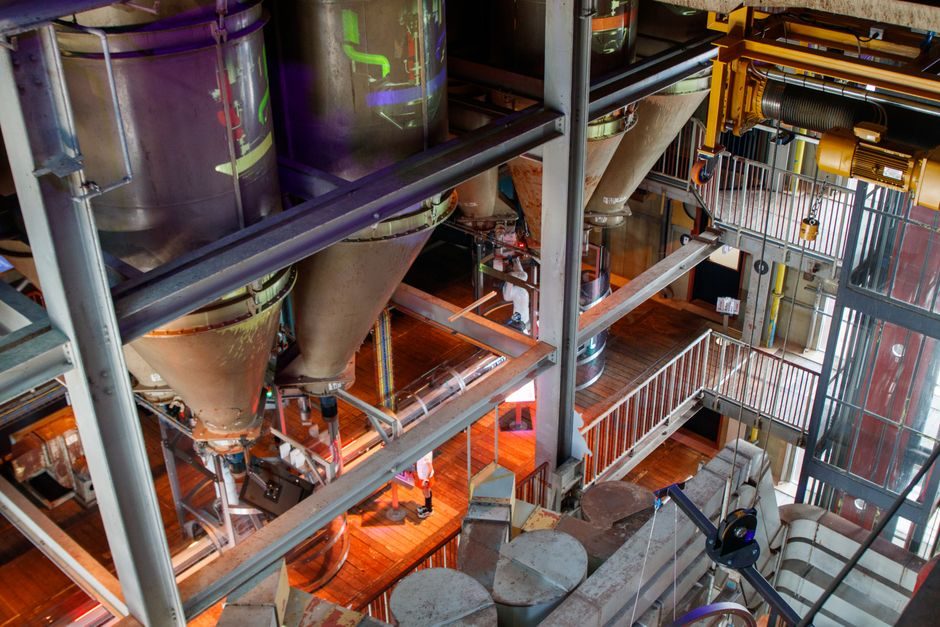
A greenfield nickel production line is built around one of two backbone flow sheets: rotary-kiln electric-furnace (RKEF) pyrometallurgy for nickel pig iron and matte, or High-Pressure Acid Leaching (HPAL) for mixed hydroxide precipitate (MHP) feed into battery-grade nickel sulfate [S3].
Reference Indonesian nodes show the band: a 2-furnace RKEF train delivers roughly 28,000 t/yr contained Ni in NPI, a 4-furnace train reaches about 55,000–56,000 t/yr, and a single HPAL circuit is sized for about 67,000 t/yr Ni-equivalent MHP plus 7,500 t/yr Co (±10%) [S3]. The flow-sheet choice, not the equipment brand, sets the capex curve and the reagent/utility envelope for the next decade.
RKEF train: line topology, capacity bands and product splits
An RKEF line is a serial four-unit chain — rotary dryer → rotary kiln (calcination/reduction, typically 900–1,000 °C) → electric furnace (smelting at ~1,500–1,600 °C) — and the furnace count is the line's nameplate lever: each additional 25–30 MVA furnace adds roughly 13,000–15,000 t/yr contained Ni in matte or pig-iron product [S3]. The product split between nickel pig iron (NPI, ~12–16% Ni) and high-grade matte (~73–78% Ni, ~0.75–1.25% Co) is set by reductant ratio, slag chemistry and tapping practice, not by adding hardware downstream [S3].
Designers should lock the kiln–furnace power balance early: kiln specific energy demand commonly sits in the 4.5–6.0 GJ/t-ore range, while the electric furnace draws 500–600 kWh/t-ore, which forces the substation spec and the line-frequency furnace transformer rating before civil works begin. Material of construction for slag-handling launders and tapping runners is typically ASTM A532-grade cast iron or Ni-hard, with Alloy 625 (UNS N06625) spouts for matte service where sulfur attack and thermal cycling overlap [S5].
HPAL train: pressure-leach sizing and battery-grade output
HPAL is the standard route from low-grade laterite (limonite/saprolite blends) to MHP, with a typical 4–5 autoclave series operating at 240–270 °C and 35–45 bar with sulfuric acid [S3][S4]. The autoclave train sizes to a 67,000 t/yr Ni-equivalent MHP output at ~35–43% Ni and 3–5% Co in the precipitate cake, which then feeds a downstream SX–crystallization circuit for battery-grade NiSO₄·6H₂O [S3][S4].
Process-design modelling work published in the Journal of Sustainable Metallurgy (VTT) shows the reagent and recycle loops dominate the carbon footprint: roughly 80% of the magnetite by-product is converted to fayalite and iron-silicate phases that must be neutralized and impounded, and the solvent-extraction (SX) stage is treated as a single unit operation with generic reagent stoichiometry in early mass-balance models [S4][S6]. Designers should treat SX reagent (e.g. Cyanex 272, D2EHPA, PC-88A) and stripping acid as the top three cost drivers after sulfuric acid, and dimension the iron-removal circuit (CCD wash or jarosite/hematite) before the autoclave train is frozen, because retrofitting iron control downstream is the most expensive scope change on a HPAL project [S4].
Selection criteria: ore type, product target and infrastructure
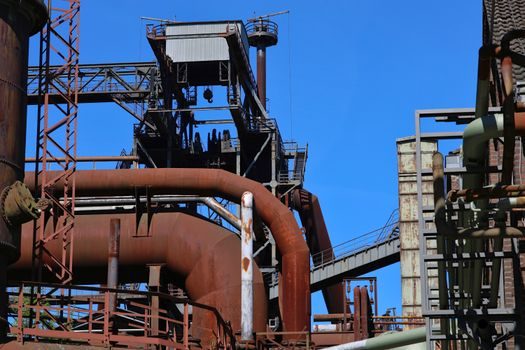
The first design discriminator is ore mineralogy: saprolite (high Mg, low Fe) routes to NPI via RKEF, limonite (high Fe, low Mg) routes to MHP via HPAL, and blended ores are split with parallel trains rather than a single shared line [S3]. The second discriminator is product end-use: stainless-steel feedstock (NPI, Class I matte) needs lower refining capex but accepts a wide Ni/Fe ratio, whereas battery-grade NiSO₄ requires HPAL or matte-ressure leach plus SX-crystallization to hit the <100 ppm Fe, Cu, Zn impurity envelope that precursor pCAM producers enforce.
Comparative layout, in four decision criteria, looks like this for the two backbone flow sheets:
| Criterion | RKEF (NPI / Matte) | HPAL (MHP → NiSO₄) |
|---|---|---|
| Ore feed | Saprolite, 1.5–2.5% Ni | Limonite, 1.0–1.5% Ni |
| Capex intensity | ~USD 15,000–25,000 / t-Ni-yr (NPI) | ~USD 35,000–60,000 / t-Ni-yr (MHP) |
| Reagent / utility | Electric power (furnace), coal or diesel (kiln) | Sulfuric acid (autoclave), limestone (neutralization) |
| Time to first metal | 18–30 months from kiln-fire-up | 30–48 months from autoclave commissioning |
Numbers are order-of-magnitude bands consistent with the cited reference lines [S3]; site power, acid availability and tailings-stability regulation usually swing the call more than the headline capex.
Who this is for — and who it is not for
Pyrometallurgical RKEF design fits groups already inside the stainless-steel melt-shop value chain, with grid power under 6 US¢/kWh, port access for imported saprolite or domestic laterite, and a tolerance for 12–16% Ni pig-iron product [S3]. It is a poor fit for cell or precursor makers who need Class I nickel (≥99.8% Ni briquettes, BSi/INCO-grade) and who must avoid the iron-removal capex of a downstream refinery.
HPAL design fits vertically integrated battery-materials groups with secure long-term offtake from EV cathode plants, sulfuric acid supply (captive or merchant) within 50–100 km, and a permitted deep-sea tailings placement (DSTP) or lined-land storage (LTS) route, because jarosite, hematite and MHP neutralization residues are the dominant environmental scope [S4]. A Nickel production line is not the right framing for a 5,000-t/yr shop running spent-catalyst recycling; that is a hydrometallurgical batch operation, not a continuous pyrometallurgical train.
Use cases anchored in announced reference projects
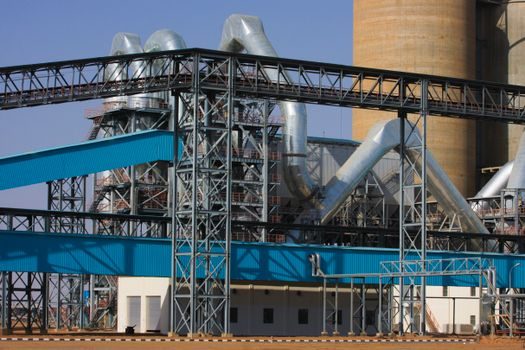
The WMI matte node in Central Halmahera runs 4 RKEF furnace lines for ~56,000 t/yr contained Ni in high-grade matte, while the BSE HPAL complex targets ~67,000 t/yr Ni-equivalent MHP with commercial start in early 2026, both under the same industrial-park footprint [S3]. A second wave of Indonesian HPAL projects in the Halmahera–Morowali–Weda Bay corridor is using these two flow sheets as the engineering template, with the IMI 2-furnace NPI train (28,000 t/yr) and the SNMI 4-furnace train (55,000 t/yr) bracketing the small- and mid-scale NPI reference points [S3].
For battery-grade nickel sulfate, the published VTT flow-sheet design demonstrates a direct-from-MHP route that bypasses intermediate nickel-crystal sulfate and targets the cathode-precursor purity window; the same paper flags that future process innovation is required to keep the carbon footprint inside OEM scope-3 limits, because the baseline HPAL-plus-crystallization route is energy- and reagent-intensive [S4][S6]. For an engineering team scoping a new line, the comparison anchor in the table above plus the Nickel Production Capacity Planning reference gives a defensible baseline for board-level capex review.
Limitations, constraints and failure modes
RKEF lines are power-elastic but heat-transfer-limited: the rotary kiln's specific throughput (t-ore/m³·hr) sets the bottleneck, and pushing feed moisture above ~10% or oversizing lump size above 50 mm collapses kiln flame stability, so ore beneficiation and pre-drying are usually a prerequisite scope item [S3].
HPAL lines are chemistry-elastic but pressure-vessel-bound: autoclave shell thickness, titanium cladding (ASTM B265 Grade 2 over carbon-steel), and brick-lining selection determine allowable acid strength and chloride tolerance, and any upstream ore change that pushes Mg or Al above the design window forces a re-pitch of the neutralization circuit [S3][S4]. The single most common project-loss driver in published HPAL post-mortems is under-sized iron-removal and tailings-neutralization capacity, not autoclave throughput.
Standards, materials and the sourcing rulebook
Material specification for the high-temperature and acid-service nodes should follow the ASTM B-series for nickel and nickel-cobalt alloy pipe, tube and fittings — typical call-outs are ASTM B444, B446 and B622 for Alloy 625 (UNS N06625) and Alloy C-276 (UNS N10276) [S5]. Sour-service and chloride-bearing hydrometallurgy service is governed by ISO 15156 / NACE MR0175, which must be cross-checked against the autoclave and SX-circuit chloride window before the metallurgical schedule is locked [S5].
For process-control scope, an RKEF line uses resistance-temperature detectors and optical pyrometers on the kiln and furnace, plus load-cell tapping trolleys and electrode-current signature analysis on the electric furnace, while an HPAL line adds pressure, pH, redox and density measurement on every autoclave and CCD stage — a molding line analogy is useful for the discrete-event control side, but the continuous reactors require distributed-control-system (DCS) scope with safety-instrumented-function (SIS) segregation per IEC 61511. The recurring engineering failure is treating the hydrometallurgy and pyrometallurgy trains as separate projects: the slag and MHP residue streams from one train are reagents and feed for the other, and the resin sand line parallel breaks down at the autoclave–SX interface.
Trackable signals for the next 6–12 months: BSE HPAL ramp-up reporting in H1 2026 against the 67,000 t/yr nameplate [S3], and any second-generation direct-NiSO₄ flow-sheet disclosure following the VTT 2024 baseline [S4][S6].