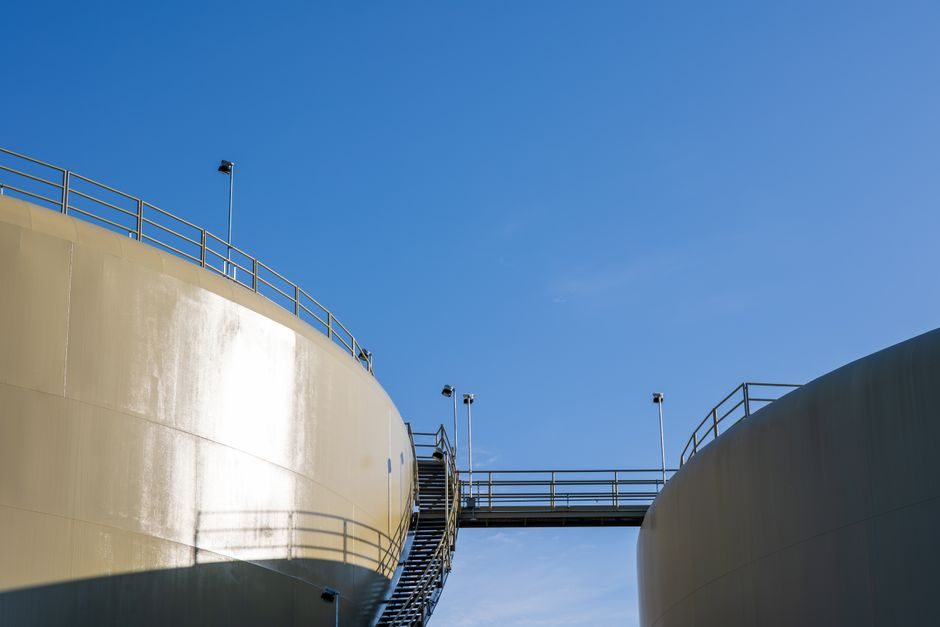
Nickel production capacity planning is now a multi-horizon exercise where Class I nickel, nickel sulphate and precursor pCAM lines must be sized against an 12-month-to-3-year ternary-cathode demand envelope, using Resource Requirements Planning (RRP), Rough-Cut Capacity Planning (RCCP) and Capacity Requirements Planning (CRP) as the three classic work-center methods [S2].
Operators in the cathode supply chain — Ronbay, Easpring, Umicore, Posco Future M — publish capacity in tonnes per year of ternary cathode, then back-derive nickel-sulphate and MHP (mixed hydroxide precipitate) offtake from Ni/Co/Mn molar ratios that typically sit at 8:1:1, 6:1:2 or 5:3:2 depending on NCM811, NCM622 or NCM523 grade [S1].
What Nickel Capacity Planning Actually Covers
Capacity planning for nickel-bearing products is the discipline of making sure that mining, refining, crystalliser and precursor conversion resources are available to execute the production schedule that MPS (Master Production Schedule) or MRP (Material Requirements Planning) generates; if capacity is short, either the plan is revised or the resource is added [S2].
In a nickel context, the "resource" is a concrete asset: a rotary kiln in a pyrometallurgical line, a Pressure Leaf Filter train ahead of a crystalliser, an autoclave in a High-Pressure Acid Leach (HPAL) circuit, or a co-precipitation reactor in a pCAM building. JD Edwards EnterpriseOne's P3380 program generates a capacity plan by critical work center, which maps directly onto these unit operations [S2].
The planning horizon splits into three bands: RRP covers 12 months to 3 years at product-family granularity, RCCP flags critical work-center constraints on a quarterly basis, and CRP matches available labour and equipment to MRP-generated requirements weekly [S2]. For a nickel-sulphate plant, the pCAM demand forecast drives RRP, the autoclave utilisation rate drives RCCP, and the crystalliser shift calendar drives CRP.
Selection Criteria for a Capacity Expansion
The first decision criterion is which nickel form to add: Class I briquette (≥99.8% Ni, LME-deliverable) for stainless and alloy melt-shops, nickel sulphate hexahydrate (NiSO4·6H2O, 22% Ni basis) for the cathode chain, or nickel briquette powder for solid-state and sulphate co-feeding [S1].
The second criterion is the upstream route: HPAL from laterite ore (Indonesia, New Caledonia) gives a 40-50 t Ni/ha·yr land intensity and a co-product cobalt credit; sulphide matte flash smelting (Norilsk, Sudbury) gives 99.9% Ni anode at the cost of depleting high-grade reserves; MHP-to-sulphate via pressure crystallisation is the lowest-capex sulphate route but locks the plant to a single laterite source [S1].
Who This Planning Is For — And Who It Is Not For

This discipline is built for process engineers and supply-chain planners at integrated nickel producers, cathode-active-material makers, and OEMs that sign 5-7 year offtake agreements — the same audience that consumes cathode cost breakdowns at the line-item level [S1].
It is not for traders optimising LME nickel positions, not for junior miners running a single open-pit cut whose planning problem is mine-sequencing rather than work-center balancing, and not for downstream cell assemblers whose bottleneck is electrode coating, not nickel form [S5].
Open-pit coal-mine capacity planning, by contrast, is dominated by stripping-ratio geometry and truck-shovel fleet matching rather than chemical work-center balancing, which is why Scientific Reports publications on that topic translate poorly into a nickel-sulphate context [S5].
Comparison: Three Routes on Decision Criteria
HPAL laterite, sulphide flash smelting, and MHP-to-sulphate crystallisation line up as follows on the four criteria a planner actually uses: [S1]
Capex per tonne of contained Ni: HPAL laterite US$35,000-50,000/t Ni (Indonesia benchmark, 2024-2025 lines); sulphide flash smelting US$20,000-28,000/t Ni where brownfield; MHP-to-sulphate US$8,000-12,000/t Ni [S1].
Lead time from FID to first nickel: HPAL 4-6 years (autoclave fabrication alone is 18-24 months); sulphide 2-3 years; MHP-to-sulphate 14-20 months [S1].
Cobalt co-product credit: HPAL produces a Co-rich sulphide at roughly a 1:10 Co:Ni mass ratio, materially improving project NPV; sulphide routes yield a minimal cobalt stream; MHP-to-sulphate inherits the MHP Co content at the same ratio as HPAL [S1].
ESG/CO2 footprint: sulphide flash smelting runs 5-8 t CO2/t Ni; HPAL laterite runs 25-40 t CO2/t Ni when coal-fired power is used, dropping to 12-18 t CO2/t Ni on hydro-powered Indonesian sites; MHP-to-sulphate inherits the upstream MHP carbon intensity plus ~2 t CO2/t Ni for crystallisation [S1].
Real Use Cases and Standard Hooks
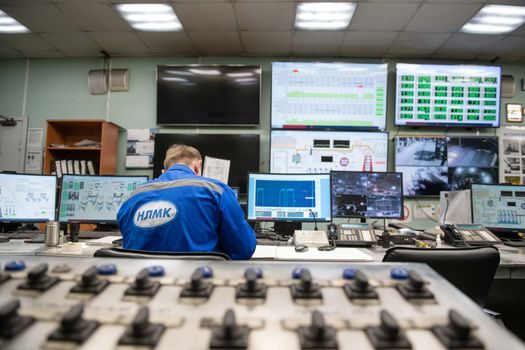
Ronbay Technology's 2022 annual report (English version) states that the company's production capacity layout in China and Korea will be gradually implemented, with strategic planning research in Europe and America carried out in parallel [S1]. That sentence is the canonical example of how a cathode maker translates cathode-tonnage targets into a nickel-sulphate pull signal that upstream planners then feed into RRP [S1].
Instrumentation on a nickel-sulphate line runs on pressure transmitters at autoclave feed, flow meters on the mother-liquor return loop, and industrial valves on the crystalliser vapour line — the same ISA-100 control stack that a lithium production line uses, which is why the planning effort can share a work-center taxonomy across both chemistries.
Limitations, Constraints and Failure Modes
The biggest planning failure is treating nickel-sulphate capacity as a single number: in practice it decomposes into a dissolution bottleneck, a crystalliser bottleneck, and a drying/packaging bottleneck, and the slowest of the three sets the line rate [S2].
The second failure is ignoring the nickel alloy of construction:硫酸蒸发器 running Monel 400 tolerate 60-70% NiSO4 saturation at 90 °C, while 316L evaporators hit corrosion limits well before that concentration, which means the metallurgy — not the geometry — can become the real capacity ceiling [S1].
The third failure is conflating Class I nickel LME tonnage with nickel-sulphate tonnage in an investor deck: a 200,000 tpa LME nickel operation may produce only 60,000 tpa of nickel-sulphate equivalent, and the difference is locked in the matte-to-sulphate conversion train that has its own RRP entry [S2].
Sourcing, Standards and Trackable Signals
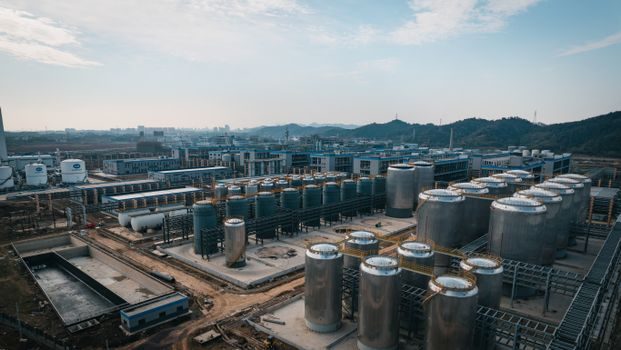
Buyers typically qualify a nickel-sulphate line against ISO 9001 for the producer's QMS, against the customer's cathode spec sheet (Ni ≥22.0%, Co as agreed, Cu ≤5 ppm, Fe ≤5 ppm, Zn ≤3 ppm), and — for HPAL-derived material — against the customer's cobalt-byproduct accounting [S1].
Two trackable signals to watch: (1) Indonesian HPAL project commissioning announcements through Q3-Q4 2026, which will reset the 2027-2028 nickel-sulphate balance; (2) cathode maker RRP updates from Ronbay, Easpring, Posco Future M and Umicore in their next annual reports, which disclose the 12-month-to-3-year forward capacity envelope that the upstream nickel planner must match [S1][S2].