Quality control on nickel products in 2026 splits into three non-overlapping regimes: heavy-industry alloy pipe and plate per ASTM/ASME material standards, skin-contact trims and jewellery per REACH Annex XVII nickel-release limits and Oeko-Tex 100, and a cross-cutting digital QMS layer (ISO 9001-aligned, with PPAP/APQP patterns) that ties first-article inspection to supplier scorecards [S1][S2][S4].
For a procurement engineer the practical question is which document chain the part must travel: a 3.1/3.2 mill cert for pressure service [S1], a REACH/SDS bundle plus nickel-release test report for consumer trims [S2], or a digital inspection record linked to the 2D/3D model for aerospace and medical Tier-1 work [S4]. Specifying the wrong stack is the single most common reason nickel quotes are rejected on technical review.
Industrial Nickel Alloy Pipe: ASTM/ASME Anchors and Mill-Cert Discipline
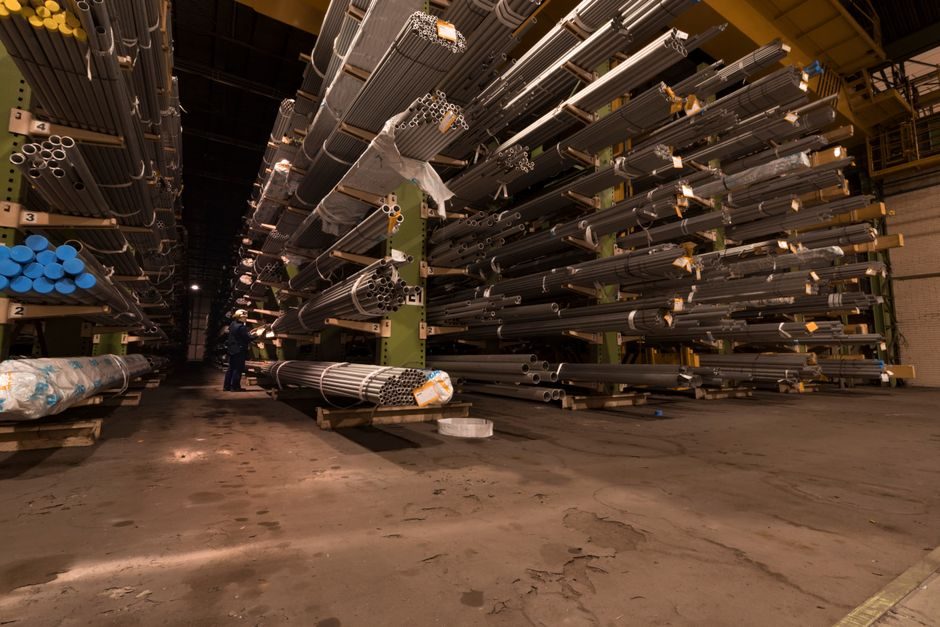
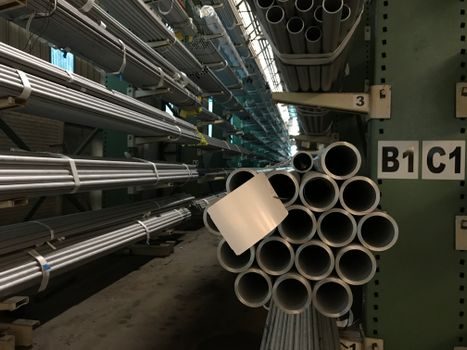
Seamless stainless and alloy pipe manufacturers serving oil and gas, petrochemical, power and water treatment routinely supply material to ASTM/ASME specifications, with mill test certificates issued per EN 10204 3.1 or 3.2 as the non-negotiable traceability document [S1]. For process piping the typical chain is ASTM A312 for stainless, ASTM A335 for ferritic alloy, and ASME B31.3 for process-piping design — the pipe is the carrier, ASME B31.3 is the design code that decides what schedule and what trace is required.
Wall-thickness tolerance, outside-diameter tolerance, straightness and end-finish control are the variables that decide field weld fit-up; manufacturers that publish numeric tolerance bands (for example ±12.5% on wall per common ASTM allowances) reduce rework risk on large projects [S1] and on the flow meter spools that share the same line list. For sour service NACE MR0175 limits the materials list to specific nickel-rich alloys, which is why procurement teams in oil and gas ask for the NACE statement on the cert before they book the PO. Independent third-party inspection (3.2 cert via an IACS-member society such as TÜV, BV, DNV or LR) is the standard escalation when the pipe is destined for hydrocracker, reformer or offshore service.
Buyers comparing alloy pipe suppliers in 2026 should score three documents: EN 10204 3.1/3.2 cert, NACE MR0175 compliance statement (where applicable), and a documented dimensional inspection plan covering OD, WT, straightness and end prep [S1]. A supplier that cannot produce all three on a sample inquiry is not yet qualified for pressure-service work — including pressure transmitter bodies that share the same nickel-rich alloy callout — regardless of price. For projects where additive-manufacturing powder or wire is being sourced alongside wrought pipe, the spec stacks must be reconciled in the same QMS — see the related Tier-1 additive manufacturing suppliers 2026 spec bands and certification analysis for the digital side of that chain.
Skin-Contact and Consumer-Goods Nickel: REACH, Oeko-Tex and Release Testing
Skin-contact trims, jewellery and fasteners made with nickel must clear REACH Annex XVII entry 27, which caps nickel release at 0.5 µg/cm²/week for post-piercing articles and 0.2 µg/cm²/week for prolonged skin contact — a test done per EN 1811 with the EN 12472 abrasion pre-conditioning for coated items [S2]. The 2026 market reality is that European and US-bound consumer brands now ask for the full bundle: REACH compliance statement, GPSR-ready SDS, Oeko-Tex 100 certificate for textile-adjacent components, and country-of-origin declaration [S2].
Lead- and nickel-free claims on a product page are marketing language, not a test result; the auditable artefact is the EN 1811 release-rate test report from an accredited lab, dated within the last 24 months, with the article family declared on the certificate. For a lingerie, swimwear or outdoor-trim application the typical spec list is: EN 1811 release test, REACH SVHC screening to the latest candidate list, Oeko-Tex 100 for the assembled component (not just the metal), and a lead-content test against the US CPSIA 100 ppm limit where children's products are in scope [S2].
Two practical tells separate a real compliant supplier from a paper-only one: the certificate names the testing lab with its accreditation number, and the certificate is tied to a specific article or SKU rather than a generic "product family." Generic family certificates are a known weak point in 2026 customs audits, particularly for parcels entering the EU under the new GPSR rules. The same supplier-grade discipline is visible in rare-earth raw material sourcing for 2026, where the certificate-to-SKU link is the deciding factor at customs.
Custom-Part Nickel: MFG Directory Capability Filters and Shop Qualification
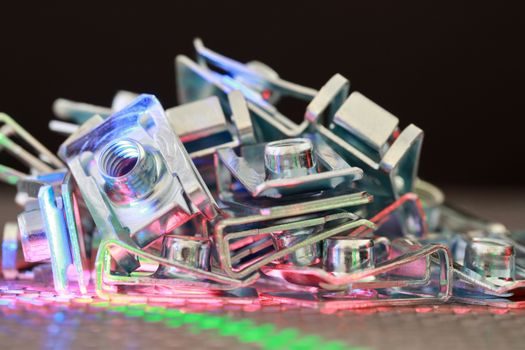
For custom nickel and nickel-alloy parts the 2026 sourcing path runs through manufacturer directories that filter by process capability — DMLS, FDM, HP MJF, SLS, SLA on the 3D printing side, plus CNC machining, EDM, milling, turning, screw/Swiss, sheet metal, stamping, forging, investment casting and die casting on the subtractive and formative side [S3]. A buyer searching for a nickel-alloy shop should never accept "we can machine that" without naming the specific nickel grade (Inconel 625, Inconel 718, Monel 400, Hastelloy C276, Nimonic 75/80A) and the work-hardening or age-hardening treatment that follows.
Capability claims map to spec evidence: a shop that lists DMLS for nickel alloys must show powder-traceability (often to ASTM F3055 for aerospace), a controlled-atmosphere build chamber, and a stress-relief or HIP cycle on the post-print route card. For CNC work, the auditable artefact is the cutting-parameter sheet, the tool-life log, and the in-process CMM inspection against the 2D drawing or 3D model. MFG and similar directories surface approximately 100,000+ reviewed manufacturers across 26 marketplaces and roughly one million RFQs per year, which is the scale at which a spec-driven filter earns its place over an open web search [S3].
Nickel-alloy machinability is the dirty secret behind many late deliveries: Inconel 718 work-hardens during cut, tool life drops by half compared to 304 stainless, and rigid toolholding with low-vibration inserts is mandatory above 50 HRC. Shops that publish a nickel-specific capability statement — grade list, machine park, typical tolerance band (commonly ±0.025 mm on finishing features), and surface-finish range — are the ones that deliver on the second PO. This shop-discipline pattern mirrors the cobalt production capacity planning logic where work-center capability, not raw material, gates throughput.
Decorative and Lapel-Pin Nickel: Plating Thickness, Substrate and EN 1811 Mapping
Nickel-plated decorative pins, badges and charms sit at the intersection of two spec stacks: the substrate material (commonly brass, zinc alloy or iron) and the nickel plate itself, which for EU sale is governed by REACH Annex XVII entry 27 release limits rather than by plate thickness alone [S5]. A 2026 spec sheet for a custom lapel pin therefore lists the substrate, the copper under-plate thickness (typically 8-12 µm), the nickel plate thickness (typically 5-8 µm for decorative use), and the final finish — gold, antique brass, soft enamel, hard enamel — as separate line items.
MOQ economics on this category start at one piece on custom OEM/ODM routes and move into 100-500 piece brackets for standard lapel-pin tooling, with per-piece pricing in the US$0.78-0.88 band on the 2026 platform for soft-enamel brass [S5]. The buyer-side quality check is a cross-section of the plating on a first-article sample, not a visual inspection: thickness is measured to ASTM B487 or ISO 1463, and adhesion is checked with a bend or thermal-shock test per ASTM B571. Without those two tests the EN 1811 release-rate result on the finished pin cannot be predicted from the plate-thickness number alone.
For buyers of custom nickel-finished components, three signals separate a production-grade shop from a trading company: in-house plating line (not subcontracted), written plating thickness specification on the PO, and a willingness to share first-article cross-section micrographs. Without all three, late-stage failures on EN 1811 release testing are common — and a failed release test on a 10,000-piece order is a write-off, not a rework.
Digital QMS Layer: 2D/3D Model-Linked Inspection and Supplier Scorecards

The 2026 quality-platform layer used by Tier-1 manufacturers and OEMs links every inspection record back to the original 2D drawing or 3D model, so first-article, in-process and final inspection all reference the same nominal geometry rather than re-keyed spreadsheets [S4]. For nickel and nickel-alloy work this matters more than for carbon steel: the inspection features (weld prep angle, bevel land, root gap) are sensitive to the model revision, and a QMS that does not lock the revision at PO release will allow drawing-rev drift to ship.
Platform functions that are now standard in aerospace, medical, energy and automotive QMS stacks are: supplier scorecarding with on-time/on-quality KPIs, non-conformance workflow with CAPA linkage, and a portable inspection plan that travels with the part through the supply chain [S4]. For buyers running multi-tier nickel supply this is the layer that surfaces a chronically late shop before the third PO, not after the third quality escape. The same QMS logic is at the centre of the lithium battery QA stack for 2026 and the GPU manufacturing QA stack, where supplier tier signals are the procurement decision driver.
Two buying patterns are visible across these platforms in 2026: companies that use the QMS to enforce a single inspection plan across all nickel parts, and companies that still email PDFs and reconcile in Excel. The first group averages faster first-article approval on nickel-alloy work and lower scrap on coated consumer parts, simply because the model-revision lock prevents drawing drift. A platform that does not link inspection back to the model is a tracker, not a QMS — that is the test to apply during any 2026 software demo [S4].
Standards Stack Comparison: Which Cert for Which Nickel Part
Three standards stacks compete for attention in 2026 nickel sourcing, and the right one depends on the end use rather than the metal. For pressure-service alloy pipe the binding chain is ASTM/ASME material spec + EN 10204 3.1/3.2 mill cert + NACE MR0175 (sour service) + ASME B31.3 (design) [S1]. For skin-contact consumer trims it is REACH Annex XVII entry 27 + EN 1811 release test + EN 12472 abrasion pre-conditioning + Oeko-Tex 100 + CPSIA 100 ppm lead for children's products [S2]. For custom nickel-alloy machined or additively manufactured parts the operative chain is the grade spec (Inconel/Monel/Hastelloy) + ISO 2768 or customer tolerance band + the QMS-level inspection plan linked to the 3D model [S3][S4].
Decision rule for procurement: if the part carries pressure, demand EN 10204 3.1 minimum and 3.2 for sour or offshore; if it touches skin and ships to the EU or US, demand the EN 1811 report dated within 24 months and an SKU-specific certificate; if it is a custom industrial component, demand a model-linked inspection plan and a grade-specific capability statement from the shop. The 2026 mistake pattern is still the same one seen in 2018-2022: a buyer accepts a generic REACH statement on a custom-coated article and the EN 1811 result then fails at the lab.
For projects spanning more than one stack — for example, a nickel-alloy process skid with stainless piping and a small skin-contact nameplate — write a single acceptance matrix that names the cert, the standard number, the test lab and the expiry window for every part family. That single page is the audit artefact customs and end-customer quality teams will ask for first. Material-grade selection across the project should be reconciled in the same nickel-alloy reference data so that the spec stack and the chemistry stack do not drift apart.
2026 Trackable Signals for the Next Sourcing Cycle
The near-term buying playbook remains unchanged: spec stack first, supplier capability second, price third — the order inverts only on commodity carbon steel, never on nickel. [S1]