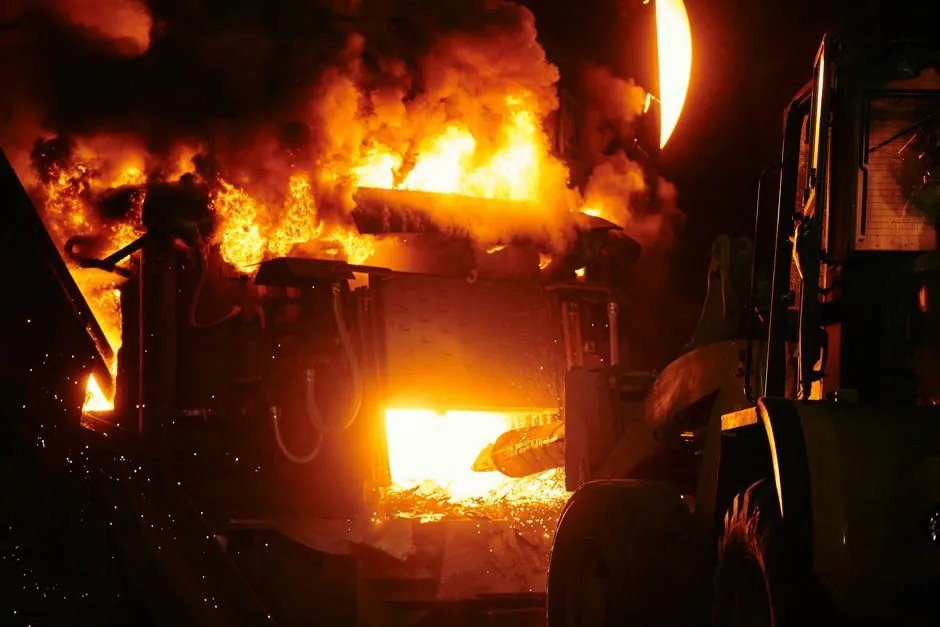
No-bake foundries recycling spent furan, phenolic-urethane, or alkaline phenolic resin-bonded sand recover 70–95% of their mould mass through attrition-based sand reclamation unit trains, with pneumatic scrubbers and vibratory attrition mills sitting at the low-to-mid end and thermal calciners pushing the ceiling [S2][S4].
The economically defensible break-even sits near 2 tonnes per hour of disposed sand, climbing to a strong payback above 5 tph, which is why most mid-sized ferrous no-bake operations now run a continuous sand reclamation unit loop feeding back into the foundry mixer [S6].
Grain size envelope reclaimed sand must hit
Spent no-bake sand after shakeout still runs roughly 85–95% of its mass between 0.15 mm and 0.6 mm (US sieve No. 30 to No. 100), the same envelope the virgin round-grain silica was graded to before resin coating [S1]. A well-tuned sand reclamation unit preserves that envelope: secondary screens, fluid-bed classifiers, and discharge fluidisation on equipment such as the Sinto GV (1–3 tph) and HL-Series (6–30 tph) re-establish the 0.15–0.6 mm window while dumping binder fines to dust collection [S5].
If the post-reclaim AFS fineness number drifts more than 10–15 points from the incoming spec, mullen strength and permeability of the resin sand line start to swing, and the operations team compensates by dosing more new sand, which defeats the reclamation rate on paper.
LOI and acid demand: the real quality gates
Loss-on-ignition (LOI) of virgin silica sits at 0.3–1.5% depending on quarry and conditioning [S4]. No-bake reclaim has to land back inside that band, otherwise residual phenolic-urethane or furan resin keeps consuming catalyst, drives gas evolution in the mould, and causes pinhole and veining defects on the casting.
Acid demand value (ADV) is the second gate. Each pass through a pneumatic scrubber or vibratory attrition cell strips 60–80% of the residual resin skin from the grain; the rest needs an airwash, density separator, or thermal finish to keep ADV under roughly 6–8 mL for a furan system or 10–12 mL for a phenolic-urethane system, otherwise bench life collapses inside the sand mixer [S2][S4].
Mechanical vs pneumatic vs thermal: a side-by-side
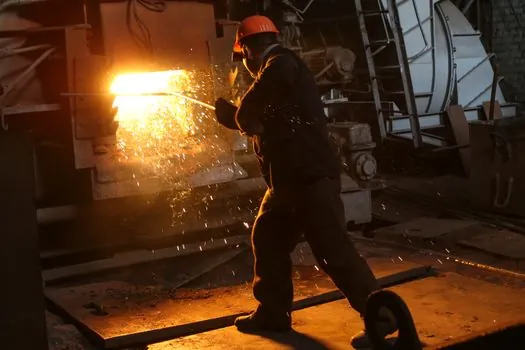
Three families dominate no-bake reclaim, and the recovery rate tracks closely with the energy input per tonne of feed sand [S2][S4][S7].
Pneumatic scrubbers (Simpson Pro-Claim style) push sand up a blast tube against a conical target, delaminating binder at 75–90% new-sand cost saving and the lowest kWh per tonne. One Waupaca Foundry case reports climbing from a 40/60 reclaim/new split to 95/5, with each grain recirculating through the unit 30 or more times before dump-out [S2].
Mechanical attrition (Sinto GV, HL, Omega LL, VIBRA-MILL vibratory batch) uses high-G vibration plus an attrition screen to scrub grains, sized 1–3 tph for small no-bake job shops and 25–45 tph on the GM+ combination shakeout/reclaimer. Recovery of usable grain typically lands at 70–85% with no thermal post-processing [S5][S7].
Thermal reclamation (fluid-bed or rotary calciner at 700–850 °C) burns the binder residue to under 0.3% LOI and routinely returns 90–95% of feed mass as specification sand, but the energy bill moves from roughly 5–10 kWh per tonne in pneumatic units to 80–120 kWh per tonne, which is why the LCA study by Ghormley (2020) flags thermal as a net environmental loss unless the virgin-sand haul distance is long [S4].
Selection rules for a no-bake spec writer
Specifying a sand reclamation unit for a no-bake line comes down to four numbers: feed rate in tph, target LOI, available thermal budget, and binder family. Below 2 tph of disposed sand, trucking to landfill or aggregate markets is usually cheaper than owning a unit, and at 5 tph the payback is firm enough to justify a continuous pneumatic or mechanical system [S6].
Chromite-faced steel foundries should look at combined magnetic plus density separation since chromite purity above 98% is recoverable, and that stream alone can pay for a side reclamation loop [S5]. Iron and steel no-bake shops running alkaline phenolic can run harder attrition because the binder skin is more brittle than cured furan, so the same vibratory mill that delivers 75% recovery on furan will deliver 85% on phenolic-urethane.
Foundries that need to send a fraction of the reclaim to core production, instead of back into the resin sand line, can route it through a greensand-to-core reclaim cell with integrated drying, scrubbing, and cooling, but expect a 5–10% throughput penalty for the extra drying stage [S5].
Failure modes and operating constraints
The three ways a no-bake reclaim loop quietly loses recovery rate are: dust collector bleed below 75 µm pulling good grain out with the fines, over-aggressive attrition fracturing sub-0.15 mm grains and pushing AFS fineness up, and a sand cooler downstream that cannot hold reclaim temperature under 50 °C, which then flashes moisture in the sand mixer and wrecks bench life [S2][S3][S5].
Another constraint is binder carryover. Each 1% of residual resin left on the grain consumes catalyst in the next mix, so a pneumatic scrubber holding 90% recovery at 2% residual LOI can still be more expensive per casting than a thermal unit holding 95% recovery at 0.2% LOI, because the thermal unit needs less new sand make-up to hold ADV flat [S4][S7].
Where the LCA evidence points
The 2020 University of Nebraska-Lincoln LCA compared three secondary reclamation options at a mid-sized US ferrous foundry and found that, while every secondary option raises on-site electricity draw, all of them cut greenhouse gas, ecotoxicity, and human-health impacts once virgin-sand and landfill haul distances are factored in [S4]. The same study concluded the single largest lever on life-cycle impact is not the reclaim technology itself but sourcing virgin sand geographically closer, which means the optimum reclaim rate is site-specific, not a universal number.
For spec writers, the practical recovery target to write into a tender is 80% by mass minimum for a pneumatic or mechanical attrition loop, 90% minimum for a thermal finish, with LOI capped at 1.5% on the outgoing stream and AFS fineness held within 10 points of the incoming virgin sand; a sand cooler sized to drop reclaim to 40–50 °C before the sand mixer keeps moisture under the 0.25% ceiling the CO2 process demands of clean sand [S3][S5].
Track two signals over the next reporting cycle: the published kWh-per-tonne figures for newer fluid-bed thermal units in 2026 vendor cuts, and any OSHA or EU AFS revision to permissible reclaim LOI for ferrous no-bake dust. Engineers comparing system layouts for a new no-bake cell can read a stage-by-stage breakdown of crushing, screening, and attrition in Sand Reclamation Process: Crushing, Screening, and Attrition Stages Explained, and the pneumatic-conveying energy trade-off that ties into reclaim loop design is covered in Medium vs Dilute Phase Pneumatic Conveying: Energy per Ton Compared.