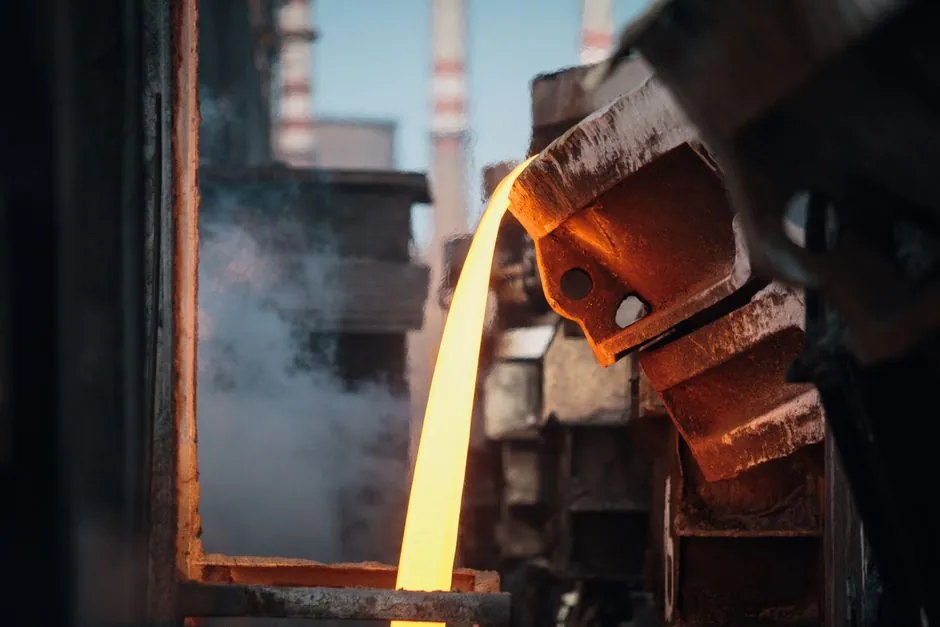
Refractoriness of standard silica-based foundry sand systems is bounded by 1,650-1,820°C (3,000-3,330°F), and most steel pour temperatures sit just below that ceiling, with thin-wall 440 stainless trials documented at roughly 2,700°F (1,482°C) per Penn State work from 2002 [S1][S7].
The "refractoriness limit" is not a single number but a coupled property: it depends on the sand grain, the binder, the facing sand, the coating, the metal's pouring temperature and superheat, and the section thickness. Foundries push steel into the upper end of that range by selecting chromite or zircon facings, using resin or sodium silicate binders, and preheating the mold to reduce thermal shock [S3][S4][S5].
What "refractoriness" actually measures in a sand mold
Refractoriness is the ability of the molding sand to withstand high temperatures without melting, burning, or cracking under the thermal load of molten metal [S6]. For a complete casting mold, the relevant number is the operating envelope, not the sand's pure-grain melting point: silica sand grains alone can tolerate 1,650°C+ but fail in aggregate as soon as the binder degrades, typically at 1,000-1,200°C for clay-bonded systems [S5].
Practical sand and ceramic mold systems are commonly cited at 3,000-3,330°F (1,650-1,820°C) for steel foundry work [S7]. The reference 2,700°F (1,482°C) pour for 440 stainless thin-wall test castings sits comfortably inside that envelope, with thermal margin for fluidity and superheat adjustments [S1]. Steel pour temperatures typically range 1,500-1,700°C depending on grade and section size, so standard silica-based systems can carry most carbon and low-alloy steel pours without exotic facing sands.
Sand system selection by steel grade and pour temperature
The four industrial sand systems are green sand (silica + bentonite + water), resin-bonded sand (furan, phenolic, alkaline phenolic), coated/shell sand (pre-coated phenolic film), and sodium silicate (water glass, CO₂ or ester hardened). Each has a different effective refractoriness and cost profile [S5].
Chromite sand has "extremely high refractoriness, excellent thermal conductivity and resistance to metal penetration" and is specified where silica-based systems risk burn-on or sintering at the mold-metal interface [S5]. For a sand casting mold facing steel above 1,600°C, foundries typically pair a silica or chromite backing sand with a chromite, zircon, or magnesia-based facing sand plus a ceramic coating. Base mold materials include silica, olivine, chromite, zircon, and chamotte sands, with binders ranging from clay/water to oil, resin, or sodium silicate [S4].
Comparison of common mold sands against pour-temperature capability

Across the four main sand systems and the four common specialty sands, the trade-off is between maximum operating temperature, dimensional accuracy, surface finish, cost, and collapsibility. The table below lines the main options up against three decision criteria relevant to high-temperature steel pouring [S4][S5].
Silica sand, the default, is cheap and reusable, with a practical envelope near 1,650°C, but its binder system is the weak link rather than the grain. Zircon and chromite deliver higher refractoriness and better thermal conductivity, used as facings rather than bulk mold material because of cost. Olivine sits between silica and chromite, with better thermal stability than silica but lower than chromite. Resin-bonded and shell systems raise dimensional accuracy and surface finish while staying inside roughly the same temperature ceiling as green sand; their failure mode is binder burnout, not grain fusion. Green sand remains the lowest-cost option for high-volume ferrous work, with the trade-off of lower accuracy, moisture-related defects, and relatively low strength [S5].
Pour-side variables that eat into the refractoriness margin
Wall thickness and pouring temperature dominate mold fill behavior, with the Penn State fillability study documenting that section thickness and superheat move the operating point far more than sand choice in the typical steel range [S1]. Thin-wall steel castings, in particular, demand higher pour temperatures and faster fill to avoid misruns, which compresses the safety margin between the metal's superheat and the mold's softening point.
Superheat is the deliberate pour temperature above the alloy's liquidus, typically 50-150°C for steel depending on section size and gating design. Excessive superheat raises the risk of mold burn-through, sand fusion, and metal penetration into the sand grain, especially at sharp corners or where the sprue impinges directly on the mold wall [S1][S4]. Foundry controls used to manage this include mold preheating (reduces thermal gradient), insulating or exothermic coatings, facing sands selected for the local pour temperature, and gating that avoids direct impingement on the mold face. Penn State thin-wall trials also used filters, head height adjustment, and tilting to manage fill without raising pour temperature into the danger band [S1].
Failure modes when the limit is exceeded
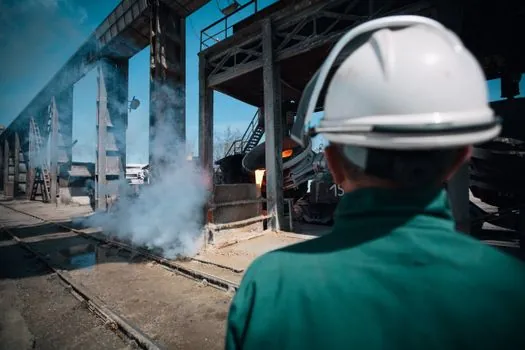
When the local thermal load exceeds the mold's effective refractoriness, three failure modes dominate: burn-on (a fused sand-metal layer that is difficult to clean), sand sintering (grains bonded to each other and to the casting surface), and metal penetration (molten metal forced into sand pores by metallostatic head). All three shorten die life, raise cleaning cost, and frequently require weld-repair on the casting [S4][S6].
The cleanest mitigation, where steel grade and section geometry require it, is to use a chromite or zircon facing sand backed by cheaper silica, and to apply a ceramic coating on the mold face. A mold base of silica or sodium silicate provides bulk strength and reusability while the facing layer takes the thermal load. For steel pours above roughly 1,650°C, this layered construction is standard practice in production steel foundries rather than an exception [S4][S5].
Standards, sourcing, and what to verify on a foundry data sheet
No single ISO or ASTM standard fixes a "maximum pour temperature for silica sand", but the underlying properties (refractoriness, permeability, green strength, moisture, grain size) are tested per standard foundry methods and reported on the sand supplier's data sheet. For procurement, the verifiable items are: refractoriness in °C or °F (typical silica systems 1,650-1,820°C), AFS grain fineness number, permeability, and binder type with addition rate [S4][S5].
The two trackable signals for 2026 are: rising use of chromite and zircon facing sands on heavier steel sections as foundries push to thinner walls and higher pour rates, and continued displacement of clay-bonded systems by resin and sodium silicate binders in steel work where collapsibility and reclamation are issues. Both are visible in current supplier literature and in the Steel Founders' Society alloy-design reference [S5][S7].
For related coverage, see ISO 9001 Documentation for Hydraulic Power Unit Builds.