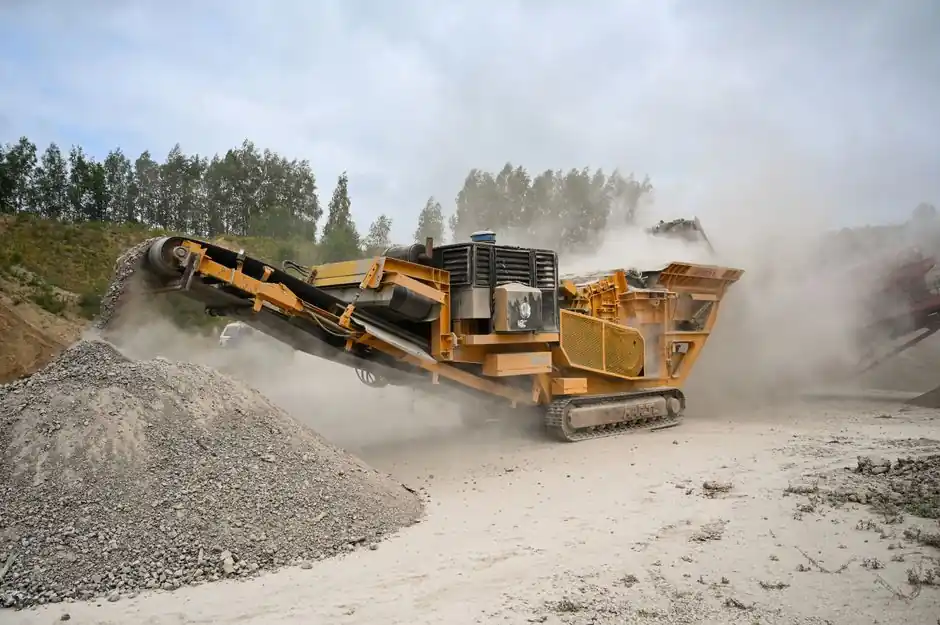
Closed-loop foundry sand lines reclaim 90-95% of used moulding sand per cycle by combining mechanical stages (shakeout, crushing, attrition, screening, air classification) with optional thermal calcination in a fluid-bed furnace at 600 to 800 °C [S4].
For a typical mid-sized no-bake foundry, mechanical-plus-thermal reclamation cuts new-sand purchases by roughly 90%, reduces landfill tonnage by 80 to 90%, and pays back in 18 to 36 months; closed-loop plants are designed around the binder chemistry of the system being reclaimed (furan, phenolic urethane, or alkaline phenolic) [S4]. A sand reclamation unit is therefore specified as a stage-matched train, not a single piece of hardware.
Stage 1, Shakeout and Primary Separation
Vibrating shakeout separates the casting from the mould sand; tramp metal, sprues and core residue are then pulled out magnetically and pneumatically before any crushing energy hits the sand bed [S4]. Combination shakeout and reclamation decks integrate this step with the first sizing pass, with production models spanning 1-3 TPH (GV-Series) up to 25-45 TPH (GM+ Series) [S5].
Two-mass vibratory shakeouts are specified where high-frequency, low-amplitude motion is needed to release sand from complex castings without breaking the grain; rotary shakeouts serve higher-tonnage, less-fragile work, with the tramp-metal removal point sized to handle expected sprue and iron content [S3]. The exit of this stage is a sand stream at ambient line temperature with metallic contamination already below downstream attrition tolerances.
Stage 2, Crushing and Lump Breaking
Crushing breaks sand agglomerates back down to individual grain size without fracturing the silica substrate, the essential first step before attrition because lumps will not scrub evenly and will damage downstream blades or mill liners [S4]. The mechanism used is process-dependent: pre-reclaiming attrition units feed sand from above into two V-shaped, oscillating crushing plates whose targeted vibrations break down the lumps to a pre-defined gap width [S2].
Roll crushers, lump breakers and spiral crushers are alternatives for different feed-size distributions; the gap setting is the primary control variable, with under-gap leaving lumps that jam attritioners and over-gap producing fines that load the classifier. The Cruz et al. attrition study on green sand confirmed that the first mechanical step in any reclamation train is reduction to grain size, after which binder removal becomes the rate-limiting step [S1].
Stage 3, Mechanical Attrition and Scrubbing
In the attrition stage, grains rub against each other at high intensity, mechanically fracturing the residual binder envelope without damaging the silica core; fines are then carried off by an air stream [S4]. JOEST's pre-reclaiming attrition units use V-shaped oscillating plates to deliver targeted vibrations; General Kinematics' VIBRA-MILL vibratory batch reclaimer shakes, agitates, vibrates, tumbles and abrades lumps up to 4-foot in size down to minus 20 mesh grain size; the VIBRA-MILL Drum handles continuous-flow reclaim [S2][S3].
Sinto's HL-Series 'High Level' attrition mill loads sand pieces into a tub and reduces them to grain size via an attrition screen system, with optional Discharge Fluidization for fines classification [S5]. For green sand specifically, the Cruz et al. fluidized-bed attrition study used nozzle pressures of 350 or 550 kPa (50 or 80 psig), with calcination at over 700 °C and the higher 550 kPa pressure giving the best clay removal; mass loss in their tests was held under 14%, which the authors treat as the practical acceptance ceiling for the attrition step [S1].
Stage 4, Screening and Air Classification
Air classifiers and vibrating sieves separate reusable grain-size sand from fines, dust and over-size particles; clean sand moves forward, fines go to disposal or to a dedicated fines-handling line [S4]. This step closes the size loop, returning only sand within the spec's AFS grain-fineness number to the mixer silo. General Kinematics' FINGER-SCREEN and STM-SCREEN families are common classifier options sized to the reclamation train's nominal TPH; JOEST's screening line includes circular motion, linear motion, flip-flow, dewatering, and cascade screens for the various cut points in a sand line [S3][S2].
On chemically bonded systems, the classifier is also where coarse grains and agglomerated particles that escaped the attritioner are rejected; the equipment must first reduce lumps back to grain size, then remove all coarse grains, agglomerated sand grains and tramp material before thermal treatment [S7]. Comparison of stage options on the main decision criteria: vibratory attritioners (VIBRA-MILL, HL-Series) score well on gentle grain handling and low dust; rotary drums score higher on continuous throughput at 25-45 TPH; fluidized-bed attrition scores highest on clay removal but consumes the most compressed air [S3][S5][S1].
Stage 5, Optional Thermal Reclamation in a Fluid-Bed Calciner
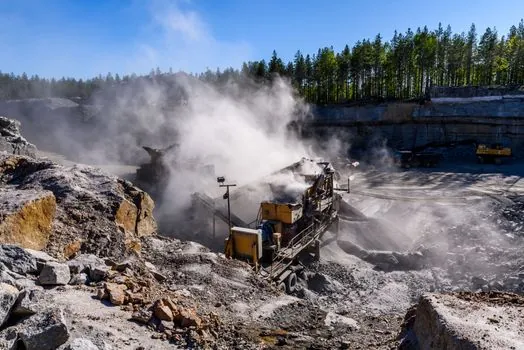
Thermal reclamation is added when 90%+ reuse is required or when the binder is phenolic urethane or alkaline phenolic; sand passes through a fluid-bed calciner at 600 to 800 °C to burn off every trace of organic binder [S4]. For a green-sand line, the same temperature range (calcination over 700 °C in Cruz et al.) is what facilitates clay removal in the subsequent attrition step [S1].
The thermal stage is the single largest energy consumer in the train and is therefore only specified where the binder system or the disposal-cost arithmetic justifies it; foundries running only mechanical reclamation typically land at 70-80% reuse, with the residual 20-30% sent to landfill or to lower-value applications such as construction aggregate. The fluid-bed calciner is sized to the same TPH as the mechanical section so the line does not bottleneck at the thermal step, and discharge sand is cooled to mixer-inlet temperature before being metered back to the storage silo [S4].
Stage 6, Cooling, Dedusting, and Return to Silo
Reclaimed sand is cooled to mixer-inlet temperature, metered, and returned to the storage silo, closing the loop and feeding the next moulding cycle [S4]. Sinto's G-Cooler is a fluidized-bed design that incorporates highly-efficient heat transfer to cool the reclaimed sand, with optional internal cooling coils when classification is the primary goal; integral drop-out chamber and discharge directly into the PV pneumatic transporter [S5].
The cooler-classifier dual function is what makes the closing stage compact on small lines; the GV-Series at 1-3 TPH integrates multiple-screen attrition with a vibratory elevator and optional discharge fluidization for the smallest no-bake foundries [S5]. For mechanized construction machinery and equipment plants running green-sand moulds for large castings, the same fluidized-bed cooling principle handles throughputs into the tens of TPH without the ductwork of a separate cooler. The choice between fluidized-bed cooling and rotary cooling is a layout-and-noise decision: fluid beds are quieter and classify at the same time, rotary drums are simpler to maintain and tolerate more variable feed moisture.
Process Comparison: Mechanical-Only vs Mechanical-Plus-Thermal
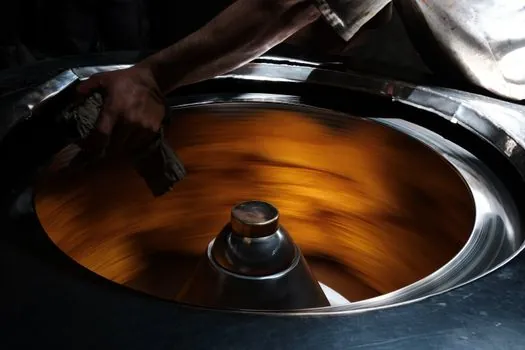
Decision criteria, mechanical-only vs mechanical-plus-thermal: target reclamation rate (70-80% vs 90-95%); binder compatibility (green sand and simple no-bake vs phenolic urethane and alkaline phenolic); capital and energy cost (lower vs significantly higher); landfill exposure (20-30% of sand volume vs under 10%); LOI and grain consistency (acceptable for non-critical castings vs close-to-virgin specification) [S4].
The CAR-Series mechanical sand reclamation system, for example, packages dual-screen attrition mill, vibration-dampening springs and stand with no pit or foundation required, aimed at foundries that need 70-80% reuse without the thermal step [S6]. Foundries running furan no-bake chemistry typically stay mechanical-only because furan burns off cleanly in the mixer; phenolic urethane lines almost always add the fluid-bed calciner because the residual urethane bond does not break down mechanically below 600 °C [S4]. For green-sand lines, the process flow is similar in structure but the attrition target is clay-and-organic removal rather than cured-binder removal, which is why green-sand reclamation often leads with a fluidized-bed attrition step rather than a vibratory mill [S1].
Limits, Failure Modes, and Selection Cues
The Cruz et al. study explicitly notes that the volume of air required for the attrition nozzle is rather high and may adversely affect the economics of the process, the single biggest practical limit on fluidized-bed attrition for green sand [S1]. On mechanically bonded sand, the equivalent limit is mill liner wear and the AFS grain-fineness drift if the attrition intensity is set too high; the binder envelope must be fractured without fracturing the silica grain.
Common failure modes across the train are: tramp metal damaging crusher and attritioner shafts (mitigated by upstream magnetic separation), over-size lumps reaching the attritioner (mitigated by crusher gap control), and classifier carryover of fines back to the silo (mitigated by air-classifier cut-point tuning). On the upstream side, when a foundry is choosing between green sand and a no-bake system in the first place, the reclamation train and its TPH are part of the same decision matrix, since the binder chemistry drives both the binder chemistry of the line and the reclamation technology required, as covered in Green Sand vs No-Bake Sand Casting: Process Mechanics and Selection Matrix.
Two trackable signals for foundries sizing a new reclamation line: (1) the binder system in use, since furan, phenolic urethane, alkaline phenolic and bentonite-bonded green sand each dictate a different combination of mechanical and thermal stages, and (2) the target reclamation rate, since the jump from 80% to 90%+ reuse is what justifies adding the fluid-bed calciner. For the casting-side context, the four-piece mould assembly that feeds this loop is described in Cope, drag, core and gating: the four building blocks of a sand casting mold, and the pneumatic conveying used to move sand between reclamation stages is covered in Medium phase vs dense phase pneumatic conveying: selection by material and distance.
The underlying component specifications are covered under lamps and light fittings.