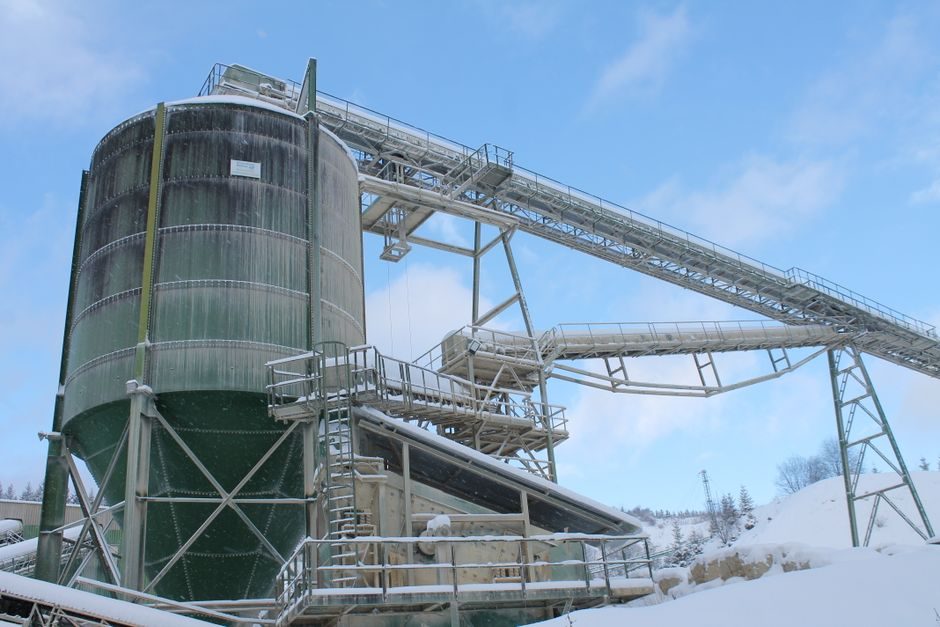
A complete nuclear power manufacturing process chain runs through five controlled stages — nuclear fuel fabrication, heavy reactor-component forging, large-scale machining, precision assembly, and ASME Section III-qualified non-destructive examination (NDE) — with each stage governed by its own auditable quality gate rather than a single shop-floor instruction set. Zhefu Holding's published R&D structure confirms this division of labour: sub-teams are dedicated to product design, performance demonstration, manufacturing process research and test verification, in that order [S1].
The 60 TJ/kg-class energy density of fission fuel sets the manufacturing stakes — a single fuel pellet contains the energy equivalent of roughly one tonne of coal, so dimensional tolerances and traceability records are tighter than in any other thermal-power fabrication chain. SpringerLink's reference text on nuclear power records the 60 TJ per kilogram-of-uranium baseline that frames the entire upstream fuel-fabrication specification [S4].
Stage 1: Nuclear Fuel Fabrication — Pellet, Rod and Assembly
UO2 pellet manufacturing starts with powder metallurgy: ADU or AUC-derived UO2 powder is cold-pressed at 200–400 MPa into green pellets, sintered at 1650–1750 °C in a reducing H2 atmosphere, and centreless ground to a final diameter tolerance commonly held at ±0.025 mm. Sintered density must reach 95–97% theoretical density to keep in-pile fission-gas release and swelling in spec. Finished pellets are loaded into Zircaloy-4 or M5 cladding tubes, backfilled with helium at 2–3 MPa, plug-welded, and bundled into 14×14, 15×15, 17×17 or 18×18 fuel assemblies depending on the reactor design [S4].
The 17×17 array is the dominant PWR geometry used in Western 2-loop and 3-loop reactors, and is the same footprint Westinghouse and its licencees continue to ship for new European and Asian builds. Each finished assembly passes through a helium-leak test, an oxide-film thickness check, and a fuel-rod bow-and-length measurement before release, with the data captured against a unique serial number that follows the assembly for its entire in-reactor life.
Stage 2: Reactor Pressure Vessel and Steam Generator Forging
Reactor pressure vessels (RPV), steam-generator shells and pressuriser bodies are produced from forged Mn-Mo-Ni low-alloy steel rings, with the active core belt typically forged to a wall thickness of 200–250 mm and a single-piece forged height exceeding 5 m. ASME Section III, Subsection NB requires a through-thickness ultrasonic examination of every forging at the rough-machined stage, with acceptance tied to chart 2200 reference levels rather than the more permissive Section VIII rules used in non-nuclear pressure vessels [S1].
Forged components then enter a cladded phase: the inner surface of the RPV receives a 4–8 mm austenitic stainless-steel overlay (typically 308L or 309L) deposited by submerged-arc or electroslag strip cladding, followed by a post-clad stress-relief heat treatment at 595–620 °C for several hours. Weld-overlay chemistry must be controlled to ≤0.035% S, ≤0.025% P and a ferrite number between 8 and 14 to avoid hot cracking in service. Zhefu's process-research sub-team specifically owns the welding-procedure qualification chain that bridges ASME IX welding procedure tests and Section III NB-end qualification [S1].
Stage 3: Heavy Machining and Dimensional Qualification
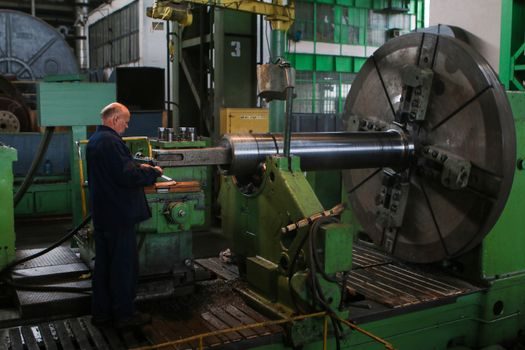
RPV flange-face machining is the most demanding operation: a 4–5 m diameter flange face must be turned to a flatness of ≤0.05 mm across the full diameter, and the bolt-circle true position must stay within 0.10 mm to ensure reactor-head gasket integrity across every refuelling cycle. Bore machining of the core belt uses vertical turning lathes equipped with on-machine laser measurement to hold concentricity below 0.03 mm on a 4 m bore, and the resulting datum is preserved across all downstream welding, cladding and final-machining steps. [S1]
Main coolant-loop piping (typically 600–900 mm NB for 1000 MWe class units) is machined from forged austenitic-stainless elbows and straight runs, then 100% radiographed and 100% liquid-penetrant tested. Piping dimensional acceptance is referenced to ASME B31.1 plus the nuclear-specific code cases published by ASME BPVC Section III, with socket-weld and butt-weld branch connections governed by the same chart-of-records discipline that gates the vessel itself.
Stage 4: Reactor Assembly and Module Staging
Final assembly of the reactor coolant system (RCS) is a clean-environment activity: weld areas are tented to ISO Class 8 or better, bores are protected with desiccant and plastic covers, and tool accountability is tracked by lot rather than by individual piece. The RCS loop is closed by an in-cell TIG or plasma-arc final closure weld, followed by a helium-mass-spectrometer leak test at a sensitivity of 1×10⁻⁹ Pa·m³/s before the system is drained and dried. [S2]
Small Modular Reactor (SMR) factories are reorganising this stage: the U.S. Nuclear Regulatory Commission approved the first U.S. SMR design in 2023, and module-based assembly lines now ship reactor vessels and integrated steam-generator modules as factory-completed skids that travel by rail or heavy-haul truck to the site [S3]. SMR module weights are typically capped below 300 tonnes per piece to match Class-1 rail and road limits, which has driven a shift toward smaller-diameter RPVs fabricated from plate-rolled rings rather than the heavy ring-rolled forgings used in 1000 MWe class units.
Stage 5: NDE, ASME III Qualification and Digital Rounds
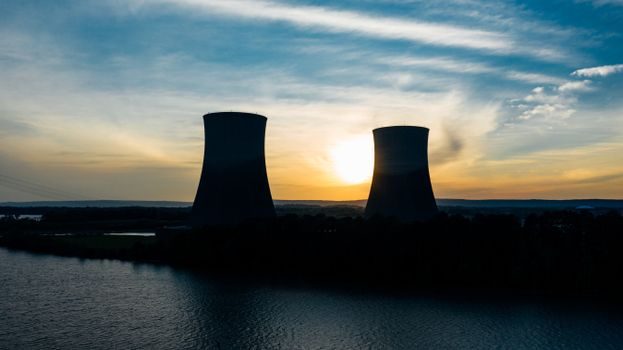
Quality-assurance evidence is the only deliverable that leaves the manufacturing chain. Every ASME III Class 1 component carries a Data Report (NB-1 or N-1) and a full chart of NDE records: ultrasonic C-scan coverage of clad regions, surface magnetic-particle or dye-penetrant examination, and a positive-material-identification (PMI) check using a portable XRF or OES analyser. ASME N-stamp certification of the entire supply chain is a contractual precondition for any Class 1 component, and the audit trail must be retained for the full 40-year design life of the plant. [S3]
Once the plant is operating, the same discipline continues at the field level. Operator-rounds data is captured against named duty stations defined in the asset-management system, and the rounds application integrates with the work-order and condition-monitoring modules so that any out-of-spec reading is auto-routed to the corrective-maintenance queue [S2]. The structured saved-query logic used in that rounds configuration mirrors the serialised data-discipline used upstream in fuel-fabrication traceability — every reading is tied to a unique equipment ID, just as every pellet batch is tied to a unique UO2 lot number.
Comparison: Five Manufacturing Stages on Process Sensitivity, Lead-Time and Standards
The five stages do not carry equal engineering risk. Fuel fabrication is a high-throughput, chemistry-led process with a typical lead-time of 6–9 months and a regulatory regime dominated by NRC 10 CFR 50 Appendix B and IAEA SSR-2/1 traceability rules. Reactor pressure-vessel forging is the lowest-throughput, longest-lead-time step, often 24–36 months from ingot to clad flange, governed by ASME III NB with ultrasonic acceptance at 2200-reference level. Heavy machining, reactor assembly and NDE/QA sit between those extremes on lead-time but match forging on standards stringency, because Section III follows the part, not the supplier. [S4]
Buyers evaluating nuclear-grade fabricators should weight three criteria: active N-stamp and NPT-stamp certificates, the depth of the chart-of-records system (digital, not paper), and the ability to deliver a full Sizewell C / Hualong One / AP1000 component matrix from a single integrator. A different adjacent spec-cut worth reading for context is the Resin Sand Molding Line 2026 spec gates, which lays out the same throughput-versus-reclamation trade-off that the heavy-machining and forging stages face when RPV orders cycle through a single bay.
2026 Outlook Signals: SMRs, Advanced Cladding and the Drag on Forging Capacity
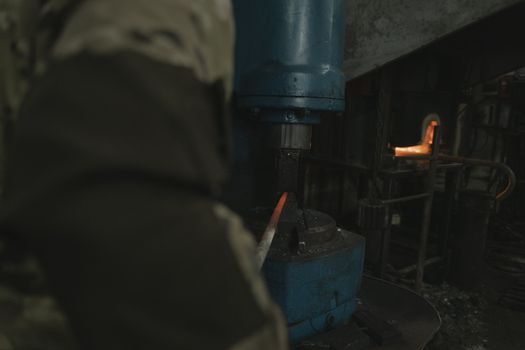
Three trackable signals will shape the 2026–2028 nuclear manufacturing chain. First, NRC SMR approvals are stacking: the U.S. regulator's first SMR design certification opened the door to factory-fabricated reactor modules rather than site-built assemblies, and follow-on certifications are queued through 2027 [S3]. Second, accident-tolerant fuel (ATM) programmes are pulling Cr-coated Zircaloy and FeCrAl cladding into the qualification chain, which will tighten surface-defect acceptance limits in the pellet-and-rod stage. Third, the global ring-rolling and electroslag-remelting capacity for nuclear-grade forgings remains the binding constraint on new-build delivery — every RPV draws from a small pool of dual-certified forging vendors.
Engineers specifying a new nuclear build in 2026 should be tracking the SMR certification queue, the ATM cladding qualification timeline, and the dual-certified forging-vendor capacity curve; those three signals together determine whether a 24–36 month forging lead-time slides further out or starts to compress as the order book re-balances. The chain is engineered to fail-safe, but it is also engineered to fail-slow — and the manufacturing pipeline is exactly where that slow-fail discipline gets built into the hardware.
For component-level specifications, see additive manufacturing material, multifunction process calibrator, and v process line.