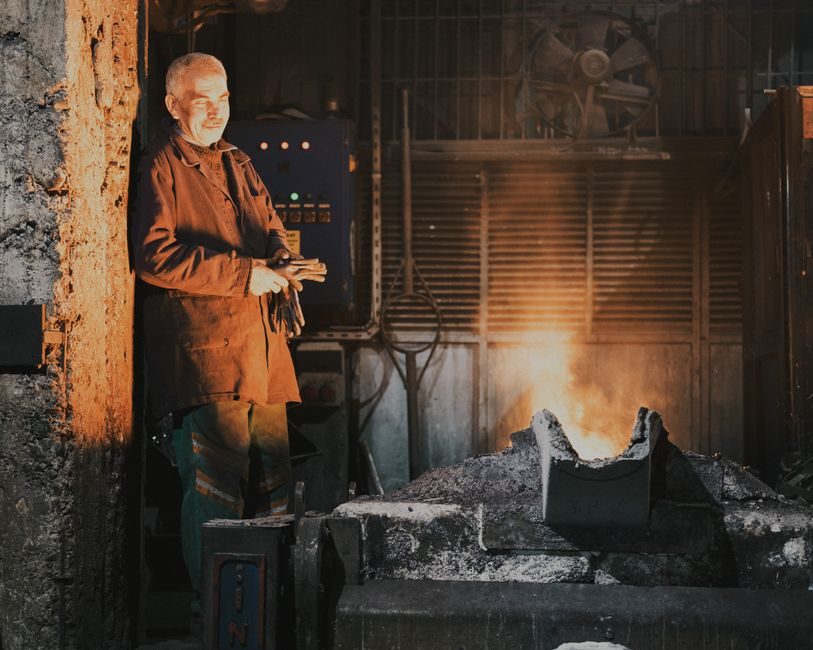
Resin sand molding line procurement in 2026 is dominated by four spec gates: flask footprint (typically 800×600 mm to 2000×1500 mm), hourly throughput (5-30 t/h finished sand), reclamation efficiency (≥85% thermal or mechanical) and resin system (furan/phenolic/alkaline phenolic). Aluminum and iron casting buyers concentrate sourcing on Made-in-China and Alibaba, where per-piece casting quotes cluster between US$3.00 and US$6.00 at 50-piece MOQ for machine-tool castings from Qingdao suppliers [S4][S1].
For a greenfield foundry, the line scope is not just a molding line — it is an integrated resin sand line covering sand mixing, molding, hardening, shake-out, reclamation and dust collection. Chinese system builders such as CRRCGC group the offering into "IMF resin sand line for cast iron", "resin sand line for cast steel" and "BMD impulse molding line" sub-categories, signalling that the binder system and metallurgy (Fe vs. steel) drive the line configuration, not the brand name on the control cabinet [S3].
Flask Size and Mold Weight: First Gate
The first engineering decision is the flask envelope, because every downstream station — mixer, rollover, shake-out, reclamation — is sized off sand throughput, which is sized off the mold. Small job shops run 600×500 mm to 1000×800 mm flasks producing 30-80 kg finished castings, while medium-tonnage iron lines use 1200×1000 mm to 1600×1200 mm flasks at 200-500 kg per mold [S3].
Buyers chasing per-piece pricing near US$3.00-6.00 should verify whether the supplier's quotation assumes a 50-piece MOQ machine-tool casting (typical at Qingdao Fuxintai) — that price band reflects sand cost, pattern amortization and heat treatment, not the line CAPEX [S4]. For a direct comparison of line cost tiers against foam-tooling-based routes, see the Lost Foam Casting Line Price and Cost Guide 2026, which covers the sand-side crossover where buyers frequently switch between lost-foam and resin sand.
Throughput and Sand System: 5-30 t/h Band
A 5-10 t/h automatic molding line suits 1,500-4,000 t/year iron jobbing; 15-30 t/h suits 10,000-30,000 t/year steel-casting plants. Sand-to-metal ratio for resin sand typically runs 3:1 to 4:1 by mass, so a 10 t/h molding station consumes 30-40 t/h of prepared sand through the mixer loop [S2].
The mixer is the heart of the loop: Alibaba foundry-sand-mixer categories in 2026 cluster around continuous paddle mixers (5-30 t/h), high-speed stirred units for furan binder, and intensive mullers for chromite/silica blends. Foundry-mixer suppliers on Alibaba Mainland China also bundle shot-blasting, dust-collector and sand-reclamation machines as a "line set", which is a useful single-RFQ strategy for greenfield buyers [S1].
Binder Chemistry: Furan, Phenolic, Alkaline Phenolic
Resin choice sets the reclamation method. Furan resin (furfuryl alcohol + acid catalyst) is the workhorse for iron and most steels, but acidic fumes force stainless or FRP ducting on the dust side. Phenolic urethane (Pepset / no-bake) gives faster strip and lower fume, at higher binder cost. Alkaline phenolic is the steel-casting default because it avoids acid-catalysed sulphur pickup on synthetic resin bonded steel molds [S2][S3].
A neutral-source rule of thumb that is safe to state: hot-box and warm-box furan systems typically run 0.8-1.5% resin over sand weight, with hardener at 30-50% of the resin mass; alkaline phenolic for steel climbs to 1.5-2.5% resin. If a supplier quotes binder add-on outside these bands, ask for the tensile-strength test certificate and the bench life data — many 2026 buyer complaints trace to over- or under-catalysed systems, not the line itself.
Reclamation and Dust: 85%+ Recovery Target
A modern reclamation loop targets ≥85% thermal reclamation efficiency for furan/phenolic systems, with the balance made up by attrition-reclaimed fines and fresh silica. Mechanical-only reclamation (vibratory + airwash) typically plateaus near 70-75% and is only acceptable on low-tonnage jobbing lines [S2].
Dust collection is the hidden CAPEX line: resin-sand shake-out and reclamation generate combustible fines, so ATEX 2014/34/EU category 2D or 3D dust collectors with explosion venting are routine on European-bound lines; the same hardware shows up on Chinese export builds because most Chinese foundries ship the same equipment platform to EU and ASEAN buyers [S1][S2]. Stack the dust-collector quote as a separate line item — bundling it into the "line price" obscures filter-area and fan-power shortcuts.
Controls, Curing and Cure Station Sizing
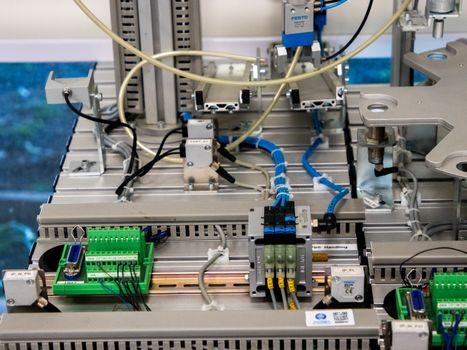
Cure station design (gas-hardening, ester-hardened no-bake, or warm-box) is locked in by the binder system, but the controls layer is increasingly a buyer's lever. 2026 resin-sand lines ship with PLC + HMI on the mixing/molding stations and SCADA on the reclamation loop; older lines still use relay logic, which is a red flag for throughput repeatability [S2][S3].
For buyers also evaluating capital equipment controls architecture, the Motion Controller Buying Guide 2026 is a useful cross-read on axis/bus/feedback decisions, since large resin-sand molding cells increasingly integrate servo-driven rollover and clamp stations that piggyback on the same vendor's motion platform.
Supplier Landscape and RFQ Structuring
Made-in-China and Alibaba remain the two high-volume 2026 sourcing channels for Chinese resin-sand line builders, with Qingdao, Weifang and Shandong clusters dominant for small-to-medium flask sizes and CRRCGC-style builders active on the larger steel-casting lines [S3][S4]. The Made-in-China 2026 product feed shows US$3.00-6.00/kg finished casting quotes with 50-piece MOQ from Qingdao Fuxintai for both iron and steel machine-tool castings — useful as a price benchmark when negotiating the line CAPEX [S4].
Issue the RFQ in this order: (1) flask size + casting weight range; (2) binder system + reclamation target; (3) annual throughput in tonnes; (4) dust-collector and auxiliaries; (5) controls scope and export certification. If a supplier refuses to break out the dust-collector, reclamation and mixer pricing separately, that is a signal to walk — it usually means the reclamation unit has been downsized to keep the headline number low [S1][S2].
Decision Snapshot: 4-Criteria Line Comparison

For a 10,000-15,000 t/year iron jobbing foundry, a no-bake furan line at US$3-6/kg casting, 85%+ thermal reclamation, 1200×1000 mm flask, and PLC/SCADA controls is the 2026 default. For the same tonnage in steel, switch to alkaline phenolic, expect 1.5-2.5% binder add-on, and add a chromite-sand option for thick sections. Avoid mechanical-only reclamation below 10,000 t/year unless CAPEX is the binding constraint and a fresh-sand make-up line is already onsite [S1][S2][S3][S4].
Trackable signals for the next 90 days: dust-collector ATEX certification audit pass-rates on new Chinese export builds, and whether 2026 platform lines are quoting PLCs from a single dominant vendor (which would compress lead time but raise the parts-spare risk). Buyers should also benchmark against adjacent capital-equipment spec gates covered in the AAC Block Buying Guide 2026, since both plant types share the same sand-handling and dust-collector supply chain.