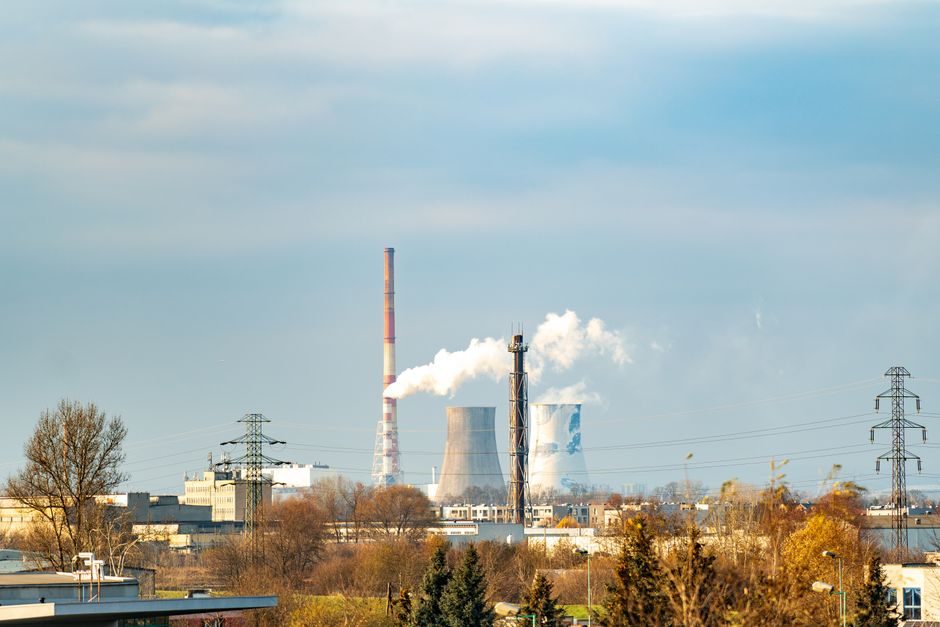
Three regional supplier clusters dominate commercial nuclear-grade equipment procurement in 2026: a largely self-sufficient Chinese domestic base, a US trade group of approximately 60 nuclear product and service vendors [S5], and a smaller set of Western OEMs operating in heavy components, instrumentation, and fuel-cycle services [S7].
Sourcing decisions still route through the same component families — reactor coolant pumps, steam generators, I&C platforms, and balance-of-plant power transformers — but the qualified-vendor lists have shifted as Chinese firms absorbed Hualong One and ACP-series construction and as US/EU programs prioritised SMR and refurbishment work [S7].
Chinese nuclear supply base: state-led, vertically integrated
China's policy is to maintain a closed nuclear fuel cycle and to "go global" with reactor exports, including heavy components, which has pulled the supply chain into a near-domestic configuration [S7]. Reactor design and construction are now largely self-sufficient, with Western technology adapted under technology-transfer agreements rather than imported as turnkey product [S7].
Zhefu Holding Group maintains a dedicated nuclear-power R&D division of more than 70 full-time engineers organised into product design, performance demonstration, manufacturing-process research, and test-verification sub-teams; the group states it developed the main pump for China's first-generation nuclear power plant programme [S4]. A cross-reference to the power mixer category is instructive — reactor coolant pump internals share metallurgy, impeller balancing, and seal-qualification protocols with industrial process mixers, which is why a Zhejiang process-equipment maker can credibly move into nuclear main-pump work after qualifying weld procedures and NDT coverage [S4].
Made-in-China lists only 3 vendors directly tagged "nuclear power," with 9 products surfaced — the slim tag count reflects how Chinese nuclear vendors cluster under reactor-system, pump, or valve categories rather than a dedicated "nuclear" filter [S2].
US supply side: the Nuclear Suppliers Association membership pool
The Nuclear Suppliers Association describes itself as a group of approximately 60 companies that manufacture and distribute products and services for nuclear energy users, with a client base covering commercial NPP operators, the US Department of Energy, the US Department of Defense, universities, hospitals, and health institutions [S5]. Member firms typically sit in the qualified-supplier tier for commercial US fleet (PWR/BWR) consumables, replacement components, and field services rather than reactor-vessel or steam-generator OEM scope [S5].
Practical entry points for sourcing from this base are consumables and replacement equipment where the power meter qualification chain is identical to fossil-plant counterparts, plus radiation-monitoring and I&C retrofits; major reactor pressure-vessel and steam-generator scope remains with the small group of ASME-stamp-holding heavy-component manufacturers [S5].
Western OEM tiers: heavy components, I&C, and fuel cycle

Outside China, the Western nuclear OEM base splits into three functional tiers: reactor and steam-supply heavy-component manufacturers (vessels, steam generators, reactor coolant pumps, turbines), I&C and safety-systems platforms (1E-classified digital and analog, with continuing work on FPGA-based and software-platform diversity), and fuel-cycle service vendors covering enrichment, fuel fabrication, and used-fuel handling [S7]. Springer-hosted proceedings from SICPNPP 2020 document the software-reliability and cyber-security scope of nuclear I&C — a domain where qualified suppliers number in the dozens globally rather than the hundreds [S3].
For balance-of-plant and grid-interface equipment, the power cable category intersects with the safety-related cable spec (IEEE 383 / IEC 60754-2 in qualified jurisdictions), which keeps a small set of cable vendors on the approved-vendor list for new-build and refurb projects. Non-safety BoP cable scope is contested by a much larger commercial vendor pool, but safety-related lots are gated by traceability and ageing-management documentation.
How to read a "nuclear suppliers list" without getting burned
A useful suppliers list answers four questions: which ASME N-stamp or NPT-stamp scope does the vendor hold, which safety class (1E / seismic / safety-related) is the product qualified for, which 10 CFR 50 Appendix B / 10 CFR Part 21 (US) or HAF 604 (China) QA programme is the basis, and whether the vendor can support the ageing-management and obsolescence window of the target plant [S5][S7].
Two pitfalls repeat: (1) treating a Made-in-China or Thomasnet keyword search as a nuclear-qualified vendor list — the surfaced firms are often process-equipment makers that have not completed nuclear QA qualification [S2]; (2) assuming a 60-member trade association is the universe of US nuclear suppliers — NSA is a membership organisation, not a regulator-maintained qualified-suppliers database [S5]. The official qualified-vendor scope in the US is the NRC-issued certifications combined with each utility's own engineering-approved manufacturers list (EAML), neither of which is fully public.
Selection criteria by component family
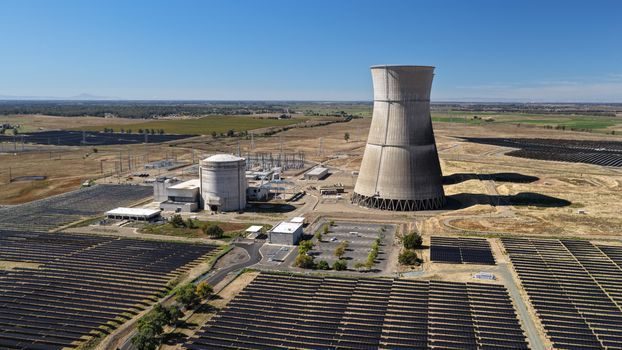
Reactor coolant pumps: minimum scope is the ability to manufacture, balance, and qualify the impeller to ASME Section III NB (or equivalent RCC-M in France, or HAF in China), plus a qualified seal-supplier chain and full-scale test loop access. China's Zhefu claims first-of-its-kind main-pump development in the domestic programme [S4]; Western OEM scope sits with the legacy pump-OEMs tied to original PWR/BWR builds. I&C and safety platforms: vendor must support 1E qualification, seismic testing to IEEE 344 / IEC 60980, and software V&V per IEEE 1012 (or IEC 60880 for software aspects of safety systems), with diversity-and-defence-in-depth typically demanded by the regulator for digital retrofits [S3]. Fuel-cycle services: enrichment capacity is concentrated in a small number of global firms; fuel fabrication scope splits between PWR and BWR bundle geometries; used-fuel handling is a tightly licensed service tier.
For balance-of-plant and grid-tie scope, the DC power supply category used in safety-related I&C racks carries IEEE 323 / IEC 62040 seismic and ageing-qualification requirements that mirror the broader safety-class component regime.
Limitations and failure modes of the current supply base
Three failure modes are visible mid-2026. First, single-source constraints on heavy forging and large casting capacity — reactor-vessel and steam-generator forgings route through a small global forging mill set; outages at any single forge slip new-build and replacement schedules by quarters. Second, qualified-welder and NDE-certificate holder demographics — nuclear QA programmes carry long qualification cycles, and workforce attrition in Western programmes is a documented ageing-management risk [S3]. Third, software-tool and FPGA obsolescence in digital I&C — platforms that achieved 1E qualification in the 2000s are now facing component EOL, and requalification timelines are running longer than original-vintage retrofits [S3].
A related signal: the wind-turbine transformer supply chain 2026 analysis flagged similar large-forge single-point risk for offshore-wind and grid step-up transformers — the same physical forging bottleneck services nuclear and large-renewables, so capacity draws compete rather than substitute.
Sourcing signals worth tracking into H2 2026
Trackable nodes: (1) Hualong One and ACP100/ACP200 export announcements from Chinese state-owned reactor vendors — each export package ships with a 60-80% domestic-content ratio target and pulls a defined Chinese vendor list [S7]; (2) NSA membership roster updates at the Nuclear Suppliers Association [S5]; (3) NRC and CNSC qualification-database updates for 1E digital I&C platforms, which signal new qualified suppliers entering the safety-class scope. A related cross-industry signal: the copper supply chain 2026 mid-year snapshot covers conductor and busbar cost drivers that feed into nuclear BoP cable and transformer scope, so copper-spread movements should be read alongside nuclear BoP sourcing decisions rather than treated as a separate variable.