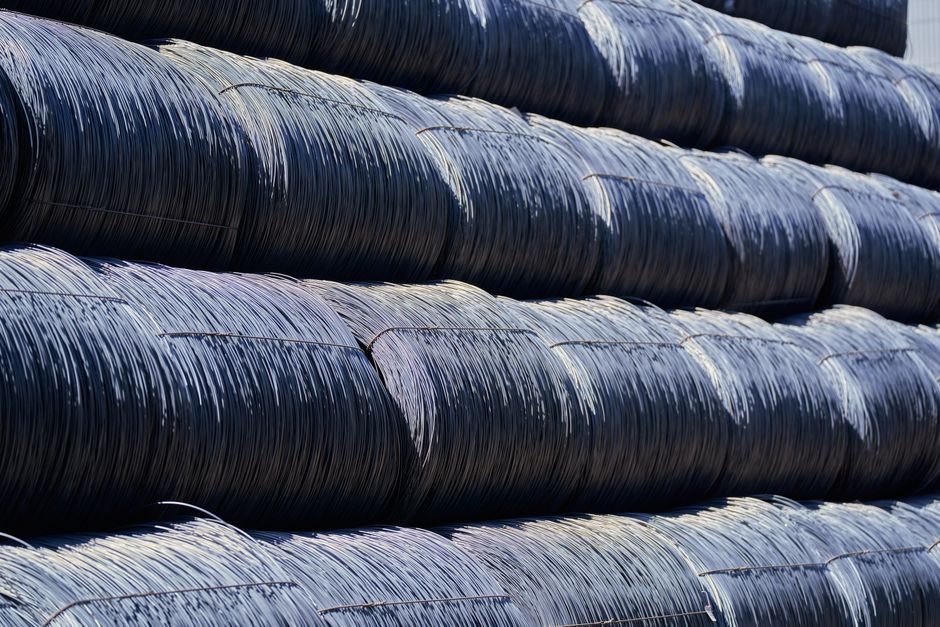
Copper supply chain analysis in 2026 is no longer just an LME and Codelco story: it is a stack of three observability layers — physical flow (concentrate, blister, cathode, rod, wire, magnet), software layer (SCRM, analytics, digital-twin platforms), and labour layer (analyst and manager compensation) — each with its own data cadence and its own S-curve of adoption.
For procurement, design and reliability engineers, the actionable question is not "is copper expensive today" but "where is my multi-tier visibility blind, and what is the marginal cost of closing it". This piece walks the mid-2026 evidence base — what the SCRM software market is actually shipping, what supply-chain talent costs, and how those numbers map onto industrial demand for copper material in transformers, motor windings, busbars and magnet wire.
Supply-Chain Risk Software: The 2026 Feature Baseline
Supply chain risk management software in 2026 converges on a recognisable feature stack: multi-tier supplier mapping, disruption event monitoring, what-if analysis on supplier sites, risk scoring, and disaster-recovery planning hooks [S7]. SourceForge's June 2026 ranking of SCRM platforms shows Z2Data-style "Risk Scores" — composite indices that combine financial, geographic and compliance signals — as a baseline expectation, not a premium add-on [S7].
For mid-size industrial buyers, the same feature set is being packaged for smaller procurement teams that cannot staff a dedicated Tier-2/Tier-3 mapping desk; SourceForge's June 2026 mid-market comparison lists filters tuned to that buyer profile (regional scope, ERP integration, alert latency) [S2]. The South America-specific shortlist, also refreshed in June 2026, emphasises regional disruption feeds — port strikes, water-rationing events in copper-belt regions, customs holds — alongside global SCRM features [S1].
Free-trial access to enterprise-grade SCRM has become standard in the segment: SourceForge's July 2026 "free trial" roundup covers platforms that previously required annual contracts above USD 50k [S9]. The practical effect for copper buyers is that pilots are now cheap and short — 30 to 60 days is enough to baseline a multi-tier cathode and rod supplier map before committing to a multi-year licence.
Supply-Chain Analytics: From Dashboard to Digital Thread
Supply chain analytics software in 2026 is defined by SourceForge as a "data-driven tool designed to optimize supply chain operations and enhance decision-making" that "collects and analyzes data from suppliers, warehouses, and logistics networks" [S4]. The category is splitting into two camps: descriptive dashboards (OTIF, inventory turns, lane-level freight cost) and prescriptive modules (re-order point optimisation, dynamic safety-stock, multi-echelon simulation).
The Sonatype 2026 State of the Software Supply Chain Report frames the broader trend as "machine scale": software supply chains in 2025 and into 2026 are no longer human-curated end-to-end, and the same dynamic is visible in physical copper flows where recyclate, scrap-blend ratios and trace-certificate handling are tracked programmatically rather than on spreadsheets [S8]. For a copper buyer, that means provenance data — mine of origin, smelter, refinery, ISO 14001 / ASI certifications — is increasingly delivered as a structured feed, not as a PDF certificate attached to a shipment.
For industrial sites that still operate on quarterly S&OP cycles, the practical recommendation from the 2026 analytics shortlist is to deploy analytics in two phases: first, instrument inbound cathode and rod lots with shipment-level identifiers; second, layer prescriptive re-order logic on top of that identifier stream. Skipping straight to the second phase without the first produces models that train on aggregated monthly data and miss the smelter-level disruption signal that matters most in tight cathode markets.
Labour Cost: What Supply-Chain Talent Actually Costs in 2026

PayScale's 2026 salary data puts the average Senior Supply Chain Manager base salary at USD 123,583, with a 10th-percentile base of USD 91,000, a median of USD 124,000 and a 90th-percentile of USD 159,000; total compensation including bonus and profit sharing ranges from USD 94,000 to USD 171,000 across 279 profiles [S3]. This is the price of a single experienced practitioner who can read a cathode shipment schedule, interrogate a smelter's energy bill, and still file a clean customs declaration.
For the more junior Supply Chain Analyst role, Coursera's 2026 salary guide anchors the entry point for graduates moving into procurement, planning and logistics analytics — the role that does the day-to-day data cleansing behind every modern SCRM deployment [S5]. The gap between analyst and senior-manager compensation is the wedge that determines how many eyes a copper buyer can put on multi-tier risk: in 2026 dollars, the spread is roughly USD 60k–80k fully loaded, which directly limits how many regional risk desks a mid-size fabricator or wire-drawer can run.
For industrial buyers building in-house SCRM capability rather than licensing it, the headcount math is unforgiving: at 2026 fully loaded senior-manager rates, a four-person regional risk desk costs roughly USD 0.5–0.7 million per year before software licences, which is one reason the 2026 SCRM market has tilted hard toward mid-market SaaS tiers with shared content libraries [S2][S3].
Industrial Demand: Where Copper Actually Pulls in 2026
Industrial copper demand in 2026 is dominated by five end-uses that map cleanly onto spec-driven selection guides: transformer windings (driven by grid build-out and the nuclear power upstream and downstream industry chain), motor windings and busbars (driven by industrial automation and HVAC upgrades), magnet wire for EV traction motors and industrial drives, rectifier and IGBT module substrates, and building wire for data-centre power distribution. The semiconductor and power-electronics adjacency matters because copper busbars, lead frames and DBC substrates all compete for the same rod and strip capacity — see the semiconductor supply 2026 legacy node allocation coverage and the IGBT price 2026 China rectifier quotes band for the parallel power-electronics cycle. [S1]
For melting and casting buyers, copper demand interacts with furnace selection — the melting furnace sizing and selection 2026 spec-first guide covers the holding and pouring capacity decisions that determine how much cathode a brass mill or copper-alloy foundry can absorb per shift. For wire-drawers, the rod-to-magnet-wire conversion ratio and annealer throughput are the binding constraints, not the LME front-month price.
For pump, gear and motor OEMs, the chain extends downstream: copper rotor bars in squirrel-cage induction motors, copper windings in hermetic compressors, and copper-alloy worm gear bushings all share the same wire-bar and billet feedstock. The 2026 worm gear reducer price and cost guide and the sump pump vs screw pump spec-driven selection 2026 coverage both reference motor and stator copper content as a direct material-cost line item, which is why cathode tightness shows up in OEM BOMs within one to two quarters.
What the 2026 Evidence Does Not Tell You

The 2026 evidence base for copper supply chain analysis is thin on three points engineers should flag before they act on it. First, the SCRM and analytics shortlists [S1][S2][S4][S7][S9] do not publish detection latency, false-positive rate or supplier-coverage depth — the three specs that actually determine whether a platform catches a smelter outage before your rod shipment is already two weeks late.
Third, none of the cited sources publish cathode, blister or rod price bands, treat-to-freight ratios, or smelter treatment-and-refining charges (TC/RC) for 2026 — those numbers must come from a separate LME, Fastmarkets or Asian Metal feed, not from a software-vendor comparison page.
The honest reading of the 2026 data is that the tooling layer is mature, the talent layer is expensive but well-documented, and the physical-flow layer is still reported on a lag. A spec-driven buyer should treat the SCRM and analytics platforms as the instrumentation layer, the salary data as the labour-cost ceiling on in-house analysis, and the demand-side coverage above as the cross-check on whether cathode tightness will show up in their own BOMs in Q3 or Q4 2026.
Trackable signals to watch into H2 2026: Sonatype's next State of the Software Supply Chain data drop (cadence is annual, so the 2027 report is the next hard data point) [S8]; SourceForge's quarterly refresh of the SCRM and analytics shortlists, which historically move on feature additions rather than vendor consolidation [S1][S2][S4][S7][S9]; and the September–October 2026 intake cycle for the MSc-level pipeline, which sets the 2027–2028 senior-manager supply curve [S6].
For component-level specifications, see dc power supply, and switching power supply.