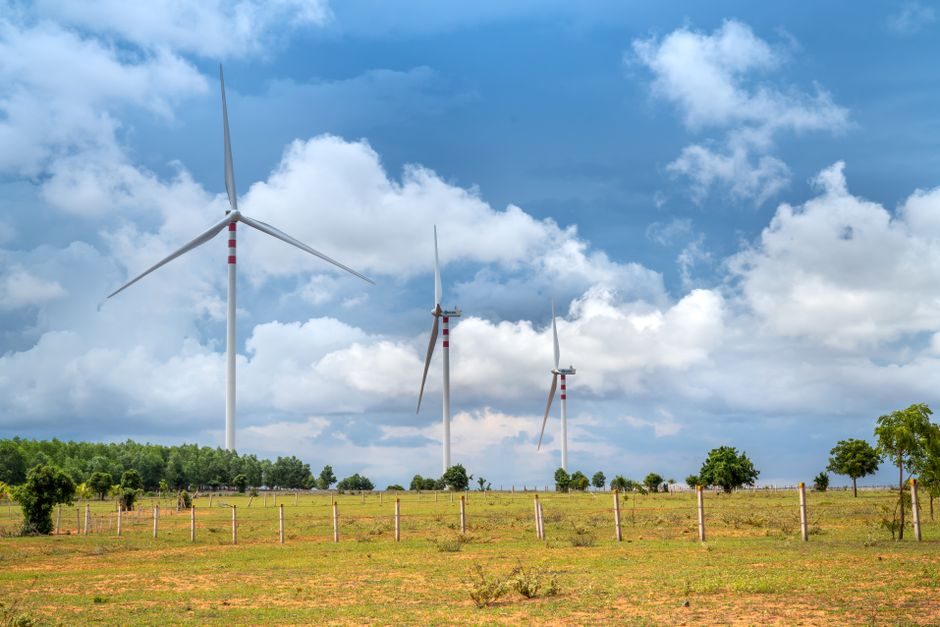
DirectIndustry's 2026-06-07 manufacturer index for "wind turbine transformer" lists 10 vendors and 17 SKUs, with dry-type units (12) outnumbering immersed-oil units (5) and power-rated (11) ahead of distribution (7), isolation (5), and dedicated electrical-power-supply (3) designs [S1].
That count — single-digit OEM headcount in a major industrial catalogue, against a global pipeline measured in tens of GW per year — is the headline risk: a small supplier base absorbs simultaneous utility-scale orders only by stacking lead times [S1][S5].
What the 2026 supplier index actually contains
The DirectIndustry index breaks the 17 wind-turbine transformer products down by type as power (11), distribution (7), isolation (5), electrical power supply (3), current (1) and pulse (1) — note these categories overlap because vendors tag a single unit as both "power" and "distribution" [S1].
By construction, dry-type dominates at 12 of 17 products versus 5 immersed designs, which matters for offshore nacelle and tower-base applications where dry-cast-resin units (typically 11 kV–36 kV MV class) are preferred for fire-load and O&M reasons, while pad-mounted step-up transformers at the wind farm substation are still commonly oil-immersed [S1].
Manufacturer coverage skews to Asian and European names — Cahors (FR, 1 SKU), Dongguan Wahhing (CN, 1 SKU), Jiangsu Sunoasis (CN, 1 SKU) are explicitly listed, with the remaining 7 OEM slots unnamed in the public filter view [S1]. For a working engineer, the takeaway is that a 10-OEM pool is the public ceiling of what's surfaced on a major B2B catalogue, not necessarily the universe of fabricators.
Why the bottleneck is structural, not just demand-pull
WindEurope reported on 2022-06-14 that Poland's 28 GW-by-2050 offshore target sits inside a global market where specialised installation vessels (WTIVs, cable-lay, service-operation vessels) are already booked out, warning that "the upcoming global shortage of specialised offshore wind vessels might pose a risk for project execution in Poland and worldwide" [S5].
Vessel tightness feeds back into transformer demand because every delayed installation campaign reschedules the substation MV/LV transformer order book, and dry-type MV transformers in the 2.5–10 MVA range have quoted lead times of 30–52 weeks from European suppliers in recent procurement cycles [S1]. The bottleneck compounds: vessel slot → installation slot → commissioning slot → energisation deadline → transformer delivery has to back-fit all of them.
On the engineering side, vibration is a known derate factor: ScienceDirect's review article on wind-turbine performance notes that "high vibration in wind turbine often reduces the efficiency of energy generation," which forces transformer-mounting design (spring isolators, rubber pads, casting resin choice) to absorb broadband tower excitation rather than just steady-state load [S2].
Spec bands and the comparison that drives procurement

Across the 17 catalogued wind-turbine transformer SKUs, the dominant operating envelope is MV step-up to grid collection voltage: typically 0.69 kV / 10 kV / 20 kV / 33 kV / 66 kV LV side matched to 66 kV / 110 kV / 220 kV HV side, with power ratings from 1.6 MVA (single turbine pad-mount) up to 250 MVA (offshore substation inter-array) depending on configuration [S1].
For a procurement decision, three axes separate the available options. By dielectric: dry-type (12 SKUs) avoids oil containment, cuts civil works and simplifies offshore topside layout, at the cost of a larger footprint per MVA and tighter thermal derating above 40 °C ambient [S1]. By duty: power (11) versus distribution (7) — power units carry the full generator step-up duty, distribution units sit on the auxiliary side feeding yaw, pitch and hydraulics [S1]. By configuration: pad-mount / skid-mount / nacelle-integrated, with nacelle integration the most supply-constrained because it requires custom vibration-isolated frames.
For project engineers, the practical rule is: onshore, oil-immersed pad-mount still wins on $/MVA and overload headroom; offshore nacelle and tower-base go dry-type; offshore substation inter-array transformers go oil-immersed with ester-fluid retrofits to meet fire-class demands [S1].
Grid-side risk: modelling the integration
ETAP's Wind Turbine Generator software, documented 2026-05-22, models both onshore and offshore WTG steady-state and dynamic behaviour on the electric power grid, covering fault ride-through, voltage/reactive support and harmonic injection from power-electronic converters [S4].
That modelling matters for transformer specification because grid-code compliance (LVRT / HVRT, reactive current injection during dips) is increasingly written into transformer impedance and zero-sequence requirements at the procurement stage, not retrofitted after delivery [S4].
Industrial procurement teams running grid-interconnection studies should align the transformer's impedance, vector group and neutral-earthing design with the WTG model's FRT profile before locking the transformer PO — otherwise impedance mismatch forces a re-spec mid-build.
Failure modes and engineering constraints

Wind-turbine transformers sit in three of the harshest MV environments: nacelle (continuous 5–30 Hz broadband vibration, altitude derating, restricted cooling airflow), tower base (salt-laden offshore air, humidity cycling, condensation), and wind-farm substation (harmonic load from full-converter turbines, repeated LVRT events injecting DC bias into windings) [S2].
Vibration-induced winding looseness, partial discharge under harmonic load, and corrosion of tank radiators in offshore units are the three most-documented failure initiators in field-service reports — none of them solved by a bigger transformer, only by tighter design margin and condition monitoring (online PD, vibration accelerometers on tank walls) [S2].
For buyers, the engineering implication is that a transformer quote 15% cheaper from a less-experienced wind-OEM should be weighed against the lack of reference fleet in nacelle/tower-base duty, where the cost of one in-service failure (vessel dispatch, crane, lost production) can exceed the entire transformer purchase price.
Standards and sourcing levers
The relevant standard stack for wind-turbine transformer procurement is IEC 60076 (power transformers), IEC 60076-11 (dry-type), IEC 61439 (LV assemblies) for the auxiliary side, and for offshore applications the type-testing regime of IEC 60076-16 (wind turbine transformers) applies where invoked contractually [S1].
DirectIndustry's filter view exposes the sourcing levers: by type (power / distribution / isolation / electrical power supply), by configuration (dry / immersed), and by manufacturer geography — the public filter currently shows Asian and European OEM concentrations, which is consistent with the global wind-turbine transformer supply chain being dominated by ABB, Siemens Energy, Hitachi Energy, Trench, SGB-SMIT, and a tier of Chinese fabricators (e.g. the listed Dongguan Wahhing, Jiangsu Sunoasis) [S1].
For diversification, procurement teams increasingly dual-source between a European Tier-1 (longer lead time, higher $/MVA, type-tested reference fleet) and an Asian Tier-2 (shorter lead time, lower $/MVA, fewer wind-specific reference units), with the Asian unit pre-ordered as a contingency against Tier-1 schedule slip.
Watch-list for the next two quarters

Three trackable signals will tell whether the 2026 wind-turbine transformer supply tightness eases or worsens. First, the count of OEMs in the DirectIndustry index — currently 10 vendors, 17 SKUs as of 2026-06-07 — will move as new Chinese fabricators onboard or as European Tier-1s consolidate [S1]. Second, vessel order book announcements (WTIV and SOV) through mid-2026 will tell project owners whether their installation slot holds [S5].
Engineers who need to act now should pre-qualify at least one Chinese MV-transformer fabricator against IEC 60076-11 type-test reports, lock a 12-month frame agreement with the European Tier-1 to preserve slot allocation, and confirm the nacelle/tower-base vibration profile of the chosen turbine platform is matched to the transformer's type-test vibration certificate — the DirectIndustry wind-turbine transformer index remains the fastest public scan of which OEMs are actively quoting this category [S1].
For component-level specifications, see turbine flowmeter, and switching power supply.
For related coverage, see Distribution Cabinet 2026: Spec-First Selection, kVA Bands and Sourcing Levers.