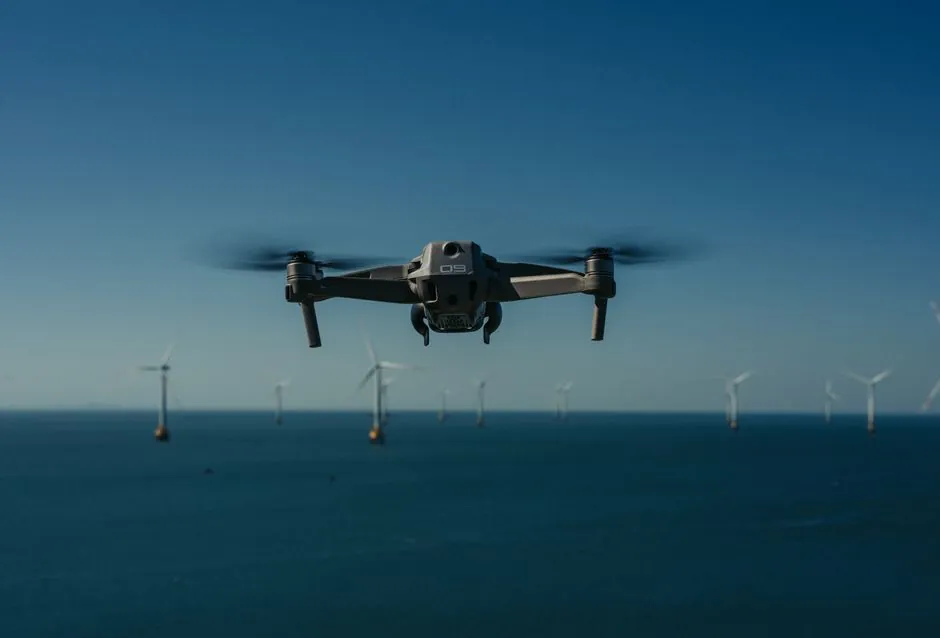
Offshore wind procurement has shifted from a price-driven award to a four-axis operating model: lease pipeline screening, supply-chain bottleneck mapping, contract structure with indexed pricing, and workforce/port readiness, as documented across DOE, NYSERDA, Carbon Trust, and Vattenfall postings in 2026 [S1][S2][S3][S4].
U.S. East Coast project timelines remain under pressure: the New Bedford solicitation's new contract completion milestone is now set to January 29, 2027, putting the process at least two and a half years behind the original schedule [S7]. State-level predevelopment support programs, such as NYSERDA's 2026 solicitation track, are explicitly exploring "new or modified approaches" to keep a steady pipeline alive [S2].
Regional Pipeline Screening: East Coast, Nova Scotia, and Taiwan
The U.S. Department of Energy's Offshore Wind Leasing and Procurement Schedule consolidates state-by-state lease areas and estimated procurement timelines for the East Coast, giving buyers a single reference to align solicitation calendars with foundation, cable, and substation fabrication slots [S1]. On the U.S. East Coast, lease status now drives procurement: federal action has halted new offshore wind leases, paused construction on key projects, and triggered sweeping permit reviews, putting billions of investment and thousands of clean-energy jobs in limbo per Waterfront Alliance advocacy briefings [S5].
Outside the U.S., Nova Scotia's strategy has cleared four early-gate items: designation of the first four offshore Wind Energy Areas, a launched prequalification process, a published revenue framework, and initiated seabed leasing, all of which a procurement team can use as a 12-18 month lead-time signal for monopile and dynamic-array cable RFPs [S8]. In the Asia-Pacific region, the Carbon Trust's March 18, 2026 financing report maps how Taiwan is scaling offshore wind investment structures, and is directly relevant to procurement teams sizing local-content thresholds and bankability requirements for WTG, jacket, and subsea cable packages [S3].
Procurement Role and Process Boundaries
Vattenfall's July 9, 2026 job posting for a Procurement Manager in Offshore Wind (Hamburg, Kolding, or Amsterdam) is the cleanest public definition of the role's scope in 2026: accountable for the full procurement process "from setting the Procurement Strategy to Preferred Supplier Selection and Contract Award," including Part 1 ITT material and Part 2 Conditions of Contract, with technical counterpart owning Part 3 (Employer's Requirements) [S4]. Minimum experience is 5 years in procurement, with maritime/offshore logistics and project management flagged as advantages [S4].
Selection criteria for preferred suppliers are explicit and uniform: transparency, equal treatment, and fair competition, evaluated by the Procurement Manager as lead negotiator and single point of contact toward suppliers [S4]. For a buyer's organization, this means the RFQ scoring matrix should map 1:1 to those three principles, with weighted gates for fabrication capacity, vessel availability, and financial health, not just unit price.
Supply-Chain Bottleneck Mapping and Vendor Diversification
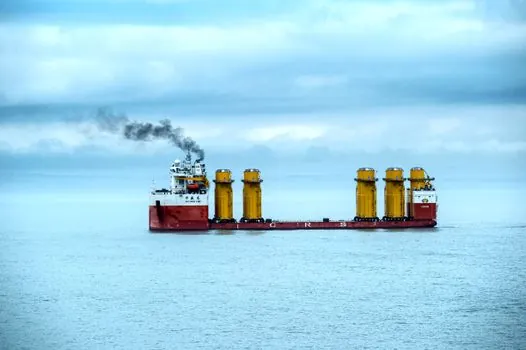
Developers building a 2026-2028 procurement strategy are now expected to map manufacturing and transportation bottlenecks per project, not per region, as illustrated in a March 23, 2026 Spinergie case study where a developer used supply-chain market intelligence to avoid fabrication and vessel queues before locking preferred suppliers [S6]. Waterfront Alliance's 2026 issue brief pegs industry-wide cost increases at up to 50% in materials, labor, and financing, alongside port and grid bottlenecks, which raises the value of dual-sourcing monopiles, towers, and 66 kV/220 kV inter-array cables [S5].
Procurement teams should treat the following categories as the highest-bottleneck packages in 2026: large-diameter monopiles and jackets, factory-floor tower sections, HV subsea cable (both 66 kV inter-array and 220 kV export), and installation-window vessels such as wind turbine installation vessels (WTIVs) and cable-lay barges. A useful operating rule is to qualify at least two vendors per category in different geographic clusters (e.g., one European fabricator and one Asian fabricator for towers) to absorb port congestion and currency swings.
Contract Structure: Indexation, Milestones, and Risk Allocation
Contract structure in 2026 is converging on three levers: commodity and FX indexation clauses, milestone-based payment schedules tied to fabrication gates (steel cut, loadout, installation), and shared-risk mechanisms for weather delay and vessel standby. Vattenfall's ITT/CoC split, where the Procurement Manager owns Part 1 (ITT) and Part 2 (Conditions of Contract) and the technical counterpart owns Part 3 (Employer's Requirements), is a working template for separating commercial and technical governance cleanly [S4].
Indexation should cover at minimum: steel plate (e.g., hot-rolled coil reference), copper conductor, and FX pairs relevant to the vendor's billing currency. Milestones should be SMART with holdback retention released at mechanical completion and during the warranty period, not at contract signature. Weather and vessel standby risk should be quantified against P50/P90 wind-wave windows for the specific site, with shared bands and capped liabilities on each side.
Standards, Compliance, and Cross-Reference to Industrial Catalogs
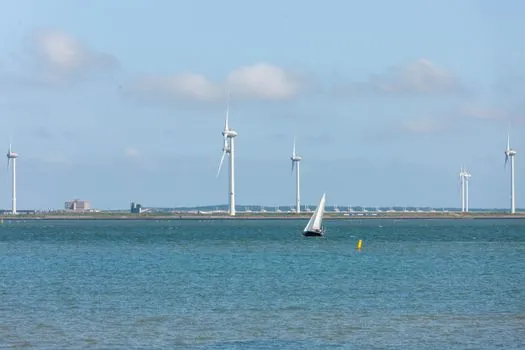
Offshore wind procurement packages overlap directly with industrial component standards covered on this site: pressure transmitters for hydraulic pitch and yaw systems, flow meters for cooling and HVAC loops on the WTG nacelle, industrial valves for the seawater lift pump and firewater systems, and linear guides and crossed roller guides for blade root and pitch bearing actuators. For hazardous-area enclosures on offshore substations, pressure sensors specified for IEC 60079-classified zones should be cross-checked against the project's ATEX or IECEx certificate pack. [S5]
Compliance documentation per major package should include: ISO 9001 quality system certificates, ISO 14001 environmental, ISO 45001 occupational health, and for subsea and structural welds, EN 1090 execution class certificates matching the designer's specification. Cable packages should reference CIGRE TB 490 / TB 852 for HV submarine cable systems, and any supplier claiming type-test compliance must furnish the actual test report reference, not a generic datasheet citation.
Workforce, Port Readiness, and Community Commitments
Workforce and port-readiness clauses are now bid-scored in U.S. state solicitations: Waterfront Alliance calls out intentional planning for engineering, welding, environmental science, and maritime logistics roles, with explicit targeting of frontline and environmental-justice communities, and investment in port modernization, interconnection points, and transmission systems [S5]. Nova Scotia's framework similarly pairs lease progress with a launched prequalification process that procurement teams should mirror in their own vendor prequalification questionnaires [S8].
For a project execution plan, three trackable signals for the next 12 months: (1) the January 29, 2027 New Bedford contract completion milestone and any further slippage [S7]; (2) the NYSERDA 2026 predevelopment solicitation outcomes and any "new or modified approaches" formally adopted [S2]; (3) the first Nova Scotia seabed lease awards under the four designated Wind Energy Areas, which will set the lead time for downstream foundation and cable RFPs [S8]. For a related read on production-line planning that dovetails with this procurement plan, see the Offshore Wind Production Line Design spec map.