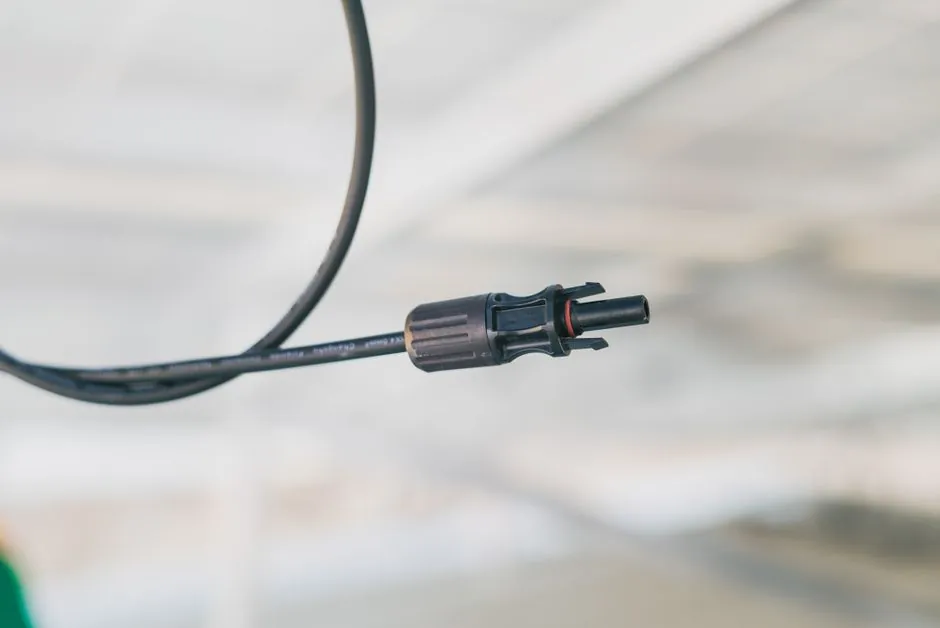
A spec-first connector procurement strategy treats the connector as a multi-variable decision, not a commodity line item: electrical rating, IP class, mating cycle count, contact plating, and supplier documentation all enter the supplier scorecard before unit price is negotiated [S3].
For electronics teams serving medical, automotive, industrial automation, and aerospace programs, the connector portfolio spans board-to-board, wire-to-board, FPC/FFC, automotive-grade, RF/high-speed, and circular/rectangular ruggedized families, each carrying different qualification regimes and total-cost profiles [S3].
Split Sourcing From Procurement Execution
Sourcing answers who to buy from, at what price, under which contract terms, and at what risk level; procurement is the end-to-end management of purchasing from need identification through final supplier payment [S1]. Treating them as the same function creates bottlenecks and maverick spend, so the 2026 playbook keeps them as connected but separate roles with explicit handoffs [S1].
A standard sourcing workflow runs spend analysis, market research, strategy development (single vs. multi-source, global vs. local), RFx, evaluation and negotiation, award and contracting, then supplier transition and onboarding; the cadence is set by contract length and market volatility rather than PO volume [S1]. Procurement then operationalizes that decision through requisitions, approvals, ordering, receiving, and 3-way match against PO, receipt, and invoice.
Map The Application Envelope Before The Catalog Opens
Pre-selection discipline: capture installation space, dust/humidity/corrosion exposure, working current, mating frequency, and docking port geometry before comparing any part numbers, because those parameters collapse the candidate set and prevent blind spec comparison [S2].
Operating-condition adaptation is a hard gate: outdoor or washdown environments call for IP65 or higher sealing per IEC 60529, with IP67 used for dust-tight and temporary immersion, IP68 for prolonged immersion, and IP69K for high-pressure, high-temperature washdown cycles common in food, rail, and automotive testing [S2][S4]. Corrosive atmospheres require corrosion-resistant plating rather than standard tin, and mating-cycle targets step up sharply with application: factory automation typically needs 1,000–5,000 cycles while military and aerospace commonly specify 5,000–10,000+ cycles [S4].
Current load matching must derate for temperature: connector current carrying capacity falls as ambient temperature rises, so high-temperature environments require either a lower chosen rated current or a connector with a stronger thermal path [S2]. For high-frequency docking on automated lines, the nominal mating-cycle rating is evaluated against projected usage frequency to estimate service life, not used as a marketing label [S2].
Compare Connector Families Against Decision Criteria
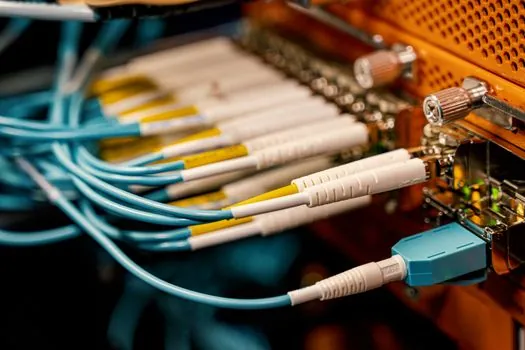
Different connector families win on different axes, and the choice cascades into sourcing complexity, qualification cost, and field-failure risk: [S4]
- Circular connectors: rugged coupling, high sealing integrity, used in aerospace, medical, and heavy industrial; benchmark standards include IEC 60529 IP code and MIL-DTL-38999 for high-end applications [S4].<br/> - Rectangular/board-to-wire: compact footprints, standardized pitch families, dominate harness assemblies and equipment panels, with the broadest supplier base and shortest lead times [S5].<br/> - RF/high-frequency: coaxial and multi-port, judged on shielding effectiveness, insertion loss, return loss, and impedance stability across temperature [S5].<br/> - USB/HDMI/CAN/LVDS and data connectors: high-speed interconnects where compatibility with cable assemblies, backplane interfaces, and ruggedized variants drives the spec [S5].<br/> - Micro/nano: small form factor for wearables and mobile, where mating cycles, tactile feedback, and mechanical tolerance dictate supplier selection [S5].
For signal-path contacts, gold plating reduces contact resistance and resists fretting corrosion; power contacts more often use silver or tin plating where current density and cost dominate [S4]. That single plating decision changes both the unit cost curve and the supplier shortlist, which is why it belongs in the sourcing stage, not in procurement.
Build A Supplier Scorecard That Goes Beyond Unit Price
Supplier qualification for connectors is denser than for most electromechanical commodities: the scorecard should score price competitiveness, lead-time reliability, part availability, defect rate and FIRST ARTICLE acceptance, packaging standards, after-sales support, plus ESG and supplier-diversity metrics, with the weights tuned to program criticality [S3].
Declared IP rating tests, material certificates covering RoHS and REACH, and quality certifications such as IATF 16949 for automotive and IRIS for rail are baseline documentary evidence; sample parts must then be tested under the buyer's own environmental profile, not only the supplier's catalog claims [S4]. Contracts should bind suppliers to change-control notification, long-term supply assurances, and defined mating-cycle and plating specifications, with a single source of truth for datasheets and mechanical drawings to stop downstream misinterpretation [S3][S5].
Total cost of ownership, not piece price, is the real lever: freight, duties, handling, obsolescence, repair, returns, and warranty support routinely exceed connector unit cost over a program life, and obsolescence risk is the most under-modeled line item for connector BOMs [S3].
Decide Single-Source, Dual-Source, And Where To Localize
Sourcing strategy for connectors typically splits the portfolio: strategic parts (long-lifecycle, design-in, qualified) get a primary strategic supplier plus a qualified second source for risk-sharing; preferred parts run on a smaller approved-vendor list with quarterly business reviews; transactional parts stay on spot or catalog purchasing for price leverage [S3].
Global vs. local is decided by program lifecycle, not by default: local suppliers compress lead time and simplify RMAs but may not carry MIL-DTL-38999 or IATF 16949 depth; Asian and European sources typically offer broader catalog depth and price advantage for high-volume rectangular and board-to-wire families [S3][S5]. Capturing alternate media (second color code, alternate plating) on the BOM is a low-cost hedge that preserves second-source flexibility without a redesign [S3].
For programs entering volume, formalize supplier onboarding, standardize the BOM library around approved part numbers, and invest in a curated catalog so engineering and procurement pull from the same qualified set rather than spinning up new suppliers per project [S3].
Field Failure Modes And How The Spec Prevents Them
The most expensive connector failures are intermittent: oxidized contact surfaces under vibration, seal failures that admit water during washdown, and contact wear past the rated mating cycle [S4]. Each maps back to a spec line: plating material and thickness, IP class with the matching IEC 60529 test evidence, and a mating-cycle rating validated against the real mating frequency [S2][S4].
Upfront spend on higher IP class and metal-shell construction pays back in reduced field service time and spare-part variety; the trade-off is documented at the sourcing stage, not discovered in warranty data [S4]. For pressure-wash or sterilization environments, autoclave resistance and IP69K test reports should be requested as part of the supplier evidence package, not assumed from the IP code alone [S4].
Trackable Signals For The Next Procurement Cycle

Verify IATF 16949 scope statement, IRIS certification, and RoHS/REACH test report currency on each strategic supplier before the next RFx; request FIRST ARTICLE inspection reports and 12-month rolling defect-rate PPM for the prior period [S3][S4].
Watch connector obsolescence notices and supplier change-control bulletins on a monthly cadence, since connector EOL is the most common hidden driver of last-time-buy costs in long-lifecycle programs [S3]. Re-qualify any second source whose last production lot is older than 24 months, and re-test sample parts under your environmental profile rather than relying on the supplier's catalog [S4]. For programs scaling into offshore wind production line design or laser profile scanner compatibility deployments, the same connector scorecard disciplines apply, with cable assembly sourcing handled through a global sourcing framework for cable connectors when offshore volume tips the freight math.
Spec-level background on the components involved: linear guide, crossed roller guide, and pressure transmitter.