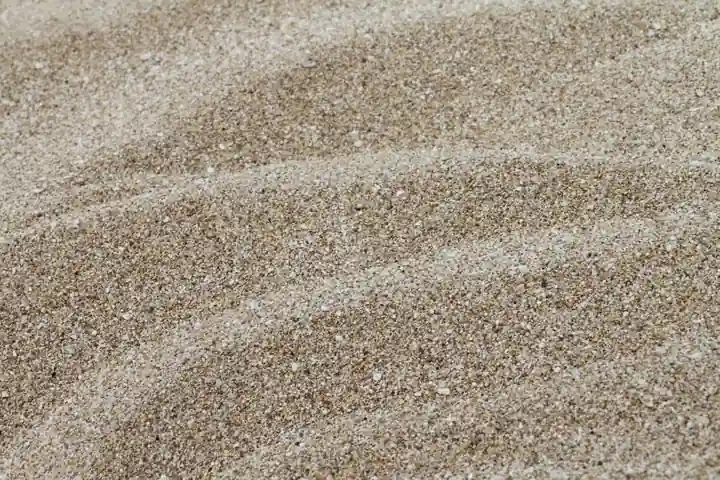
Olivine sand (forsterite Mg2SiO4 / fayalite Fe2SiO4, ~90/10) is the standard technical choice for manganese steel castings because silica's free SiO2 reacts with MnO from the melt to form MnSiO3 slag, producing burn-on and penetration defects [S1][S6]. Metso Steel Foundry in Prerov, Czech Republic specified olivine bonded with the FENOTEC alkaline phenolic ester binder on a unit-sand system when it scaled from 5,000 to 16,000 tonnes/year in 2009, targeting castings from 300 kg up to 5 tonnes [S1].
For non-manganese work, silica sand remains the default: cheaper, more uniformly available, and compatible with most acidic or neutral binder systems [S2]. Olivine is the second-most-expensive common foundry sand after zircon, and its pH 9 to 10 chemistry rules out several acid-catalysed binder families [S1][S2]. The decision therefore hinges on whether the casting alloy is manganese-bearing, the mould system is chemically bonded, and the foundry can run sand reclamation at a high enough ratio to absorb olivine's price premium.
Why MnO/SiO2 Reaction Forces the Switch
At the metal-mould interface, free SiO2 on silica grain surfaces reacts with MnO reduced from the molten Hadfield-grade steel to form a low-melting MnSiO3 (rhodonite) slag that locks sand grains to the casting surface, producing classic burn-on and mechanical penetration [S1][S6]. Tani et al. (1987) showed that high-manganese cast steel did not penetrate silica moulds at low ferrostatic pressures, but manganese did coat olivine grains without forming the silicate slag, which is why the olivine surface stays clean [S6].
Olivine's forsterite matrix supplies no free silica to react; MgO is already tied up in the Mg2SiO4 lattice, so there is no path to MnSiO3 formation under standard pouring conditions [S1]. The chemistry also explains the second benefit: olivine's thermal expansion is markedly lower than silica's, and its thermal-shock resistance reduces the expansion-related veining and scabbing that drive fettling cost on heavy steel castings [S1][S8]. Reported metal-flow improvement for synthetic olivine over silica or natural olivine is up to 45% further flow length in non-ferrous systems, illustrating how much heat the olivine mould retains versus a silica mould [S5] (2026-06).
Selection Criteria: Olivine vs Silica Decision Matrix
Use the matrix below to score a candidate mould system. The four criteria are the ones the source material flags as decisive for manganese steel work, ranked by impact on defect rate and cost-to-pour. [S1]
1) Alloy Mn content. Olivine is preferred for Mn-bearing steels (typical Hadfield 11 to 14% Mn) because free SiO2 forms MnSiO3 burn-on [S1][S6]. Silica is acceptable for low-Mn carbon and low-alloy steel where the MnO activity stays low; most iron and non-ferrous pours still use silica [S2].
2) Mould binder compatibility. Olivine's pH 9 to 10 (alkali) is incompatible with several acid-curing phenolic and furan systems; alkaline phenolic ester (FENOTEC) and certain inorganic systems are the proven pairings [S1]. Silica is compatible across greensand, sodium silicate CO2, furan, phenolic, and shell processes, which is why foundries standardise on it for mixed alloy work [S2][S4].
3) Thermal behaviour. Olivine has lower thermal expansion, lower thermal conductivity, and higher thermal-shock resistance than silica, reducing veining, scabbing, and metal penetration on heavy sections [S1][S7][S8]. Silica's higher conductivity is helpful where fast skin formation is wanted on thin-wall iron castings, but it aggravates hot-tearing and burn-on on heavy manganese steel sections [S1][S2].
4) Sand cost and reclamation ratio. Olivine is the most expensive common foundry sand after zircon; cost recovery depends on a sand reclamation unit running at 90% reuse or better, with makeup sand at roughly 10% of sand-to-metal ratio in a fully synthetic-olivine system [S2][S5]. Silica's low unit cost and well-understood attrition behaviour let it tolerate lower reclamation efficiency, but disposal cost and respirable crystalline silica regulation are pushing foundries to higher reclamation rates anyway [S1][S2].
Net rule of thumb from the sources: if the alloy is manganese steel, pour through a chemically bonded olivine system with thermal reclamation; if it is anything else, default to silica and choose the binder around it. Badger Alloys (Milwaukee, WI) describes olivine as effectively restricted to aluminium and manganese-steel pours for cost and chemistry reasons [S2].
Operating Envelope: Grain Size, pH, and Reclamation
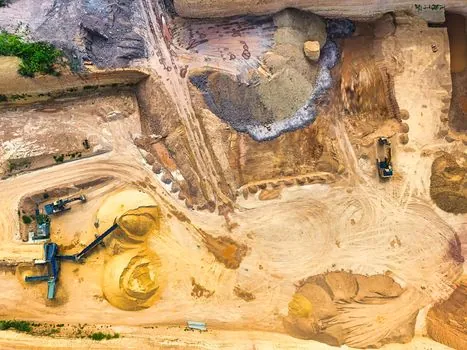
Olivine is sold at AFS 16, 45, 75, and 120 grain fineness, with 3000 lb super-sacks and 50 lb bag options typical for the North American distribution channel [S3]. At pH 9 to 10 the grain surface is basic, which is why Metso selected the FENOTEC alkaline phenolic ester system (introduced to the foundry market roughly 35 years ago) and combined it with a multi-stage sand reclamation unit: primary and secondary attrition, then thermal reclamation, sized to keep the unit-sand loop closed on a 16,000 t/year foundry [S1].
Olivine's angular grain shape and poor grain-size distribution push binder demand up relative to rounded silica, so the sand mixer and muller sequence must be calibrated for higher binder addition and tighter compaction control [S1]. Synthetic olivine (engineered from high-purity ore) offers higher durability than natural olivine or silica: the manufacturer cites sand additions controlled at 10% of the sand-to-metal ratio in a full synthetic-olivine system, with reduced fines generation and lower binder consumption [S5] (2026-06). Natural olivine can carry variable iron oxide, chromite, clay minerals, and trace contaminants that drive gas evolution and surface reactions in molten aluminium; the same impurity sensitivity applies, with different symptoms, on manganese steel [S3][S5].
Defect Modes and Failure Cases
On silica moulds pouring manganese steel, the dominant failure modes include veining from silica's high thermal expansion, metal penetration, and burn-on, each of which is reduced when olivine sand is used instead [S1][S5][S6][S8]. Reliance Foundry's 2018 reference notes that olivine plus manganese gave a good casting finish and minimal thermal expansion, but warns that olivine's tensile strength is modest, so cores that need high as-baked or cured strength still trend toward silica or zircon [S4] (2018-04).
On olivine systems the failure modes shift. With acidic binders, the alkali surface neutralises the catalyst and the bond never develops, so the mould collapses on stripping; this is the main reason foundries restrict olivine to alkaline phenolic ester, silicate, or selected inorganic chemistries [S1]. Poor compaction from angular grains drives edge-erosion and rat-tailing on high-velocity pours, while variable natural-ore quality can introduce chromite or iron-oxide inclusions that show up as slag patches on the casting surface [S1][S5]. Over-reclamation without thermal stages burns out the binder residue but also fractures the forsterite grains, shifting the AFS distribution finer and raising binder demand, which is why Metso built the loop with primary attrition, secondary attrition, and thermal stages in series [S1].
Use Cases and Application Boundaries
Olivine is the right call for: Hadfield-grade (11 to 14% Mn) crusher liners, jaw plates, cone crusher parts, grinding mill liners, and Mn-steel railway crossings, which is the exact product mix at Metso Steel Foundry (300 kg to 5 t) [S1]. Synthetic olivine is also specified for high-end aluminium castings where dimensional accuracy and surface finish matter, and for manganese steel where foundries can amortise the sand cost via thermal sand reclamation [S3][S5].
Silica remains the right call for: general iron and non-ferrous work, greensand systems using bentonite (where the acidic silica surface activates the clay bond), and any mould line that switches alloys frequently, because silica tolerates a wider binder window than olivine [S2][S4]. For high-alloy non-ferrous work that needs better surface than silica, zircon or ceramic (aluminium oxide) sands are the usual step up, with zircon priced above olivine and ceramic above zircon [S2]. Heavy steel sections outside the Mn alloy range can also be poured in silica if the foundry accepts higher fettling cost and uses a zircon or chromite facing on the working face [S2].
Integration with the Mould Line and Process Control
Specifying olivine is not a drop-in for silica: the sand mixer must deliver enough compaction for angular olivine grains, the binder pump must hold the alkaline phenolic ester ratio within tight limits, and the sand reclamation unit must include thermal capability, not just attrition, to keep the unit sand's AFS and LOI stable over thousands of cycles [S1][S5]. The Mould and core line at Metso, built around an IMF fast loop moulding system, is the reference layout for foundries targeting >10,000 t/year of manganese steel castings [S1].
Spec writers should also pin the olivine chemistry to the forsterite / fayalite ~90/10 ratio rather than generic "Mg-Fe silicate" wording, because ore-source variability is the single biggest cause of inconsistent casting finish and the most common reason olivine is blamed for problems that are actually raw-ore variability [S1][S5]. For foundries standardising on a single unit sand, this is the lever that decides whether olivine pays back versus a cheaper silica line, and it ties directly to the broader foundry engineering choices covered in process-side references like this normalizing vs full-annealing guide for carbon steel castings and the regulatory framing in NESHAP Subpart EEEEE cupola emission limits.
Track, for the next planning cycle, the published AFS grain-distribution certificates from the olivine supplier, the binder-cured strength and pH trend on the unit-sand loop, and the thermal-reclamation throughput, because each one is a leading indicator of the MnSiO3 burn-on rate the foundry is trying to eliminate.
For component-level specifications, see sand cooler.