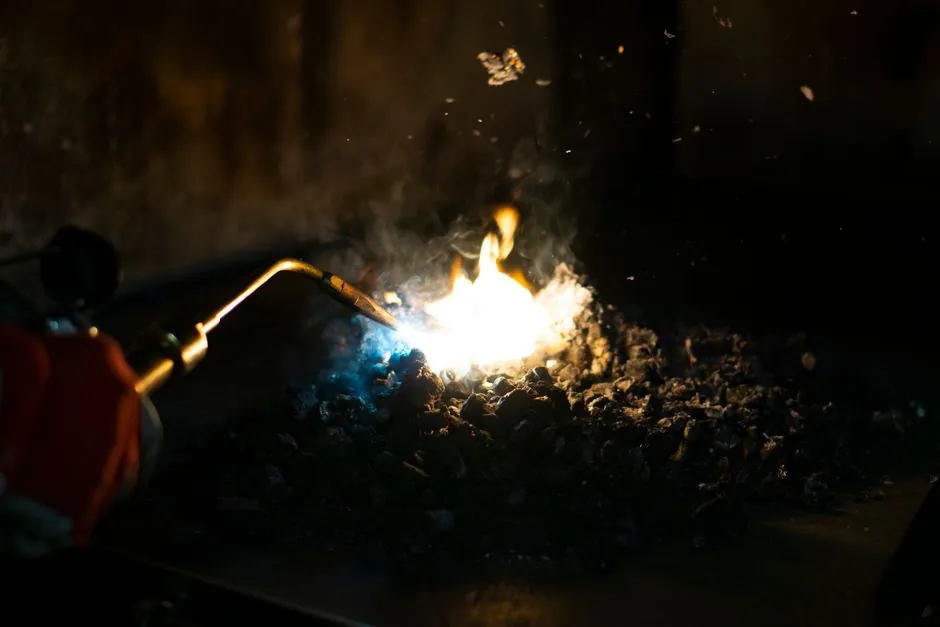
40 CFR Part 63 Subpart EEEEE, the National Emission Standards for Hazardous Air Pollutants (NESHAP) for iron and steel foundries, requires that cupola metal melting furnaces at major sources must not discharge listed volatile organic and metal HAP above the numerical limits set in § 63.7690, with compliance for existing sources due no later than April 23, 2007 [S1][S4].
A foundry is a major source of HAP if it emits, or has the potential to emit, any single HAP at 10 tons per year or more, or any combination of HAP at 25 tons per year or more, and the rule then covers emissions from metal melting furnaces, scrap preheaters, pouring areas, automated shakeout lines, mold and core making lines, and fugitive emissions from foundry operations [S1].
Applicability Thresholds and Compliance Dates
The applicability threshold is binary: a foundry triggers Subpart EEEEE only when it meets the 10/25 tpy single/combination HAP major-source test, otherwise the facility is treated as an area source and is not subject to the major-source emission limits in § 63.7690 [S1][S4].
For existing affected sources (those that commenced construction or reconstruction before December 23, 2002), compliance with the emissions limitations, work practice standards, and operation and maintenance requirements is required no later than April 23, 2007, while the work practice standards under § 63.7700(b) or (c) had to be met by April 22, 2005 [S1].
New affected sources (construction or reconstruction on or after December 23, 2002) with initial startup on or before April 22, 2004 had to comply by that date, while units with initial startup after April 22, 2004 must comply upon initial startup [S1].
If a foundry is an area source that becomes a major source of HAP, the facility must meet the requirements of § 63.6(c)(5), and all affected sources must also meet the notification and schedule requirements in § 63.7750, with several notifications due before the applicable compliance date [S1][S4].
Cupola-Specific HAP Emission Limits
Subpart EEEEE § 63.7690 establishes separate numerical emission limits for each regulated emission point at an iron and steel foundry, and § 63.7690(a)(2) specifically sets the HAP emissions limits for cupola metal melting furnaces at existing iron and steel foundries [S2][S4].
The cupola provision is part of a wider structure covering metal melting furnaces in general: § 63.7690(a)(1) through (11) set limits for individual emission points, including cupolas, electric arc furnaces, and other melting units, with separate limits for scrap preheaters, pouring areas, automated conveyor and pallet cooling lines, automated shakeout lines, and mold and core making lines [S1].
The 2004 final rule was amended on May 20, 2005 to clarify the work practice and compliance assurance provisions in §§ 63.7700, 63.7735, and 63.7765, and was further amended by the 2008 final rule (73 FR 7218) and the 2020 risk and technology review final rule (85 FR 56080), which did not impose new numerical emission limits on iron or steel foundries but removed the exemption for exceedances of emission limits during periods of startup, shutdown, and malfunction [S3][S5][S8].
Pollutants Targeted by the Foundry NESHAP
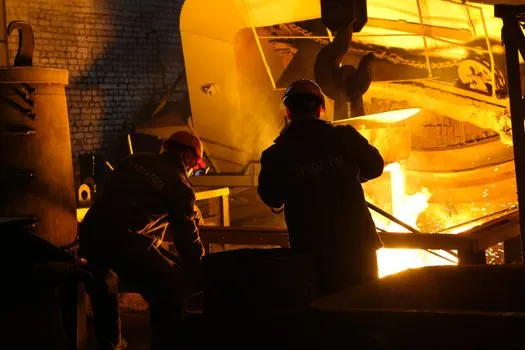
For foundries producing low-alloy metal castings, the dominant metal HAP are lead and manganese, with smaller contributions from cadmium, chromium, and nickel, while for high-alloy and stainless steel casting production, chromium and nickel become the principal metal HAP [S3].
Organic HAP listed by EPA for iron and steel foundries include acetophenone, benzene, cumene, dibenzofurans, dioxins, formaldehyde, methanol, naphthalene, phenol, pyrene, toluene, triethylamine, and xylene, with documented adverse health effects ranging from cancer to chronic respiratory, reproductive, and central nervous system disorders [S3].
EPA's impact estimate for the rule is 580 tons per year of HAP reduction and 1,850 tons per year of other pollutant reduction from the iron and steel foundry source category, expressed at the program-rule level rather than as a per-cupola allocation [S3].
Cupola Furnace Operation in Foundry Context
A cupola furnace is the dominant iron-melting unit in many gray and ductile iron foundries, and it is the specific metal melting furnace type whose emissions are bounded by § 63.7690(a)(2); because the rulemaking treats cupola emissions as a category-level limit, the compliance strategy at a given plant is to demonstrate that the cupola stack concentration and mass rate stay below the HAP limits in Table 1 of § 63.7690 while the cupola is operating within the established operating limits. [S1]
Emission control on cupolas is typically achieved with afterburners, fabric filters, and wet scrubbers, and the rule's work practice requirements in § 63.7700(b) and (c) set behavior-based obligations such as inspection frequency, parameter monitoring, and recordkeeping that supplement the numerical HAP limits on the cupola itself [S1].
Subpart EEEEE compliance is layered on top of any applicable state-level rules, and the Illinois EPA MACT training material for the iron and steel foundry source category treats the May 20, 2005 amendments as the working compliance baseline, with the 2008 and 2020 amendments folded in [S5].
Area Source Rule, Continuous Compliance, and Related Standards
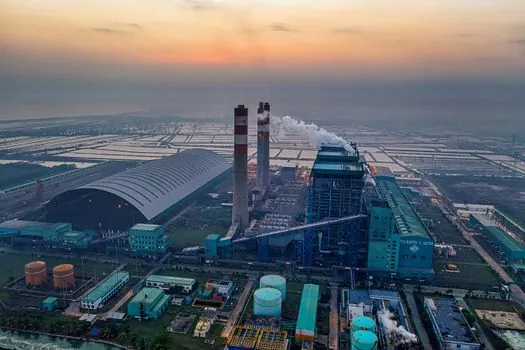
For area source foundries (those under the 10/25 tpy major-source threshold), EPA has separately set an emission limit of 0.8 pounds of particulate matter per ton of metal charged on melting furnaces at existing large area source foundries, which is a particulate limit, not a HAP limit, and applies in addition to state-level requirements [S9].
Continuous compliance under Subpart EEEEE is demonstrated through a combination of performance tests, parameter monitoring, inspections, and recordkeeping, with notifications submitted under § 63.7750 prior to the applicable compliance date; the 2020 final rule removed the SSM exemption so that emission limits now apply at all times the cupola or other affected emission point is operating [S1][S8].
The rule has been formally published at 69 FR 21906 (April 22, 2004), 70 FR 29400 (May 20, 2005), 73 FR 7210 (February 7, 2008), and 85 FR 56080 (September 10, 2020), so the cupola-specific limits for existing iron and steel foundries remain the § 63.7690(a)(2) values promulgated in 2004 as subsequently amended [S3].
Selection Criteria for Compliance Strategy at a Cupola
Three options dominate cupola HAP compliance for an existing iron foundry: (1) meeting the § 63.7690(a)(2) numerical HAP limit at the cupola stack with an add-on control device such as a high-efficiency venturi scrubber or fabric filter with afterburner, (2) operating the cupola inside a documented work practice regime under § 63.7700(b) or (c) that demonstrates equivalent HAP control, or (3) installing continuous emissions monitoring on the cupola and showing that the rolling average stays below the HAP limit set in the rule. [S1]
For plants that are already subject to the area source rule, the 0.8 lb PM/ton metal-charged limit for melting furnaces is the floor; a foundry that is or becomes a major source has to layer the § 63.7690(a)(2) cupola HAP limit on top, and the plant's selection of a control device is then driven by which pollutant (HAP metal species versus organic HAP) is the binding constraint on that specific cupola charge mix [S2][S9].
Foundries operating a cupola furnace alongside other melting units must maintain a separate emission point identification for each unit because § 63.7690(a)(1) through (11) sets distinct limits per source type, and an electric arc furnace on the same site is not covered by the § 63.7690(a)(2) cupola provision.
Who Subpart EEEEE Is, and Is Not, For
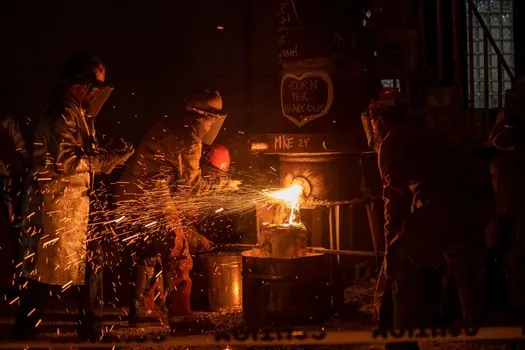
Subpart EEEEE is for any iron and steel foundry, including those producing cast iron parts, that meets the major-source HAP threshold of 10 tpy single HAP or 25 tpy combination HAP, where cupolas and other melting units are the covered emission points [S1].
The rule is not for non-iron and non-steel foundries (aluminum, copper, brass), which have their own NESHAP rules; it is also not for area source foundries below the 10/25 tpy major-source threshold, which instead follow the area source rule that uses the 0.8 lb PM/ton metal-charged limit on melting furnaces [S9].
Within an iron and steel foundry, Subpart EEEEE does cover pouring areas, automated shakeout lines, mold and core making lines, and fugitive emissions, so a plant cannot treat a cupola in isolation: the HAP limit on the cupola stack is one of several limits the site must track simultaneously [S1].
Two trackable signals to watch over the next reporting cycle are: any EPA proposal to revise § 63.7690(a)(2) following the 2020 risk and technology review, and any state-level implementation rulemaking that piggybacks on the 85 FR 56080 final rule, since the 2020 final rule removed the SSM exemption and the states are now aligning their operating permit templates to match [S3][S8].
Spec-level background on the components involved: pressure transmitter.
Background reading: Low-alloy steel powder grades for press and sinter: family comparison.