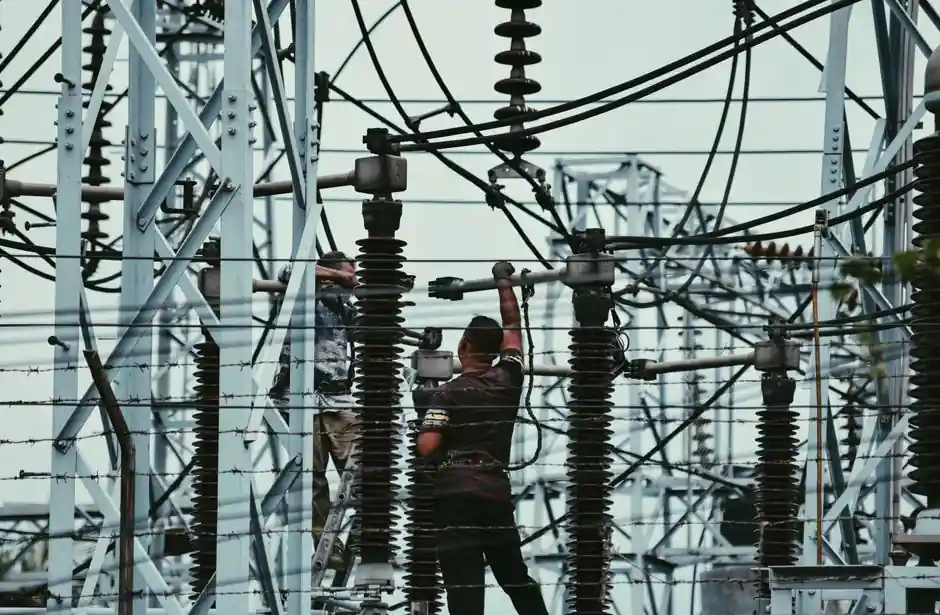
S1 gives an example of an on-load tap changer that is 18 months from delivery, and S2 reports a Maschinenfabrik Reinhausen OLTC delivery time of 16 weeks.
Capacity, not transformer assembly alone, determines the schedule: MR reports a 16-week OLTC delivery target, while a broader market assessment identifies component scarcity, supplier qualification, and a limited domestic manufacturing base as the binding constraints [S1][S2].
OLTC lead-time range and the capacity constraint
S1 gives an example of an on-load tap changer that is 18 months from delivery and says large power transformers may be quoted 30 months out. That comparison changes the procurement logic: the tap changer and high-voltage bushing can sit ahead of the transformer on the project critical path even when transformer assembly capacity is not fully utilized.
Global transformer production capacity was running at roughly 60% utilization, yet some large units were quoted 30 months out, demonstrating that available assembly floor space does not guarantee the arrival of qualified OLTCs [S1].
Effective lead time depends on the selected supplier, transformer configuration, approval status, and available production slot.
16-week delivery is a supplier-specific capacity result
S2 reports a Maschinenfabrik Reinhausen OLTC delivery time of 16 weeks.
S2 reports a Maschinenfabrik Reinhausen OLTC delivery time of 16 weeks.
A 16-week commitment should therefore be treated as a supplier-specific quotation requiring configuration and order confirmation, not as a planning assumption for every OLTC. Buyers need the exact type, voltage class, current rating, operating fluid, installation arrangement, destination, and approval status before comparing an MR delivery promise with an 80–90 week market quotation [S1][S2][S4].
Comparing OLTC architectures and procurement options
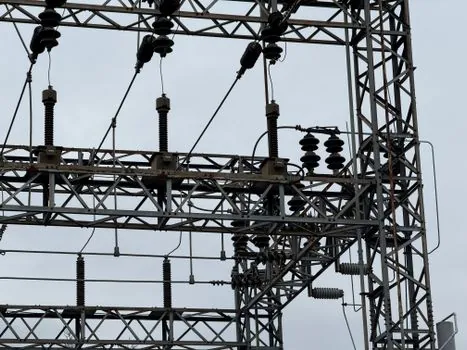
Resistor-type and reactor-type OLTCs are the two established switching architectures, and their physical arrangement affects specification, installation space, and factory planning [S4]. Most resistor-type units are installed inside the transformer tank, while reactor-type units are normally placed in a separate compartment welded to the tank [S4].
Resistor-type designs use transition impedance to bridge adjacent taps during load transfer and limit circulating current; reactor-type designs normally use the bridging position as a service position and are designed for continuous current [S4]. Newer resistor-type products use vacuum interrupters, with vacuum switching described as the state-of-the-art design for OLTCs [S4].
The procurement comparison is therefore not limited to price: S2 reports a Maschinenfabrik Reinhausen OLTC delivery time of 16 weeks, and an off-circuit tap changer differs from an energized load tap changer because it cannot regulate voltage while the transformer remains energized and carrying load.
Selection criteria for transformer and procurement teams
An OLTC changes the transformer ratio under load without interrupting the load, supporting voltage regulation or phase shifting in networks and industrial process transformers [S4]. The device operates through a make-before-break contact arrangement, bridging adjacent taps with resistance or reactance so that load transfer occurs without an interruption or appreciable load-current change [S4].
The required specification must cover rated voltage and current, number and range of taps, transition impedance, short-circuit withstand, insulation medium, and installation arrangement. Mineral-oil immersion is the principal application covered in MR’s technical paper, while natural ester, synthetic ester, or gas insulation requires manufacturer approval and may require a different OLTC design [S4].
For a main power transformer, buyers should also align the OLTC specification with the transformer’s regulating winding, selected tap positions, paralleling requirements, and operating duty. These are engineering interfaces rather than commercial options: choosing a short-lead device with an incompatible voltage, current, fluid, or installation arrangement can create commissioning and acceptance problems [S4][S6].
Application scope and intended users
OLTCs are appropriate where a transformer must regulate voltage or phase while remaining energized under load, including network transformers and industrial process transformers [S4]. The same function applies to power transformers and transformers serving distributed energy systems, where condition monitoring and switching history become part of operating management [S4][S8].
An off-circuit tap changer is appropriate when switching is permitted only while the transformer is de-energized and unloaded. It is not a substitute for an OLTC in applications requiring continuous regulation during load [S7]. This distinction prevents buyers from optimizing around a shorter delivery period while changing the required function.
MR’s 16-week capacity is most relevant to buyers able to specify an approved MR configuration and place a confirmed order within the supplier’s global production network. The 80–90 week planning range is more conservative for unspecified products, constrained supplier pools, or configurations requiring additional approval [S1][S2][S4].
Constraints, failure modes, and qualification risk
Electronically controlled OLTCs can suffer from arcing behavior that contributes to premature transformer degradation, making switching condition and maintenance strategy relevant to long-term reliability [S8]. Mechanical wear, contact behavior, transition resistors, and control-system performance therefore cannot be reduced to delivery speed alone [S4][S8].
Using a non-mineral insulating fluid without manufacturer approval can invalidate the assumed OLTC design and eliminate the reliability history associated with the specified configuration [S4]. The procurement schedule must therefore include fluid compatibility review before the factory slot is fixed.
Adding a new supplier does not create immediate capacity. New aftermarket component suppliers require 6–18 months for qualification and approval, while an 80–90 week OLTC queue can delay the project before that additional qualification cycle is complete [S1]. The practical control is to reserve the OLTC against the transformer project schedule and obtain written confirmation of the production slot, approved drawing, fluid, voltage, current, tap range, and delivery terms [S1][S2].
Market scale and sourcing signals to track

The global OLTC market was estimated at USD 0.72 billion for 2026, with growth projected toward USD 1.03 billion by 2035 [S5]. This market value is a commercial indicator rather than a delivery guarantee, but it supports continued supplier investment in production capacity and supply-chain coordination [S2][S5].
For projects above 345 kV, supply planning becomes more difficult because no domestic U.S. bushing option is available at any lead time, forcing buyers to rely on manufacturer pre-positioned inventory [S1]. Although the same voltage threshold is not explicitly attached to the OLTC range in the research, it demonstrates the broader qualification and inventory constraints affecting high-voltage transformer procurement.
Three signals deserve tracking through procurement: whether MR keeps the 16-week commitment for the exact ordered configuration, whether competing qualified OLTC suppliers narrow the 80–90 week market range, and whether project schedules reserve component delivery before transformer assembly. A written supplier commitment tied to the actual OLTC configuration is more useful than a general market lead-time range.