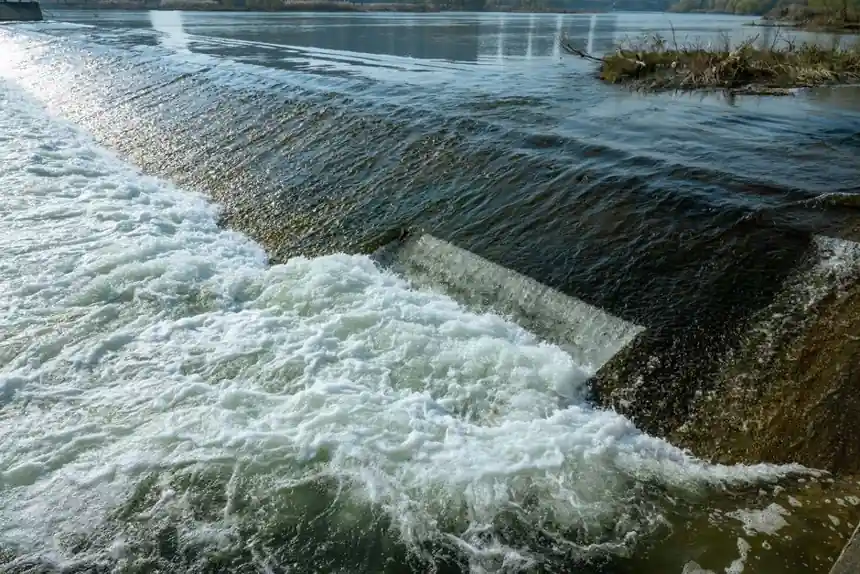
Open-channel flowmeters measure flow in gravity-driven, free-surface channels, where a primary device (Parshall flume, weir) or a velocity-area calculation converts level or surface velocity into volumetric flow [S1]. DirectIndustry's 2026-04-28 manufacturer index lists 62 volumetric flow products across 17 vendors, dominated by ultrasonic and area-velocity categories [S1].
Specifying one in 2026 means matching four variables to the duty: channel geometry, fluid cleanliness, required accuracy (commonly 0.25–5%), and environmental enclosure (IP65 to IP68) [S1][S3]. Cost drivers and sensing principles also overlap with the broader flow meter landscape, where open-channel units fill the gap left by closed-pipe inline meters.
Four Working Principles, Four Spec Bands
Ultrasonic open-channel systems, such as the ASIT AI.4FPC-SS Parshall-channel package, pair an ultrasonic level sensor with a calibrated stainless-steel Parshall flume and deliver 0.3% precision over a 0.3–7,200 m³/h range with -20 to 90 °C process temperature tolerance and IP65/IP67 protection [S2]. Area-velocity meters, typified by the Pulsar AVFM 6.1, accept a 5.9 in (150 mm) minimum channel dimension and run -20 to 80 °C at 0–10 psi with 0.25% precision, suiting full-pipe and partially-filled retrofits [S1].
Non-contact radar surface-velocity sensors from NIVUS and Sommer Messtechnik cover -20 to 85 °C at 1% precision and 0.1% repeatability for clean-water rivers, canals, and surface-water monitoring [S1]. Doppler/laser hybrids, such as the Teledyne Isco 2160 LaserFlow, drop the level probe into the wetted channel and add a non-contact laser Doppler velocity measurement with optional ultrasonic area-velocity backup during submerged conditions, in an IP68 submersible enclosure rated -40 to 60 °C [S3]. For a deeper dive into the technology split, see the open-channel flowmeter spec guide.
Selection Criteria by Channel Type
Rectangular concrete or steel channels carrying clean or lightly loaded water, such as wastewater plant influent with low rags, map cleanly to Parshall flume + ultrasonic level; the 13-model AI.4FPC-SS family scales from 0.3 to 7,200 m³/h without recalibration [S2]. Partial-fill circular pipes from 80 to 125 mm (DN80 to DN125) and 2 to 4 in lines are the natural fit for area-velocity probes like the AVFM 6.1, which only need the operator to enter pipe diameter or channel dimensions at commissioning [S1].
High-solids streams, sludges, and abrasive slurries push the spec toward Doppler/laser velocity sensors: the Teledyne 2160 LaserFlow uses a laser beam at single or multiple points below the surface, with quick-connect field-swappable probes that do not require recalibration after changeout [S3]. Clean rivers and irrigation canals with stable cross-section profiles typically use radar surface-velocity meters such as the Sommer RQ-30, where ±1% accuracy and 0.1% repeatability over -40 to 85 °C meet most hydrology budgets [S1].
Who Should Avoid the Mainstream Pick
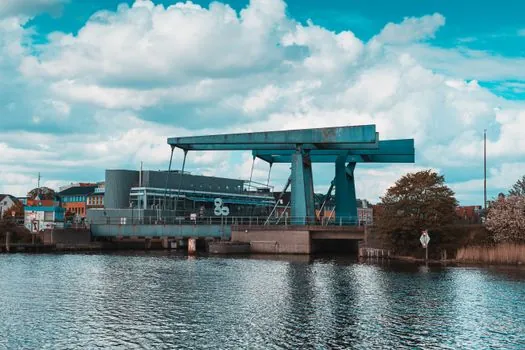
Plants with heavy sediment, grease, or floating debris should not specify a level-only Parshall + ultrasonic system as a stand-alone: the flume will silt up and the level reading will drift unless paired with periodic maintenance access, and the ASIT specification explicitly markets the integrated 4FPC version for corrosive or harsh environments where stainless construction is mandatory [S2]. Likewise, clean-water radar surface-velocity meters like the RQ-30 assume a known cross-section profile: a channel with variable geometry, weeds, or backwater effects will violate the 1% precision claim, and a hybrid or area-velocity device becomes the safer pick [S1].
Buyers who need traceable custody-transfer accuracy should look elsewhere: open-channel accuracy of 0.25% on the AVFM 6.1 is strong for wastewater but not equivalent to a Coriolis flowmeter on a closed pipe, and most vendor datasheets explicitly market open-channel units for "monitoring" rather than fiscal metering [S1][S3].
Criteria-Based Comparison: Four Realistic Options
The four mainstream 2026 options line up against four buyer-side criteria as follows. Parshall flume + ultrasonic level (ASIT AI.4FPC-SS): accuracy 0.3%, range 0.3–7,200 m³/h, fluid suitability clean to moderately loaded water, enclosure IP65/IP67, process temperature -20 to 90 °C, output 4–20 mA, RS485, Modbus, 220 VAC supply [S2]. Area-velocity probe (Pulsar AVFM 6.1): accuracy 0.25%, range set by channel dimensions (150 mm minimum), fluid suitability wastewater with sediment, enclosure typically IP68, process temperature -20 to 80 °C at 0–10 psi, output level + velocity + flow [S1].
Non-contact radar surface velocity (Sommer RQ-30, NIVUS NivuFlow 550/7550): accuracy 1% (5% on hybrid 7550), range velocity-based, fluid suitability clean rivers and canals, enclosure IP67/IP68 variants, process temperature -20 to 85 °C, output 4–20 mA and digital protocols [S1]. Doppler/laser hybrid (Teledyne Isco 2160 LaserFlow): accuracy area-velocity class, range velocity-based with submerged backup, fluid suitability wastewater CSO/SSO/influent/effluent, enclosure IP68 rugged submersible, process temperature -40 to 60 °C, output Modbus, optional solar or lead-acid battery module [S3]. The accuracy column alone spans a 20× spread (0.25% to 5%), which is usually the single biggest driver of price.
Use Cases, Standards, and Communication Protocols
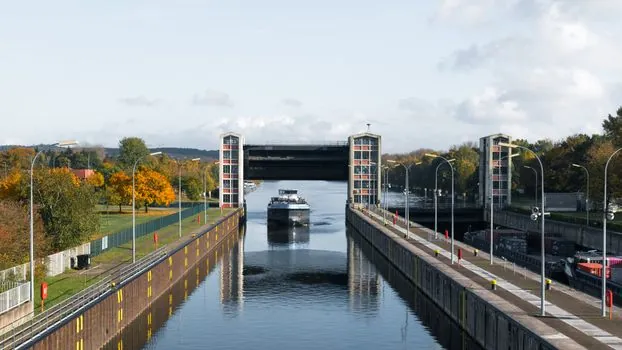
Typical 2026 application buckets follow directly from the equipment buckets. Wastewater plant influent and effluent: AVFM 6.1 or 2160 LaserFlow with IP68 and Modbus, the latter stacking up to four 2100 Series modules on a single network for SSES, CMOM, and I&I programs [S1][S3]. Industrial process water and cooling-water discharge: AI.4FPC-SS Parshall channel for clean duty, or AVFM 6.1 where the line is partially filled and rectangular geometry is not available [S1][S2].
Surface-water hydrology, irrigation canals, and stormwater outfalls: Sommer RQ-30 (or RQ-30 ADMS with integrated data logger) and NIVUS NivuFlow 7550, which combine radar surface velocity with a sideways ultrasonic profile sensor for part-filled pipes and open channels [S1]. Process standards that show up in vendor documentation include IEC 60041 (transit-time method for part-filled and full pipes, cited by NivuFlow 650) and ISO 1438/1 thin-plate weir and Parshall-flume calibration conventions, though buyers should confirm the latest revision directly with the manufacturer for any project-specific submittal [S1].
Buyers weighing open-channel against inline closed-pipe technologies can cross-check selection logic in the broader flow meter selection map, while cost-driven specifiers looking at adjacent inline meters will see the same accuracy-and-protocol tradeoffs in the ultrasonic flowmeter price guide. For an apples-to-apples comparison of non-contact versus inline technologies, the ultrasonic versus general flow meter spec guide is a useful cross-reference.
Limitations, Failure Modes, and Sourcing Signals
Failure modes track the working principle. Ultrasonic level sensors foam-fool in aerated wastewater unless paired with a stilling well or a redundant area-velocity input; the 2160 LaserFlow addresses exactly this with an optional Doppler Ultrasonic Area Velocity backup that keeps the reading continuous during submerged conditions [S3]. Parshall flumes lose accuracy when sediment builds up on the floor, and the ASIT datasheet notes that the 4FPC integrated package was developed for corrosive and harsh environments where access is limited [S2]. Radar surface-velocity meters depend on a stable, known cross-section: a deformed channel after a flood event will push the 1% accuracy figure out of spec without recalibration [S1].
Trackable sourcing signals for the rest of 2026 include the TNF Technology (Dalian) open-channel flowmeter line, listed on kflowmeter.com alongside their electromagnetic, Coriolis, and vortex ranges, indicating continued Chinese OEM capacity in the ultrasonic open-channel segment [S4]. DirectIndustry's manufacturer index refreshed 2026-04-28 confirms at least 17 active vendors including Hach, NIVELCO, Flow-Tronic, Holykell, and Pulsar, with NIVUS, Sommer Messtechnik, and Teledyne Isco carrying the non-contact radar and laser-Doppler specialty lines [S1]. Buyers should request a current calibration certificate against the flume standard or velocity-trace standard at RFQ stage, since the 0.25% to 5% accuracy spread is meaningless without a documented test rig.