
Use an open-end wrench when clearance, not maximum torque, governs access; its jaws can approach and remove a fastener from several angles where a larger closed head cannot fit [S1].
Use a combination wrench when one tool must handle repeated assembly and occasional high-torque tightening; its open head supports maneuverability while its closed head improves grip and torque capacity [S1][S4].
Confined-Space Access: Open-End Wrench Wins on Clearance
An open-end wrench can engage a nut or bolt in confined areas where a traditional box-end wrench cannot fit. This geometry allows the tool to be angled into restricted spaces, including automotive repair, plumbing installations, and industrial machinery where overhead and lateral clearance are limited [S1].
The open-end design allows a wrench to approach fasteners from multiple angles and slide onto nuts and bolts when clearance is limited. A double-open-end tool provides two sizes on one body, reducing the need to exchange tools between adjacent fastener sizes [S1][S4].
Torque, Grip and Fastener Protection
A closed 6-point or 12-point box head surrounds the fastener on multiple sides, giving more contact than an open jaw and reducing the likelihood of slipping or rounding fastener edges [S2]. That makes the box end the preferred end of a combination wrench when the joint is tight, corroded, or subject to higher tightening torque [S1][S2].
Open-end wrenches are less suitable where maximum torque or maximum control of a hex fastener is required. Their useful pulling or tightening angle is constrained by the jaw geometry, while the box end distributes force around the fastener [S1][S2]. The trade is direct: better clearance on one end, better torque and grip on the other [S4].
Decision Comparison Across Four Job Criteria
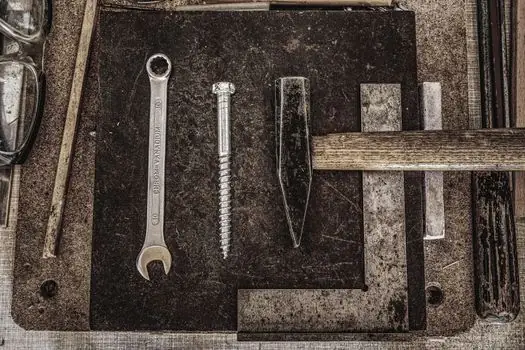
For clearance and angle-of-access work, an open-end wrench ranks first, a combination wrench is acceptable when its open end is used, and an offset or flexible box wrench is preferred only where its head geometry still clears the obstruction [S1][S2]. For torque and grip, the closed box head is strongest, the open head is weaker, and a combination wrench preserves both options in one tool [S1][S2].
For repetitive assembly, a double-open-end wrench supports quick removal and repositioning, while a combination wrench reduces tool changes by combining 2 sizes and 2 head styles [S1][S4]. For confined high-torque work, an offset or flexible-head box wrench can outperform a standard open end because it reaches around obstructions while retaining a closed grip [S2]. A standard combination wrench is the best general-purpose compromise, not the universal confined-space solution [S4].
Use Cases and Tool Selection by Work Pattern
Select an open-end wrench for brake-line fittings, fuel-system components, electrical connections, pipe fittings, valve adjustments, and HVAC connections where access is restricted [S1]. Select a combination wrench for mixed maintenance work involving both rapid open-end adjustment and higher-torque box-end work, especially when carrying fewer tools matters [S4].
Select a box wrench with an offset or flexible head when a fastener is deeply recessed, its socket is obstructed, or greater torque must be retained in a difficult approach [S2]. Do not treat a box wrench, combination wrench, or open-end wrench as the correct tool for every hex fastener condition. Flare-nut wrenches use open jaws shaped to wrap around a fitting while avoiding damage to the connected pipe, so they serve a different function from ordinary hex-fastener wrenches [S4].
Failure Modes and Sourcing Checks
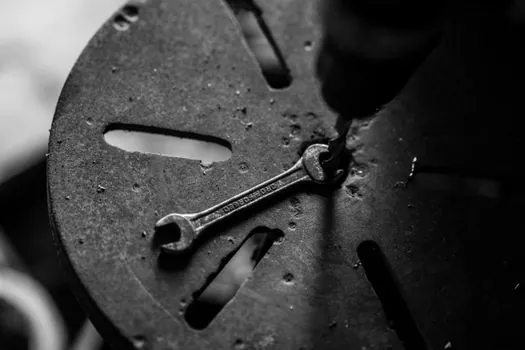
The principal failure mode of a combination wrench is choosing the wrong end: the open end sacrifices the box end's grip, while the box end may fail to reach the fastener because the tool must be brought nearly square to the fastener axis [S1][S2].
When specifying a tool set, verify whether the open head is 6-point or 12-point, whether the box head is offset or flexible, and whether the two ends carry different sizes [S2][S4]. The research does not provide a universal torque rating, material grade, dimensional tolerance, or test standard for these wrench types, so those values must come from the manufacturer specification for the exact model rather than from the wrench category alone.
Practical Selection Rule
When clearance is limited, consider an open-end wrench rather than a combination wrench's closed end. If the joint needs high torque after the fastener is exposed, finish with the combination wrench's 6-point or 12-point box end, or use an offset box wrench from the outset [S2].
For procurement, specify separate open-end, combination, offset box, and flare-nut tools where each geometry has a defined task. The most trackable field checks are access-path clearance and whether the selected end completed tightening without slip or fastener-edge damage [S1][S2][S4].