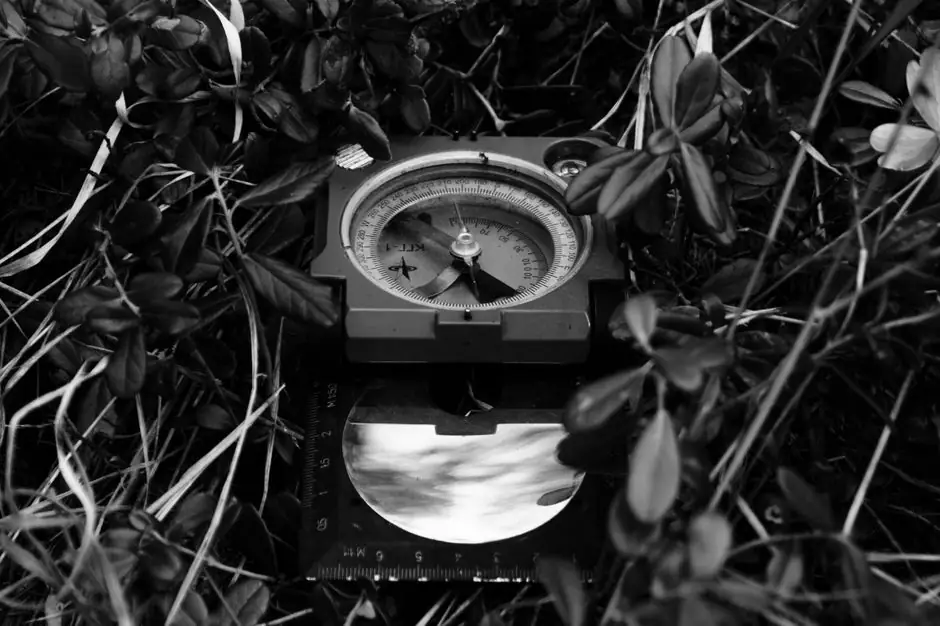
A compass theodolite supports magnetic bearing work with the instrument’s compass circle, while an electronic theodolite provides angular readings through graduated or digital systems [S1][S3].
The decision hinges on magnetic-reference requirements, observation precision, field endurance, recording method, and the need for a powered electronic workflow, not on whether a modern instrument is automatically preferable.
Define the bearing task before choosing the instrument
A compass theodolite combines an angle-measuring theodolite with a magnetic compass, allowing the surveyor to establish or express a bearing relative to magnetic north. The compass depends on Earth’s magnetic field and must also respond to local magnetic disturbance from steel, electrical equipment, vehicles, and nearby steel structures [S1].
An electronic theodolite measures horizontal and vertical angles, but the instrument does not automatically provide a magnetic bearing. If its zero reference is not tied to magnetic north, the observed direction remains an orientation-independent angle until it is connected to a control direction or separate magnetic observation [S3].
The key distinction is therefore between measuring an angle and establishing a magnetic datum. Compass-assisted equipment addresses the second task directly, while an electronic theodolite is strongest for repeated angular measurement, vertical-circle work, illuminated readings, and digital collection. A practical workflow can combine both: use the compass theodolite to orient the survey, then use the electronic theodolite for the precision angle set [S1][S3].
Compare the main options against field decision criteria
Compass theodolites offer the shortest route to a magnetic bearing, but their usable accuracy depends on magnetic conditions and the operator’s reading skill. Electronic theodolites offer clearer displays and repeatability, yet they add battery, electronics, and configuration requirements that are irrelevant to a purely mechanical optical instrument [S2][S3].
<strong>Bearing datum:</strong> a compass theodolite can relate a line to magnetic north; an electronic theodolite requires an established reference direction unless fitted with an orientation system. <strong>Power:</strong> the compass version can remain independent of a battery, whereas an electronic model requires a charged pack or external power source. <strong>Recording:</strong> compass observations require handwritten or separately transferred readings, while electronic models can support LCD readout and instrument memory. <strong>Field exposure:</strong> both can encounter moisture and dust, but an electronic instrument adds sealed electrical contacts, displays, batteries, and serviceable electronic components [S3].
Against angle-only work, the electronic theodolite is generally the stronger choice because graduated circles and verniers or micrometers can resolve fractions of a degree, while digital models can offer direct numeric readings [S3]. Against one-time magnetic reconnaissance, a compass theodolite is usually simpler because it combines the angle instrument and magnetic reference in one setup [S1].
Select by accuracy, durability, and operating time

Optical theodolites can provide arc-second-class angular observation using graduated circles divided into degrees and smaller 10- or 20-minute intervals, with the residual fraction measured on both sides of the circle by vernier or micrometer [S3]. This makes a non-electronic instrument viable when precision angles are required but digital storage is not.
Representative electronic models in the reviewed product set illustrate the practical range. These are model examples, not universal performance bands.
A compass reading should not be confused with a five-second electronic angular specification. One is an observation referenced to a magnetic field; the other is an instrument angular-accuracy class. Local magnetic deviation can affect a nominal magnetic direction independently of telescope resolution, so compass and angular errors must be assessed separately [S1].
Apply the instrument to realistic survey workflows
Use a compass theodolite for preliminary reconnaissance, route or boundary work, setting out lines from magnetic north, and locations where establishing a conventional control orientation would be slow. These are cases where portability, direct magnetic referencing, and simple setup outweigh electronic data capture [S1].
Use an electronic theodolite for construction layout, structural alignment, and control surveys that require repeated horizontal and vertical angle observations. A theodolite supports the angle-only workflow, while a total station adds electronic distance measurement, onboard coordinate calculations, and digital data handling; therefore, a total station is the stronger option when coordinates and 3D layout are required rather than bearings alone [S2].
Robotic total stations extend this distinction further by adding motorized drives and automatic target recognition for one-person operation, but that capability does not replace a magnetic compass when the required datum is magnetic north [S2]. The instrument hierarchy should follow the deliverable: magnetic direction, angular control, distance and coordinates, then automation.
Control magnetic interference and observation failures

Compass theodolite work is vulnerable to nearby magnetic sources because the instrument responds to the local magnetic field rather than a fixed inertial axis. Keep steel structures, energized machinery, vehicles, and power sources away from the setup, and recheck the magnetic reference after moving the instrument or changing the station [S1].
Electronic theodolites have different failure modes. A tilted instrument can leave the operating range of its vertical-angle compensator, and a 5-second electronic model displays a tilt warning so the operator can correct the setup rather than accept the erroneous reading [S3]. Battery exhaustion can interrupt capture, while a failed LCD, keypad, or internal memory can affect productivity even when the telescope and angular encoder remain functional [S3].
Do not treat a compass theodolite reading as a precise geodetic azimuth without a declared magnetic correction and reference epoch. Do not infer magnetic north from an electronic horizontal-circle reading. Do not select a 2-second or 5-second model and assume that its rating includes magnetic alignment. These distinctions are fundamental to a defensible bearing record.
Standardize the acceptance test before deployment
Acceptance testing should separate mechanical, angular, electronic, and magnetic performance. Verify that the horizontal and vertical motions run smoothly, that the telescope can sight and reverse accurately, and that readings remain stable after settling. For an electronic theodolite, confirm the specified angular accuracy, vertical-angle compensation, display readability, battery operation, and data-transfer procedure [S3].
For a compass theodolite, establish the magnetic reading at a station known to be free of interference, compare repeated observations, and document the date, station, magnetic reference, and local conditions [S1]. The historical study of theodolite compass accuracy identifies the interaction between the instrument and magnetic declination survey as the governing concern [S1].
For precision control, add an explicit comparison of theodolite angular accuracy classes and their role in instrument selection, using the reference on theodolite angular accuracy in seconds of arc. Record the chosen model, nominal accuracy, serial number, calibration status, battery configuration, and the exact field procedure used for every bearing set.
Choose the simplest instrument that preserves the datum

Choose a compass theodolite when the deliverable is a magnetic bearing and the site is suitable for magnetic observation. Choose an electronic theodolite when angular repeatability, vertical-circle compensation, illuminated readings, and electronic capture justify the added electrical complexity. For construction layout requiring distance and coordinates, specify a total station rather than treating either angle-only instrument as an EDM replacement [S1][S2][S3].
Before purchase, obtain the manufacturer’s specification for the exact model, including angular accuracy in seconds, compensation range, ingress rating, battery chemistry, operating-temperature limits, data ports, and warranty conditions. No model-specific figures should be copied into an issue of works unless they match the supplied instrument and its documented configuration.