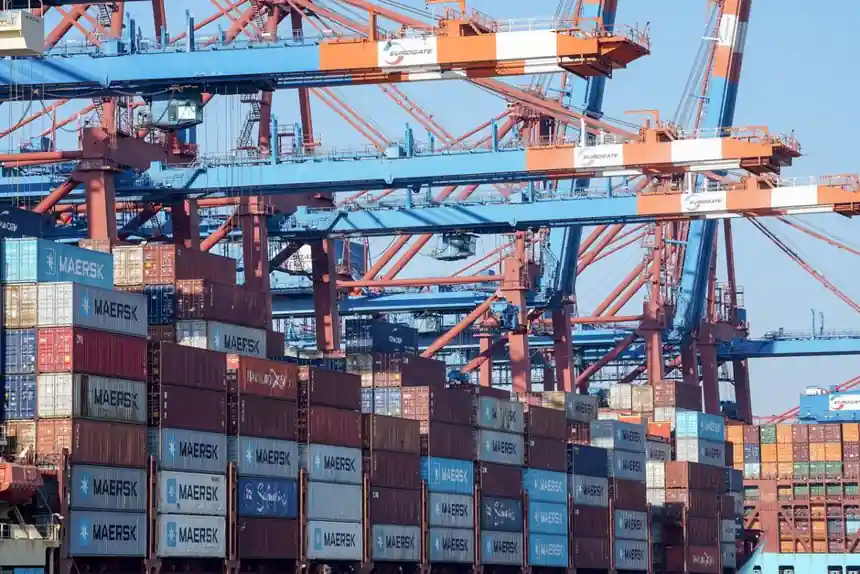
Port-logistics order picking in 2026 is driven by three measurable constraints: aisle width (2.8-3.5 m common), platform lift height (4.5-7.5 m for single- and two-tier racking), and chassis duty cycle rated for the high-shock, mixed-floor reality of a container freight station (CFS) bonded warehouse [S1].
The labour signal confirms the equipment mix: ProLogistix is hiring overnight Cherry Picker/Order Picker operators in Port Wentworth, GA at USD 25.75/hr on a Wednesday-Saturday 18:00-06:30 schedule, a rotation that exists because the equipment is specified for near-continuous shift coverage rather than single-shift retail [S3]. Randstad is recruiting the same profile in Port Deposit, MD for high-throughput warehouse work, reinforcing that the order picker has become the default vertical-pick unit in US port-adjacent distribution [S4].
Operating envelope: aisle, lift height, and floor class
The narrow-aisle order picker class is defined by a 2.8-3.5 m minimum aisle envelope, a 4.5-7.5 m platform lift window, and a chassis narrow enough to work between 1.0-1.2 m rack bays without contact [S1]. For port logistics this is non-negotiable: quay-side and CFS operations run on 1.0-1.2 m rack bays with 5-7 m tier heights to maximise cubic density of import containers stripped into bonded storage [S1]. A standard order picker for a port CFS needs platform lift, dual-direction travel, and rail-guided or wire-guided navigation where aisle width drops below 3.0 m, otherwise operators cannot stay within rack tolerance while carrying 100-200 kg pick loads [S1].
Floor class matters as much as aisle width. Port CFS floors alternate between concrete slab, epoxy-coated high-bay, and painted steel grating at the quay interface. Chassis must be specified for a mixed-floor duty cycle that includes occasional grade ramps (typically 5-8%) between the dock door and the racking block, and wheel-load ratings that do not exceed the slab's point-load limit, commonly 50 kN/m² in newer bonded-warehouse builds [S1]. The Port Wentworth, GA operator profile published by ProLogistix (Wednesday-Saturday, 18:00-06:30) confirms the shift pattern that this equipment class is designed to support [S3].
Power train: lead-acid vs lithium-ion in 24/7 port duty
Lithium-ion order pickers support opportunity charging between shifts, zero routine battery maintenance, and full cycle life that exceeds 3,000 cycles at 80% depth of discharge, making them the default specification for port-logistics 24/7 operations [S1]. Lead-acid remains acceptable only where capital cost dominates and where single-shift duty allows a 7-8 hour battery swap window, which is rarely the case in CFS work [S1].
The opportunity-charging profile is the deciding factor. A port CFS typically runs two 10-hour shifts with a 4-hour sortation gap; opportunity charging during that gap with a 30-80 kW DC charger restores a 24-48 V, 200-600 Ah Li-ion pack to near-full state of charge without a battery change, which is the throughput case for the lithium spec [S1]. The Port Deposit, MD and Port Wentworth, GA staffing posts both list overnight and continuous-shift duty, which is the operational signal that the equipment has to be opportunity-charge capable rather than swap-battery [S3][S4]. For background on how Li-ion has displaced lead-acid across the wider logistics packaging equipment class, the trend line is now the default, not the exception.
Cold-chain, clean-room, and hazardous-zone variants

For port reefer-container stripping operations, order pickers are specified with components rated for sustained operation at -25°C, including hydraulic oil, cable insulation, and battery thermal management, which is the standard cold-chain floor in the 2026 spec window [S1]. This is not a marketing line: the -25°C rating is what allows the same fleet to work a reefer buffer zone, a frozen-food cross-dock, and an ambient dry-goods block without a dedicated cold-rated sub-fleet [S1].
For pharmaceutical and medical-device cross-docking at port bonded warehouses, electric order pickers are specified for zero-emission indoor operation, smooth-DC traction control for fragile SKU handling, and cleanable surfaces that meet typical pharmaceutical hygiene protocols [S1]. Hazardous-zone (ATEX/IECEx zone 2) variants exist for chemical-port operations but are not the default; the 2026 procurement guidance is to keep ATEX-rated units as a dedicated sub-fleet sized to the explosive-atmosphere zones of the specific terminal, not the whole CFS [S1].
Selection criteria: which order picker for which port zone
Three order picker subtypes cover the bulk of port logistics: low-level order picker (lift height under 2.5 m, for ground-floor pick-and-stage), mid-level order picker (lift height 3.0-5.0 m, for standard 4-5 tier racking in the dry-goods CFS), and high-level order picker / man-up turret truck (lift height 5.0-7.5 m+, for narrow-aisle high-bay bonded storage) [S1].
The decision criteria line up as: (1) required pick height vs the rack tier of the zone, where any unit underspec'd by 0.5 m of platform lift is unsafe; (2) aisle width, where high-level units need 2.8-3.0 m and low-level units can work 2.2-2.5 m; (3) duty cycle, where lithium-ion is mandatory for two-shift operation and lead-acid is acceptable only for single-shift; (4) ambient temperature, where the -25°C cold-chain rating is required only for reefer-buffer or frozen-food zones [S1]. For a deeper walkthrough of these four criteria and how they map to pick height and aisle geometry, see the spec map on order picker selection by aisle width and workflow. For apparel-distribution centre variants of the same equipment class, the spec window differs in pick-height logic but not in the underlying aisle/lift decision tree.
Automation, IoT telematics, and operator skill profile
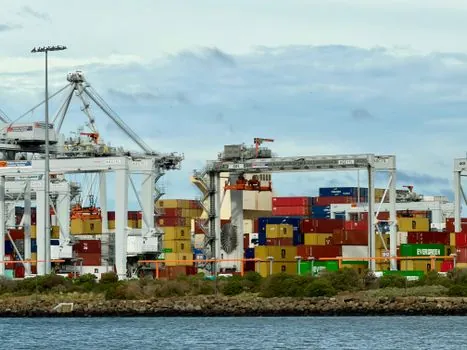
IoT telematics are now specified at procurement, not as an aftermarket add-on: real-time fleet management, predictive-maintenance alerts, and pick-route optimisation are baseline features on 2026-vintage order pickers from major Asian OEMs, with the explicit goal of cutting non-productive travel time in large CFS blocks [S1]. Operators are expected to read fleet-management dashboards, perform pre-shift telematics checks, and follow route-optimisation prompts, which is why ProLogistix and Randstad job posts both list "recent Cherry Picker/Order Picker experience" as a hard requirement rather than a preferred one [S3][S4].
The operator skill profile therefore has two layers: machine-handling competence (platform lift, dual-direction travel, emergency lowering, battery hot-swap or opportunity-charge handling) and WMS/IoT competence (handheld scanner integration, pick-confirmation, route compliance). The Randstad Port Deposit posting lists "meet demanding production goals" as the core KPI, which is the practical translation of a fleet that is now measured on picks-per-hour-per-unit, not per-operator [S4].
Lead-time, sourcing, and the 2026 procurement checklist
Port-logistics operators procuring order pickers in Q3 2026 should expect a 6-10 week lead time on standard units from major Chinese OEMs (Qingdao is a documented manufacturing hub with mature export logistics for material-handling equipment), and 12-16 weeks on cold-chain rated or ATEX-rated variants [S1]. The spec checklist, in order, is: platform lift height vs rack tier; aisle width vs chassis width; battery chemistry vs duty cycle; ambient temperature rating vs zone; IoT/telematics package vs WMS integration; and service-parts proximity to the terminal.
For the apparel-distribution centre variant, where the picking logic and SKU profile differ from a port CFS, the spec map on apparel DC order picker selection covers pick-height, aisle, and picking-logic detail that does not transfer to port logistics. The next node to track is the 2026 Q4 release of updated opportunity-charger standards for 24-80 V Li-ion packs, and any IEC/ISO update to man-up lift safety that flows through to the 2027 model year. Until then, the spec window is: 2.8-3.5 m aisle, 4.5-7.5 m lift, Li-ion with opportunity charging, -25°C option for reefer zones, and IoT telematics on the procurement line, not in the aftermarket column.
Spec-level background on the components involved: pressure transmitter.