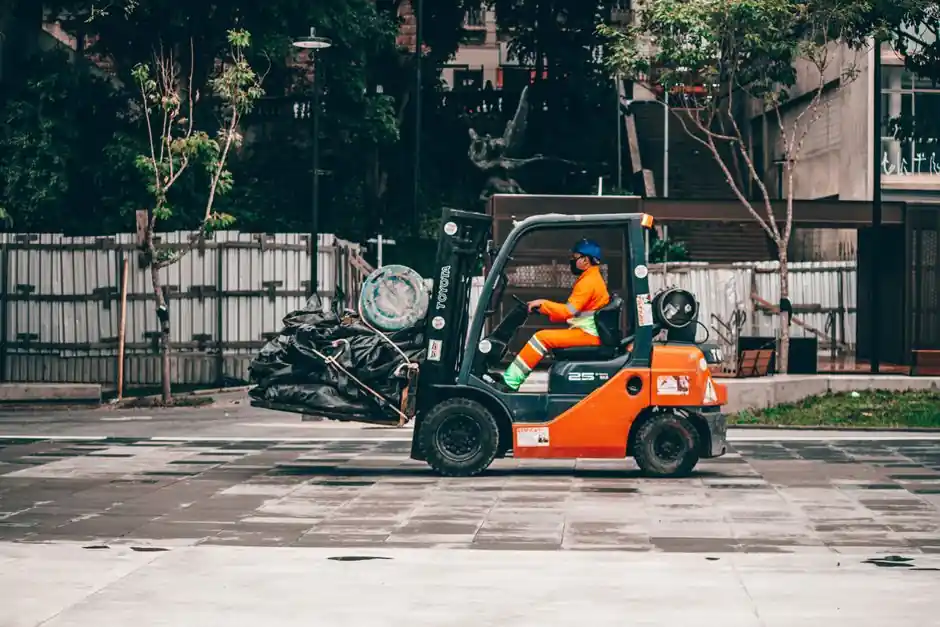
An order picker lifts the operator with the forks for case or individual-item picking, while a counterbalance forklift moves full pallets with the operator seated at floor level [S2][S5].
The decision depends on the handled load, aisle width, rack height, and operating environment: order pickers suit elevated picking, while counterbalance trucks suit trailer unloading, open-floor transport, and general pallet handling [S1][S4].
Pick by load and operating cycle
Order pickers are built for picking cases or individual items from rack levels, with the operator platform rising with the load; counterbalance forklifts are built around pallet transport and use a rear counterweight to balance the load [S2][S4].
Those figures are category examples, not a basis for purchase: the selected model’s rated capacity, load center, mast configuration, and data plate must cover the actual load [S3][S4].
Compare aisle width and rack access
Counterbalance forklifts approach pallets directly from the front because they have no support legs ahead of the forks, making them suitable for unloading trailers, open-floor moves, and rack aisles that do not require the tightest turning envelope [S4]. Their rear counterweight and chassis geometry still have to clear the specified turning radius [S4].
Order pickers can serve narrow or conventional picking aisles, depending on the truck and rack configuration, because their job is person-to-goods access rather than full-pallet storage [S2]. A rack layout below 20 ft is described as being within general counterbalance territory, while narrow-aisle warehousing above 20 ft points toward more specialized narrow-aisle equipment [S6].
Match the truck to the picking method
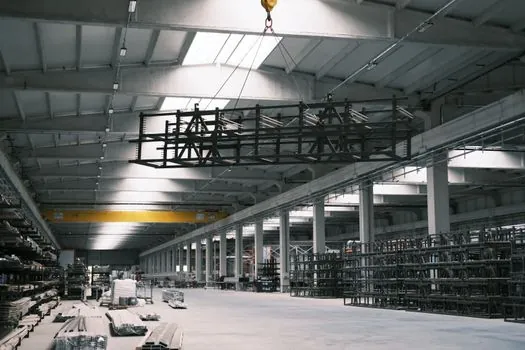
A counterbalance forklift should be selected for putaway, replenishment, pallet retrieval, trailer unloading, and other moves involving intact pallets; the forklift category covers several power and chassis configurations, so “counterbalance” does not itself specify electric, diesel, or LPG propulsion [S1][S4].
An order picker should be selected when workers must remove cases or individual products from elevated rack bays, travel through picking aisles, and place the raised platform beside the required pick position [S2][S5]. Use it for e-commerce fulfillment, piece picking, and high-level case picking rather than treating it as a general pallet-hauling replacement [S2].
Compare the four procurement criteria
On primary load, a counterbalance forklift handles full pallets, whereas an order picker handles picked cases or individual items [S2]. On vertical access, the counterbalance operator remains at floor level, while the order-picker platform rises with the forks [S5]. On aisle fit, counterbalance suitability depends on available width and turning space, while order pickers can operate across narrow or conventional picking aisles [S2][S4]. On throughput, counterbalance performance is driven by travel and pallet-handling efficiency, whereas order-picker performance is driven by pick ergonomics and route optimization [S2].
Check floor, environment, and operating limits
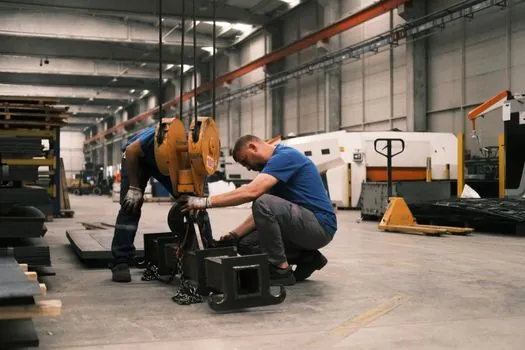
Indoor suitability is not established by the word “forklift”: the specific model, tires, power source, floor condition, ventilation, and duty cycle must be reviewed [S4]. A standard indoor counterbalance truck with cushion tires can sink into soft ground and lose traction, so a surface-floor truck or different tire package may be necessary [S7].
Order pickers are electric-powered machines whose operator platform enables an individual to control the machine while standing on it. Typical controls include a deadman pedal, joystick, steering wheel, and platform lift controls, with common guidance arrangements comprising operator steering, roller guidance, or RFID or wire guidance [S5]. Operator elevation makes fall protection and controlled platform behavior central engineering constraints [S2][S5].
Specify the duty before selecting a model
Choose a counterbalance forklift for general pallet handling with an open front end, rear counterweight, and direct pallet approach, subject to the site’s doorways, docks, floor, load, and turning space [S4]. Choose an order picker for elevated case or each-picking where the operator must travel with the load platform [S2][S5].
For mixed workflows, keep the duties separate: use counterbalance equipment for full-pallet putaway and retrieval, then use order-picker equipment for item-level picking. Confirm the final selection against the model’s capacity plate, actual load center, lift height, aisle turning envelope, and duty cycle [S3][S4].
Validate safety and capacity before delivery
OSHA classifies powered industrial trucks by power source and design characteristics, and operator certification is required for powered industrial trucks [S4][S3]. The procurement file should also record the specific model, rated load, mast and fork geometry, travel and lift limits, battery arrangement, tire type, and intended floor conditions; capacity reduction as lift height or attachments increase must be checked against the manufacturer’s data, not estimated [S4].