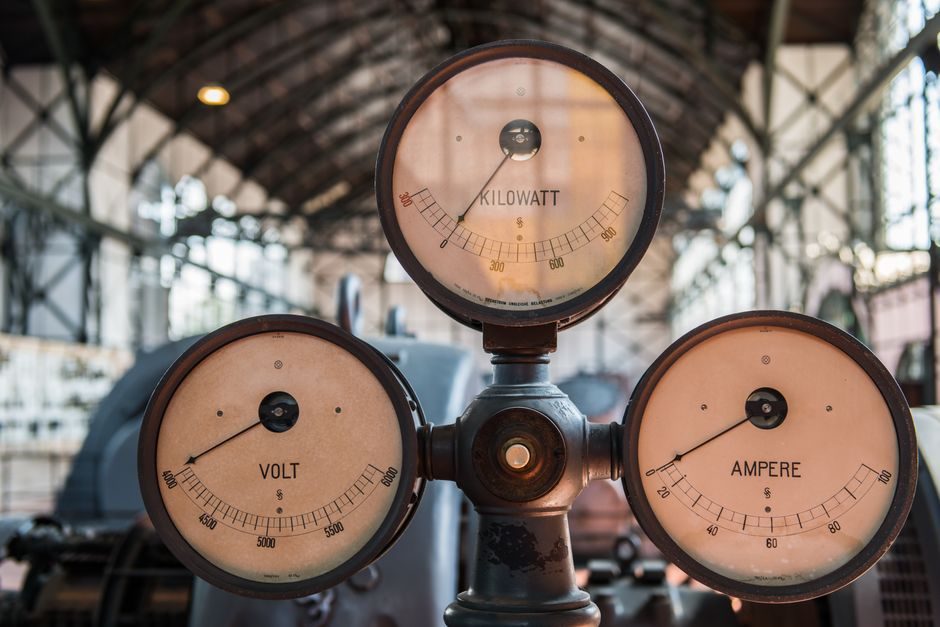
An orifice plate flowmeter is a thin, sharp-edged plate clamped between flanges that creates a calculable pressure drop, which a differential-pressure transmitter converts into a flow rate. The assembly is the lowest-cost, most-recognised DP primary element on the process market, with stainless-steel single-piece assemblies listed at US$198.52 MOQ on Shanghai export channels as of 2025-09-29 [S1].
Specifying one in 2026 is a three-axis decision: mechanical design of the plate itself, the geometry of the bore (beta ratio), and the tapping arrangement that feeds the DP cell. This guide walks the choice the way a process engineer actually writes the datasheet — from the flange rating in, to the transmitter loop and totalised output out. Background on the orifice-plate flowmeter family and its place in the wider flowmeter market is covered in the linked reference.
How the plate works: ISO 5167 square-root law and what it costs you
The orifice plate is governed by ISO 5167-2 geometry: a concentric, sharp upstream edge, a prescribed plate thickness, and a defined downstream face — deviations push the discharge coefficient out of its tabulated window [S4]. The flow equation is Q = C·E·Y·A₂·√(2·ΔP/ρ₁), so output is non-linear in ΔP; the DP transmitter is run through a square-root extractor, and the natural turndown is roughly 4:1 before the signal becomes noisy in the lower 10% of range.
Permanent pressure loss — the part the process can never recover — is a strong function of beta ratio (d/D). Engineers writing 2026 datasheets normally pick β between 0.40 and 0.65 for clean liquid service and 0.20–0.50 for gas/steam where Reynolds and expansibility corrections both bite [S4].
Plate material and edge condition: 304, 316L, Hastelloy, Monel
Plate material is selected against the process fluid, not against the line, because the wetted edge sees the full flow stream. 304 stainless is the budget default for water, air and neutral chemicals; 316L is the workhorse for low-chloride chemical service and pharmaceutical clean-in-place loops. For chloride pitting, sour service or wet CO₂, NACE MR0175-compliant plate materials (typically 316L with restricted hardness, or higher alloys) are typically specified by the operator's materials group. [S1]
Hastelloy C276 and Monel 400 plates are stocked for HF, hot caustic and seawater; lead-time stretches from the 1-week class of 316L up to 8–12 weeks on the exotic alloys. The upstream edge must remain sharp — a 0.025 mm radius is the ISO 5167-2 limit and a radius beyond that re-classifies the device as a quadrant-edge or conical-entrance orifice with a different Cd curve. The same care applies to differential-pressure tap lines: a differential pressure transmitter loop is only as repeatable as its impulse piping.
Tap arrangement: flange, D and D/2, corner, and where each fits
Tapping arrangement is the single biggest contractual decision after beta ratio. Flange taps (1 in. upstream and downstream of the plate face) are the historical default and the easiest to install on ANSI 150/300 flanges, but they sit inside the pressure-distortion zone and give the largest installation-induced uncertainty. D and D/2 taps (one diameter upstream, half a diameter downstream) move the high-pressure tap into a flatter region of the profile and are the preferred choice for high-β installations and for calibration work that has to be traceable across units. [S2]
Corner taps are reserved for small-bore, low-Reynolds metering in the laboratory and skids, where the plate sits between companion flanges and the tap is taken at the plate face itself. Pipe taps (2.5D and 8D) are obsolete for custody transfer and should be ruled out on any 2026 datasheet. The tap selection, plate thickness, and DP cell static-pressure rating should all be written into the same line item; mismatches between the tap location and the DP cell's range are a frequent commissioning-day surprise.
Sizing, beta ratio and what the DP cell actually has to swallow
Sizing an orifice plate is iterative. The engineer fixes the design flow, the line ID, and the fluid (density, viscosity, isentropic exponent for gas), then sweeps β until the predicted ΔP at maximum flow sits comfortably inside the DP cell's calibrated range — 0–100 mbar, 0–1 bar, 0–10 bar and 0–100 bar are the four common cell ranges. For clean water, β = 0.50 at Qmax is a reasonable starting point that drops around 0.5 bar on a 6-in. line and gives 4:1 turndown; higher β widens turndown but inflates permanent loss. [S3]
Gas and steam service change the maths. ISO 5167 requires the expansibility factor (ε, often called Y) to be applied when the upstream absolute pressure is less than 20 bar gauge, and the diameter ratio is meaningful — for steam at 40 bar, ε differs from unity by single-digit percent and must be carried through the flow computer or HART configurator [S4]. Saturated steam also forces a condensate pot arrangement on the impulse lines; dry leg / wet leg mistakes here are the most common field-failure root cause.
Plate types beyond the classic concentric: eccentric, segmental and conditioning
Concentric sharp-edged plates are not appropriate for everything. Eccentric orifice plates offset the bore tangent to the plate OD and are used for slurries and dirty liquids where a concentric plate would collect debris on the upstream face; the eccentricity must be noted on the datasheet and the bore area calculated as the eccentric circle, not a concentric one. Segmental plates cut the bore as a segment of the pipe cross-section and are used for two-phase flow, paper stock and fibrous slurries; both have lower discharge-coefficient confidence than the concentric design and need an in-situ calibration or a comparison against a Coriolis flowmeter if the line is custody-relevant. [S4]
Conditioning orifice plates (e.g. the McCrometer V-Cone, Herschel Quadrant, and the more recent 4-hole bundle-average plates) add a flow-conditioning geometry upstream of the bore. They collapse the straight-pipe-run requirement from the 20D / 8D ISO 5167 baseline down to as little as 3D, which is the reason they show up in retrofits where a short meter run is unavoidable. Each has its own Cd curve and is not ISO 5167-2; if the project is bound to ISO 5167, stick with the concentric plate.
How an orifice plate compares to other primary elements in 2026
Decision criterion | Orifice plate (concentric) | Venturi / flow tube | Turbine flowmeter | Coriolis Installed cost (2-8 in.) | Lowest (US$200–2,000 plate + DP cell) [S1] | High (welded body, machining) | Medium (insert + counter) | High (sensor + transmitter) Permanent pressure loss | High at β ≥ 0.50 | Lowest (1–5% of ΔP) | Low to medium | None in line Turndown | 4:1 | 4:1 to 6:1 | 10:1 to 20:1 | 80:1 to 100:1 Multiphase / dirty | Concentric clogs; eccentric/segmental degrade accuracy | Tolerates some dirt | Bearing wear | Two-phase readable Calibration custody | ISO 5167-2 traceable | ISO 5167-3, -4 traceable | Per-flow calibration typical | Mass flow, no recal Best-fit service | Clean liquid, gas, steam at high turndown | Large conduits, water intake | Clean hydrocarbon, jet fuel | Mass flow, density, two-phase
The takeaway from the table is mechanical: the orifice plate is the cheapest, most standardised primary element, and that is exactly why it stays on datasheets for clean utility, steam and high-pressure gas. When turndown, low pressure loss, or mass accuracy moves to the top of the requirements list, the conversation shifts to Coriolis flowmeter or magnetic alternatives on conductive liquids — see the linked Coriolis flowmeter buying guide 2026 for that path.
Limitations, failure modes and what 2026 specs should reject

Orifice plates are unforgiving of three things: plate edge damage, condensate in gas impulse lines, and mis-aligned flanges. A 0.1 mm burr on the upstream edge — easily caused by a wire brush during cleaning — moves Cd by several percent and breaks ISO 5167-2 compliance. Steam impulse lines that have not been filled with water before transmitter power-up show a 24-hour drift as condensate accumulates; the cure is a proper condensate pot and an installed five-valve manifold for the differential pressure transmitter. [S5]
2026 datasheets should reject the following explicitly: pipe taps for any new installation; plates without a documented plate-thickness, edge-radius and concentricity certificate; DP cells whose static-pressure rating is below the line MAWP; and primary elements that are not hydrostatically tested with the assembly they ship with. For high-temperature service, verify that the plate material's allowable stress at design temperature is on the datasheet, not just the room-temperature value.
Sourcing, standards and what to confirm before signing the PO
The procurement specification should call out, at minimum: ISO 5167-2 compliance for concentric plates, plate material and condition (mill certificate, hardness for sour service), bore diameter tolerance ±0.0005D, plate thickness in mm, tapping arrangement, flange standard and rating, and the calibration fluid or computed Cd. Where the meter is fiscal, the buyer should additionally request an electromagnetic flowmeter-style or weighbridge cross-check on a sample loop, since orifice-plate fiscal accuracy depends on the plate itself, the DP cell, and the flow computer being treated as one calibrated chain. [S1]
The first will affect how multi-hole plates get specified in 2027 tenders; the second will cut the impulse-line-plus-HART cable bundle down to a single cable. Neither is a reason to defer a clean 2026 purchase, but both should be on the next-project lessons-learned list.