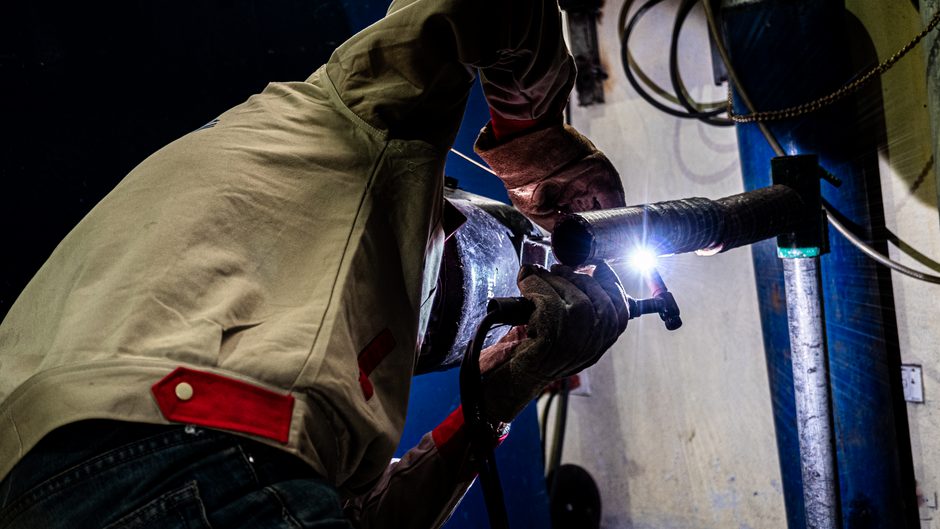
Oxy-fuel cutting torch installation is a gas-pressure-and-stand-off problem, not a mounting problem: select the right torch family and nozzle for plate thickness, then commission the oxygen + fuel train in a fixed sequence to avoid backfire and slug bind.
The Messer SMB 663 hand torch reaches cuts up to 700 mm in unalloyed and low-alloy steel using propane, methane, MAPP or acetylene with oxygen (PMY or acetylene gas combinations), with a 4,000 mm length and G1/2" RH oxygen / G3/8" LH fuel connections for the German market [S1]. For machine integration, the Messer ALFA moves height sensing and auto-ignition inside the torch body, eliminating the external sensing ring and its wear part [S2].
Gate 1 — Torch family and nozzle selection by plate thickness
Oxy-fuel cuts the widest thickness envelope of any industrial thermal process: 0.5 mm to 250 mm plate on a single machine, according to TWI's process reference [S8]. Torch family choice is driven by three variables: thickness, mechanisation, and whether the cut is straight or bevel.
For heavy ingot, billet, slab and scrap work above ~100 mm, the SMB 663 hand torch with lever cutting-oxygen valve and optional torch carriage or skid is the relevant spec, available in straight or angled-head designs and convertible to powder cutting for stainless or cast iron [S1]. For machine-mounted production the ALFA torch targets the same family of work but in CNC gantries, with no-sensor-change height sensing that tolerates slag, mill scale and moisture on the plate [S2]. Gantry class itself sets the second gate: the United ProArc Master series covers X travel 1,600–7,600 mm with ±0.1 mm positioning accuracy and 300 mm maximum cutting thickness, on a rigid ground I-rail with precision linear ways under copper covers [S3].
Gate 2 — Gas train assembly and stand-off settings
Fuel-gas options are not interchangeable: acetylene, propane, MAPP, propylene and natural gas each change preheat flame profile and oxygen demand, so the nozzle size and stand-off distance must match the chosen gas, not the plate alone [S8]. The SMB 663 spec lists compatible gas combinations explicitly as Propane/Methane/MAPP + Oxygen (PMY) or acetylene + Oxygen, with the connection threads sized for those services [S1].
Hand-torch workflows using propane (no welding heat) use a 17 mm shank combined heating and cutting torch with a propane-threaded plug matched to the fuel hose, not an acetylene thread — fitting the wrong thread is a leak path that worsens backfire risk [S4]. The 0.5–250 mm envelope is the nozzle's working range; mismatched nozzle size is the most common root cause of slug bind and incomplete cut-through at the back edge [S8].
Gate 3 — Height sensing, ignition and machine integration
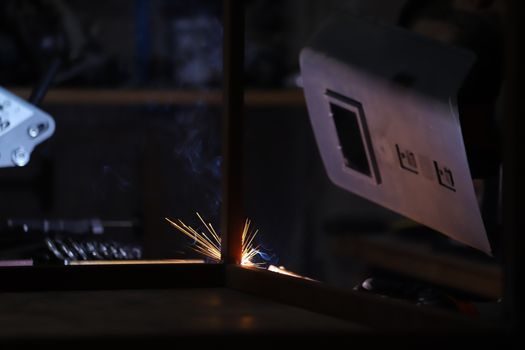
Stand-off height is the single highest-leverage commissioning variable: too low and the nozzle ingites slag; too high and preheat fails to bring the steel to ignition temperature. The Messer ALFA's magnetic height sensing is integrated into the torch body and works right up to the plate edge, so no external sensing ring or extra cable is required and no sensor swap is needed across thicknesses [S2]. A digital Sensomat display shows live operating status during set-up [S2].
Vision-based oxy-fuel torch control with an eye-in-hand camera on a robot arm has been published as a control scheme for automated metal cutting, including work relevant to manufacturing and metal recycling [S7]. On the machine side, the Master series gantry pairs the gas-control system with an optional IHT automatic flame cutting torch and supports plasma + oxy-fuel bevel cutting, tube cutting, dust collection and nesting software in a single CNC envelope [S3].
Gate 4 — Commissioning, first-cut checks and acceptance
Acceptance on a hand torch is a three-step check: confirm oxygen and fuel pressures at the regulator, ignite the preheat and verify a stable neutral flame, then pierce on scrap of the same grade and confirm a clean kerf with parallel drag lines before going onto the workpiece [S8]. For a torch like the ewo 17 mm shank combined heating-and-cutting set, the working envelope is propane heating plus cutting, not welding — the burner gas limits the use case to heating and cutting only [S4].
Acceptance on a CNC gantry is a positioning check plus a cut-quality check: the Master series rates positioning accuracy at ±0.1 mm and pairs a precision linear way under copper cover with sealed cable chains on X and Y axes, so first-cut acceptance should verify repeatability at plate corners and a drag-line pattern consistent with the selected nozzle chart [S3]. When the kerf pulls to one side or slag welds to the back, do not chase stand-off — change the nozzle size and re-verify, because nozzle selection, not height, is the dominant variable for cut quality in this process [S8]. Replace the torch if sensing-ring wear, thread damage or backfire pitting is observed, since retrofits (e.g. powder cutting for stainless) are available on the SMB platform but only with a verified torch body [S1].
Comparison: hand torch vs machine torch vs gantry system
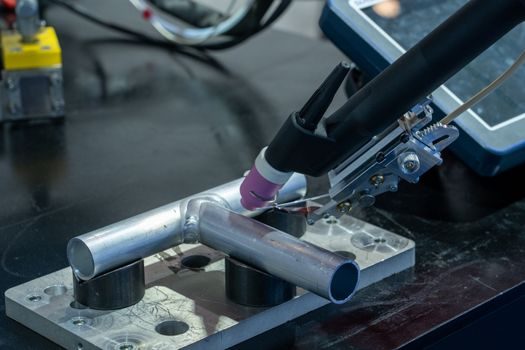
For spec-driven selection, line the three classes up against four decision criteria.
Hand torch (SMB 663, ewo 17 mm): low capex, portable, no external power, cut thickness up to 700 mm on the heavy-duty end, limited to straight cuts and operator-dependent stand-off [S1][S4]. Machine torch (ALFA, MS 932): integrated magnetic height sensing and auto-ignition, no sensing-ring wear, edge-to-edge sensing, requires a CNC gantry and stable gas train [S2]. Gantry system (Master series): ±0.1 mm accuracy, X travel up to 7,600 mm, 300 mm max cutting thickness, optional plasma + oxy-fuel bevel and tube cutting, requires track foundation, fume extraction and nesting software [S3]. A practical rule is: hand torch for one-off heavy work, machine torch for repetitive plate production where stand-off drift costs scrap, gantry system where bevel and tube work share the same cell.
Standards, sourcing and adjacent categories
Process-side references on the oxy-fuel envelope and gas selection come from TWI's job-knowledge library, which documents the 0.5–250 mm thickness range and the fuel-gas options in current industrial use [S8]. CE conformity is stated on the Master series gantry, which is the regulatory baseline for European plant builds [S3]. For a wider view of where oxy-fuel sits against competing thermal cutting, the 2026 laser and plasma trends are mapped in our laser cutting machine trends 2026 reference.
Trackable signals: the ALFA-style integrated-sensor torch is now the default spec on new Messer oxy-fuel gantries [S2], and the Master series options list — IHT auto-ignition, bevel, tube cutting, dust collector — is the practical bill of materials a buyer should request from any CNC oxy-fuel builder in 2026 [S3].
Spec-level background on the components involved: oxy fuel cutter, cutting machine, and linear guide.