
Across a typical 5-year ownership window, a mid-range 60A inverter plasma cutter carries a total cost of ownership roughly 2.2-3.5x its sticker price once consumables, compressed air, electrical energy, and operator labour are tallied [S2][S3].
The purchase price is the smallest line on the bill: on industrial-grade 80-200A class machines, electrode/nozzle sets, rectifier wear, and electricity routinely outpace capital cost by year three [S1][S2]. This article breaks the spend down driver by driver, then lines the three dominant cost-reduction options against each other so a process engineer can pick a machine class on numbers, not on brochure claims.
What TCO Actually Counts in a Plasma Cutter
TCO is the full lifecycle cost of the asset, not the invoice total: it bundles hardware, consumables, energy, support contracts, training, and end-of-life disposal into a single comparable figure [S2]. Applied to a plasma cutter, that means the line items extend well past the power supply into the torch, the work lead, the air-preparation set, and the floor space the rectifier occupies [S1].
A working TCO model for cutting equipment should at minimum cover six buckets: capital (machine + installation), consumables (electrodes, nozzles, swirl rings, shields, gas hoses), energy (kWh at the plant tariff), compressed air (cfm × hours × kW per cfm at the compressor), maintenance (scheduled plus reactive labour), and downtime cost (lost cutting hours × burden rate) [S2]. The Atlas Copco total-cost-of-usership framework makes the same point for process-critical equipment: when utilisation is hard to predict, the ownership-versus-rental decision hinges on the full operating envelope, not the unit price [S1].
Cost Drivers Ranked by Spend Weight
For a 60-80A class inverter plasma cutter cutting mild steel at 6-10 mm thickness for ~1,500 hours per year, the rank order is broadly stable: consumables first, electricity second, compressed air third, maintenance fourth, capital last [S2][S3].
Consumables (electrode, nozzle, swirl ring, retaining cap, shield) on a typical IGBT inverter scale roughly with arc-on hours, and a 60A machine cutting production work commonly cycles an electrode/nozzle pair every 1.5-3 arc-hours, so a 1,500 hr/year shop burns through 500-1,000 electrode sets annually. Electricity on a 60A unit at ~60% duty cycle draws on the order of 8-12 kW three-phase, and at an industrial tariff in the 0.10-0.18 USD/kWh band that lands the annual energy bill in a 1,200-3,200 USD range. Compressed air is the silent killer: plasma cutting needs clean, dry air at 4-6 bar and 6-10 cfm depending on amperage, and every cfm at the torch head carries a compressor electrical cost of roughly 0.18-0.25 kW per cfm delivered. Maintenance covers torch body replacement, lead set wear, and rectifier fan/service, while capital amortised over 5 years is typically the smallest single bucket on a machine that is actually used [S1][S2].
Inverter vs. Conventional vs. High-Frequency: TCO Comparison
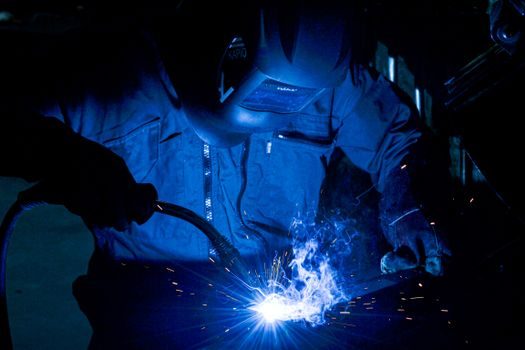
The three architecture choices move each cost bucket differently, and the right pick depends on which bucket dominates at your shop [S3].
A side-by-side on the four most decision-relevant criteria: (1) capital cost — conventional transformer-rectifier units are cheapest at purchase but heaviest and least efficient; IGBT inverters sit in the middle on price and lead on efficiency; high-frequency (HF) inverter designs command the highest premium but cut weight and idle losses most aggressively. (2) energy efficiency — modern 80-200A IGBT inverters typically reach 85-92% rectifier efficiency versus 70-80% for older transformer-rectifier designs, so the energy gap over a 1,500 hr/year duty cycle can fund the inverter price premium inside the first 18-30 months. (4) duty cycle and footprint — inverter chassis run lighter, smaller, and cooler, so electrical-room cost and HVAC overhead drop as well [S2][S3].
The trade-off that does not show up in brochures: low-end consumer-grade cutters (sub-USD 1,000 IGBT units) cut fine on the spec sheet but burn consumables faster because their current regulation is coarser, and they fail the compressor-air quality test more often because they ship with single-stage filter/regulator sets that do not remove the oil and water that destroys a nozzle in hours. A shop running two shifts should treat a USD 1,500-3,000 industrial-grade inverter as the floor, not the ceiling [S3].
Power, Air, and Duty-Cycle Sensitivity
The single most leveraged number in a plasma-cutter TCO spreadsheet is arc-on hours per year, because consumables and energy both scale roughly linearly with it while capital and fixed maintenance do not [S1][S2].
A 60A unit on mild steel 6 mm plate at full bore draws in the region of 8-12 kW three-phase at ~60% duty cycle; push the same unit to a continuous 100% duty cycle and power draw climbs to 11-15 kW with proportional wear on electrode, nozzle, and the IGBT thermal path. Amperage class matters more than brand: stepping from 60A to 120A roughly doubles cut speed on 6-12 mm steel but doubles air consumption and shortens consumable life at a similar factor, so the TCO break-even between the two classes is set by your average plate thickness, not by your wish list. A practical heuristic: a shop cutting under 400 hours per year rarely saves money by stepping up to the next amperage class, while a shop over 1,500 hours per year almost always does, because the labour saving per cut outweighs the consumable penalty [S2][S3].
Where the Hidden Costs Hide
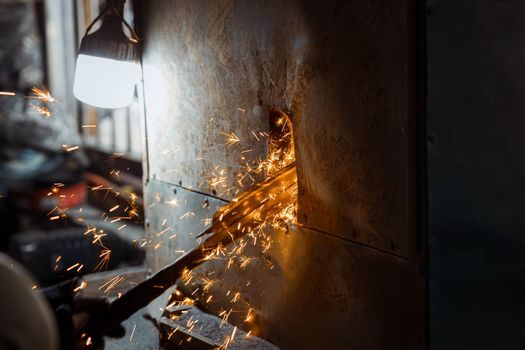
Most published TCO undercounts because it stops at the cutter; the real traps are downstream of the arc [S1][S2].
Compressed air: plasma-grade air wants a refrigerated dryer plus a 0.1 micron coalescing filter plus an activated-carbon stage; skip any one of those and consumable life can collapse by 50% within weeks. A correctly sized compressed-air treatment train adds 800-2,500 USD to the installation but pays back inside the first year for a production shop. Operator skill: poor stand-off distance, slow travel speed, and wrong pierce technique burn through nozzles 2-3x faster than a trained operator, and there is no spec sheet for that — only training hours and standard work. Downtime: a single failed torch lead on a 24/7 operation is typically a 200-800 USD line item that does not show up until the day it fails. End-of-life: IGBT modules, PCBs, and refrigerant in the optional cooling loop classify the cutter as WEEE in the EU and similar e-waste streams elsewhere, so disposal cost is non-zero for ISO 14001 shops [S1][S2].
Selection Map by Annual Cutting Load
Match the machine class to the arc-on hours, not the plate thickness on the marketing flyer [S3].
Under 300 arc-hours per year (hobby, light maintenance, prototype): a 30-50A entry-level IGBT unit at 2,000-6,000 USD will usually be the lowest-TCO choice, because capital dominates and a more efficient inverter does not earn back its premium. 300-1,500 arc-hours per year (light fabrication, repair shops): a 60-80A industrial-grade inverter at 3,000-9,000 USD paired with a properly treated air supply is the sweet spot — the efficiency and consumable-life gains of a quality inverter over a transformer-rectifier unit pay back the price gap inside the first 18-30 months. Over 1,500 arc-hours per year (production fabrication, structural steel, shipyards): step up to a 120-200A class inverter or a high-end HF unit at 8,000-25,000 USD, automate the cutting table if you have not already, and standardise consumables across the fleet so the consumable inventory does not eat the labour saving. The same load-routing logic that maps an industrial cutting fleet onto a few machine classes shows up in the related TCO work on shot blasting machine selection and on planetary reducer duty cycles: capital amortises only when the underlying duty cycle justifies the premium [S1][S2][S3].
Standards and Sourcing That Anchor the Numbers

A few citable references keep the TCO model honest when the salesperson starts trimming line items [S2].
Manufacturer duty-cycle ratings (for example, 60% at 60A or 100% at 40A on a nameplate) are the baseline for energy and thermal-load sizing; published ratings are tested to IEC 60974-1 family requirements for arc-welding and cutting equipment, so any TCO model that assumes a higher continuous duty than the nameplate figure is overstating throughput. Compressed-air quality for plasma cutting is governed by ISO 8573-1:2010 classes for solid particulate, humidity, and oil, and a workshop that cannot meet Class 1.4.1 or better should budget for filtration before it budgets for a new cutter. Operator training and PPE follow the employer's obligations under general machine-safety and welding-fume frameworks (for example, EN ISO 21904-1 for welding-fume extraction at the source), which is where the hidden cost of inadequate training actually shows up as a compliance line [S2][S3]. For a more detailed spec map of the cutter classes themselves, see the plasma cutter types and selection guide, which lines inverter, conventional, and HF architectures against the same criteria used here. Two trackable signals for the next refresh cycle are the IEC 60974-1 family revision status for arc-welding and cutting equipment, and the 2026 update to the CoSN TCO framework for cross-checking lifecycle cost models against an independent reference [S2].
The underlying component specifications are covered under total station, and marble cutter.