
An oxy-fuel cutting torch is a thermal-cutting handpiece that mixes a fuel gas with oxygen to produce a 1,300–3,500 °C preheat flame and a high-purity oxygen cutting jet, classified by duty (hand vs. machine) and by fuel-gas compatibility rather than by brand [S8]. Across the 2026 vendor catalog, three practical classes cover nearly every shop-floor and steel-mill application: air-cooled manual torches, machine torches with built-in height sensing, and heavy-duty torches rated for slabs, billets, and scrap [S2][S4][S6].
The classification matters because each type maps to a specific thickness range, automation level, and gas-mix envelope. A fabricator cutting 6–25 mm plate gets one toolset; a steel mill parting 700 mm ingots gets another [S1][S2]. Selecting the wrong class typically shows up as poor cut-edge squareness, premature nozzle burnout, or a non-CE-conformant gas train on a CE-marked machine [S1][S3].
Hand / Manual Oxy-Fuel Cutting Torches: Air-Cooled Field Tools
Manual torches are the baseline classification, designed for portable field use where the operator controls travel speed, standoff, and ignition directly [S8]. The Messer SMB 663 is representative: a 4,000 mm long air-cooled hand torch with lever-valve oxygen control, available in straight or angled head, and rated to cut up to 700 mm of unalloyed or low-alloy steel [S2]. The Uniweld 830 series shows the same family in a different geometry: V-style head angles of 75°, 90°, and 180°, ribbed brass handle, stainless ball-point valves with Teflon packing, and an air-cooled manual configuration [S6].
Hand torches in this class share three technical features regardless of brand: (1) air-only cooling, since duty cycles are short and the operator pauses between cuts; (2) interchangeable nozzle tips that change both kerf width and the fuel-gas family, with PMY (propane/methane/MAPP) and acetylene being the two common envelopes [S2]; (3) thread patterns for fuel and oxygen typically G3/8" LH and G1/2" RH, with national variants available [S2]. For shop-floor work on sheet, plate, and structural steel, this classification is the default — see the cutting machine reference for how it fits into a full thermal-cutting cell.
Machine Oxy-Fuel Torches: CNC-Mounted With Integrated Height Sensing
Machine torches are the second classification, mounted to CNC bridges, gantries, or portable rails and engineered for unattended, repeatable cuts [S8]. The Messer ALFA is the textbook example: it internalises height sensing and auto-ignition — features that used to live in external consoles — and changes nozzles without tools, which directly reduces mean-time-between-adjustments on a production line [S4].
This classification splits into two sub-types: (a) machine torches fitted to fixed gantries such as the United ProArc Master series (X-travel 1,600–7,600 mm, CE-marked, ±0.1 mm positioning accuracy, max cutting thickness 300 mm) [S1], and (b) machine torches on portable or compact bridges such as the Lincoln Electric EUROTOME 2, which mounts 1–4 oxy-fuel torches alongside plasma and a marking tool on a single bridge, travel speed 15 m/min, and supports plates from 0.5 mm up to heavy industrial thickness [S3]. The Shandong Jiaxin CNC series is the portable end of this sub-type, with X-travel 1,200–1,600 mm, Y-travel up to 5,500 mm, frame weight 70.5–95.5 kg, and a maximum cutting speed of 2,500 mm/min [S5].
Machine torches must be matched to the controller's gas-management block — the Lincoln EUROTOME 2 uses the OXY Essential module to manage up to four oxy-fuel torches, while the United ProArc Master uses an external gas control system plus optional IHT automatic flame cutting torch [S1][S3]. Mismatching the torch to the gas-management block typically results in flame-out during pierce or in backfire alarms; see oxy-fuel cutter for the upstream gas-train requirements.
Heavy-Duty Torches: Steel-Mill and Scrap-Cutting Class
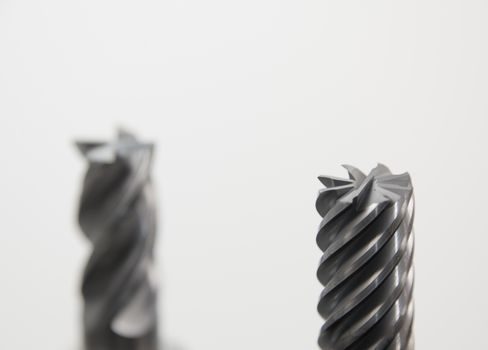
The third classification is heavy-duty torches, purpose-built for steel mills, foundries, and scrap yards where the workpiece is hot, oversized, or both [S2]. The Messer SMB 600/SMB 663 family again defines the class: lever-valve cutting oxygen, straight or angled head, optional powder-cutting attachment for stainless steel and cast iron, and torch-carriage or skid accessories that let the operator work without fatigue on 4 m torch lengths [S2].
Heavy-duty torches in this class differ from manual torches in three measurable ways: longer overall length (the SMB 663 ships at 4,000 mm), higher fuel-gas flow rates that demand reinforced hose bundles, and a dedicated cutting-oxygen lever valve sized for continuous rather than intermittent duty [S2]. Optional powder injection lets the same torch body cut austenitic stainless and cast iron by adding iron powder to the cutting oxygen stream — a feature with no equivalent in the manual hand-torch class [S2]. For riser and gate removal on castings in the same heavy-industrial context, see riser-cutting machine for the dedicated alternative.
Fuel-Gas Classification: Acetylene vs. PMY vs. Natural Gas
Fuel-gas family is the second axis of torch classification and often overrides the duty-class choice [S8]. Acetylene (C₂H₂) produces the hottest preheat flame (~3,500 °C) and the fastest pierce on thin plate, but requires acetone-stabilised cylinders and cannot be used above 1.5 bar working pressure for safety [S8]. The PMY family — propane, methane, MAPP, and propylene — runs cooler (~2,800 °C) but is cheaper, pipeline-available in many plants, and the standard fuel for the SMB 663 and ALFA torches [S2][S4][S8]. Natural gas is the lowest-temperature option and is used where pipeline gas dominates, accepting slower preheat and lower maximum thickness [S8].
The compatibility rule that engineers get wrong: a nozzle is rated for a specific gas family, and swapping a propane nozzle onto an acetylene line — or vice versa — yields poor cut quality and risks backfire. The Messer SMB documentation explicitly lists the compatible gas combinations per nozzle (PMY/O₂ or acetylene/O₂) and warns that national connection threads differ from the German G1/2" RH / G3/8" LH pattern [S2]. For fabrication shops standardising on a single fuel, the PMY family is the practical default because the same regulator and hose bundle works across propane, MAPP, and propylene.
Comparison of Oxy-Fuel Torch Classes
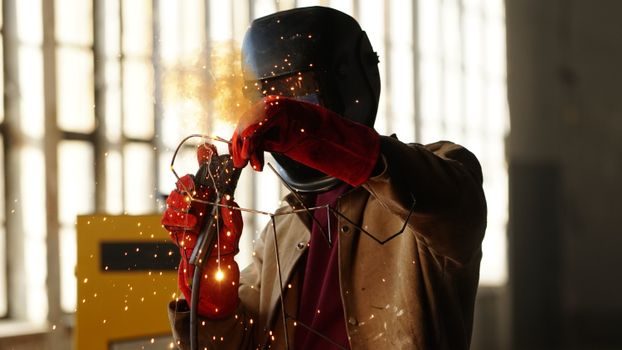
Four decision criteria line the three torch classes up against each other. (1) Maximum cut thickness: manual hand torches and the Uniweld 830 typically rate to ~150 mm with a skilled operator, the SMB 663 heavy-duty line reaches 700 mm on unalloyed steel, and CNC machine torches such as the Master series spec 300 mm as the catalog maximum [S1][S2][S6]. (2) Operator-skill dependence: hand torches require manual standoff and travel-speed control, heavy-duty torches add carriage/skid accessories to reduce fatigue, and CNC machine torches add closed-loop height sensing for full automation [S1][S2][S4]. (3) Compatible fuel gases: hand and heavy-duty torches are commonly built for both acetylene and PMY, while machine torches on automated gantries lean PMY because the gas train is easier to plumb [S2][S4][S8]. (4) Capital cost vs. throughput: portable CNC units such as the Shandong Jiaxin CNC series start at the low end (~70 kg frame, 1,200 mm standard width), fixed gantries such as the Master series scale X-travel to 7,600 mm, and the EUROTOME 2 adds plasma and marking on the same bridge for a single-machine multi-process cell [S1][S3][S5].
For most general-fabrication buyers, the decision reduces to two questions: is the cut thickness above 300 mm (yes → heavy-duty), and is unattended CNC operation required (yes → machine torch with height sensing). Hand torches remain the right call only for field repair, demolition, and one-off cuts where portability outweighs throughput.
Standards, Safety, and Failure Modes
EN ISO 5172 governs the construction and safety of oxy-fuel equipment and is the European reference most CE-marked torches are built against; operator competence is typically certified to EN ISO 9606-1 [S1][S2]. On CE-marked CNC gantries, the gas control system and the torch body are part of the same conformity assessment, so retrofitting a non-CE torch onto a CE machine voids that assessment [S1]. North American sites follow NFPA 51 for oxy-fuel gas handling and AWS C5.1 for cutter qualification.
The recurring failure modes across all three classifications are: backfire (flashback into the torch body, usually from wrong nozzle-to-gas pairing or overheating), cut-edge drag (travel speed too slow or oxygen pressure too low), and excessive dross (oxygen purity below 99.5% or standoff too high) [S8]. On CNC torches, the failure mode shifts to height-sensor drift — a known issue that the Messer ALFA addresses by integrating the sensor into the torch body rather than mounting it externally [S4]. For adjacent process cells that depend on the same gas-regulation infrastructure, see industrial valve for the upstream regulators and check valves that protect the torch train.
Selection Map: Matching Torch Class to Application
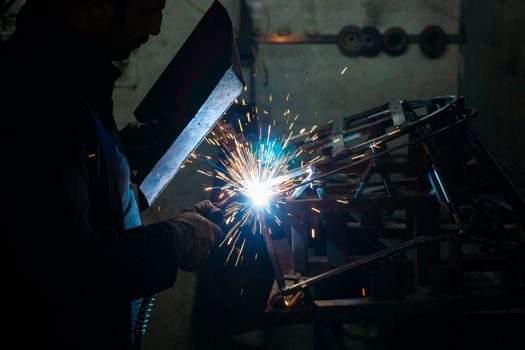
Three application profiles cover the majority of buying decisions. Profile A — structural-steel fabrication, plate thickness 6–50 mm, mixed manual and CNC: pair a Uniweld 830-class hand torch for fit-up work with a Master-series or EUROTOME 2 gantry for production cutting [S1][S3][S6]. Profile B — heavy industry, ingot/billet/slab parting 100–700 mm: the Messer SMB 663 with torch carriage, PMY fuel, and optional powder-cutting attachment for stainless [S2]. Profile C — portable job-site work, plate thickness up to ~25 mm: the Shandong Jiaxin CNC series (70.5–95.5 kg, 1,200–1,600 mm X-travel) gives a single-operator CNC option where a fixed gantry is impractical [S5].
Across all three profiles, the same selection rule applies: choose the fuel-gas family first (acetylene for hottest preheat, PMY for cost, natural gas for pipeline supply), then pick the torch class whose maximum cut thickness and automation level match the workpiece [S8]. The vendor list — Messer, Lincoln Electric, United ProArc, Shandong Jiaxin, Uniweld, plus software/automation suppliers such as Lantek and TherMacut — is stable through 2026, with no dominant disruptive change in torch class structure [S1][S2][S3][S4][S5][S6][S9][S10]. For a deeper look at how automated cells are evolving, the 2026 robotic-welding and plasma-cutter reference articles cover the adjacent automation stack.
Trackable signals for the next sourcing cycle: the rollout of closed-loop oxygen-purity sensors on CNC torches (currently absent from all five catalog entries reviewed), wider adoption of vision-based torch control as documented in the 2023 Akl et al. arXiv paper on robotic oxy-fuel cutting [S7], and the publication of any EN ISO 5172 revision that would re-tier the manual vs. machine torch safety requirements.
See also our earlier report, Hydraulic Actuator and Gear Backlash: Four Compatibility Gates.