
For road-maintenance crews sizing a hand-held oxy-fuel cutter for culvert plate, guard-rail stub, rebar salvage, and patch-plate trimming, the decision still hinges on four engineering gates rather than brand preference: torch seat type, steel thickness, application profile, and fuel gas [S1][S2][S5].
Oxy-fuel equipment can be put into service for roughly $250 to $350 for a high-end torch kit, requires no electrical supply, and is rated to cut mild steel from 3 mm (1/8 in) up to 300 mm (12 in) with the correct tip [S1]. That portability plus thickness headroom is exactly why municipal road crews keep a hand torch on the truck even when a road roller fleet or a plasma station handles the bulk work.
Thickness Range, Preheat Temperature, and Why Mild Steel Is the Sweet Spot
Mild steel must reach an ignition band of roughly 1,600 to 1,800 F before the cutting oxygen stream can sustain oxidation, and preheat is what carries the plate into that window when rust or mill scale is present [S2]. Oxy-acetylene delivers a flame temperature between 5,600 and 5,800 F, which shortens preheat time on cold in-place patch plates and worn guard-rail sections [S1].
Propane runs a noticeably cooler flame, so road crews who standardize on propane torches for cylinder safety and storage simplicity should expect a longer preheat dwell and should size one tip heavier than the acetylene equivalent for the same plate gauge [S1][S5]. Propylene, often sold as a generic label for propane/ethylene blends, sits between the two on flame temperature and typically needs an injector-style torch to develop enough tip velocity for clean kerf [S4]. For non-ferrous or stainless road hardware (aluminum sign brackets, stainless drainage grating), oxy-fuel is the wrong tool: those alloys do not oxidize exothermically in the cut zone, and a plasma cutter sizing for bridge construction approach is the better reference.
Tip Selection Logic: Seat Type, Orifice Sizing, and One-Piece vs Two-Piece Tip Bodies
The cutting tip is not a generic commodity, because the center hole and preheat orifices are sized in matched pairs for a specific thickness and fuel gas, and the seat geometry is torch-model specific [S1][S5]. Installing a tip with the wrong seat, even when the threads look similar, can damage the torch head or produce a flammable gas leak at the mixing chamber [S1][S5].
For routine road-maintenance cuts in the 6 to 25 mm range (patch plates, sign-post stubs, rebar), a one-piece solid copper tip in the appropriate acetylene size is usually sufficient; for plate above 25 mm or for high-pressure machine cuts at the depot, a two-piece hybrid tip with a brass inner preheat sleeve and copper outer cutting barrel is the more durable choice [S1]. Specialty tips extend up to 24 in from the torch body to reach into culvert interiors or behind a guard-rail face without dismantling the assembly [S1].
Fuel Gas Comparison for Field Duty: Acetylene vs Propane vs Propylene vs Natural Gas
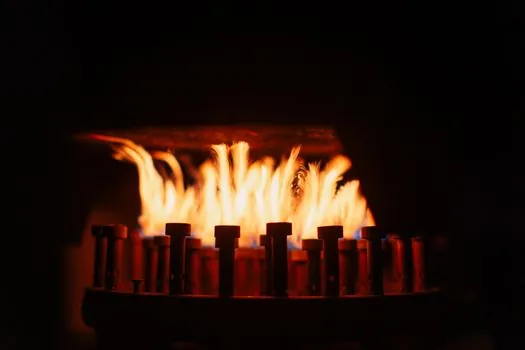
Acetylene cuts fastest and preheats in the shortest time, but it is the most expensive fuel per cubic foot and is not the most efficient choice when the work is heating large areas of asphalt patch rather than slicing steel [S1]. Propane is more storage-stable, easier to handle in a hot service truck, and is the common hobbyist and small-crew default, with cutting speed close to acetylene on thin plate but slower preheat [S4].
Propylene is a hotter-than-propane alternative that requires an injector torch to keep the heat cone concentrated on the kerf, while natural gas delivers the lowest flame temperature of the four and the slowest cut, which generally rules it out for time-sensitive road calls [S4]. A practical road-crew matrix therefore looks like: acetylene for cold-weather, thick-plate, and fast-turnaround work; propylene for crews that want hotter-than-propane performance with a stable bottle; propane for general-purpose light-gauge trimming and heating where cylinder logistics matter more than cycle time. The fuel choice must match the tip, because propane tips are heavier to compensate for longer preheat and propylene tips are designed around the higher flame velocity of that fuel [S5].
Torch Architecture: Equal-Pressure vs Fuel-Injected (Injector) Bodies
Equal-pressure torches deliver the oxygen and fuel at matched pressures and accept acetylene, propane, or natural gas with a tip swap, which makes them the flexible default for mixed-fleet road depots [S4]. Fuel-injected (low-pressure) torches use acetylene as the fuel gas and are optimized for welding and brazing duty in addition to cutting, so a crew that brazes copper sign-ground straps or heats frozen couplings will often standardize on this body style [S4].
If the maintenance yard is also running automated or rail-guided oxy-fuel cutting machine work for guard-rail blank preparation, select a torch model with a high-pressure cutting tip rated for machine travel, because hand tips are not designed for the sustained oxygen flow of a motorized carriage [S1]. For demolition-adjacent tasks like burning out a riser on a bridge abutment form, or for cutting embedded plate flush with a deck, the same hand torch works if a long-reach or gouging tip is fitted rather than a standard cutting tip [S1].
Flame Setup, Common Failure Modes, and Acceptance Cues
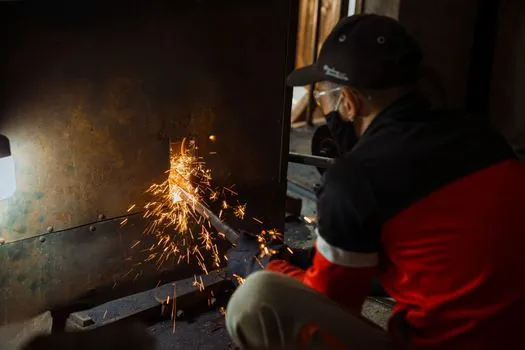
After lighting, the operator should verify that the inner blue gas cones are equal in length with and without the oxygen lever pressed, which confirms a neutral flame and the correct gas balance for cutting [S4]. A carburizing flame (too much fuel) leaves carbon deposits along the kerf, while an oxidizing flame (too much oxygen) produces porous, brittle cut faces, and both are tip-or-pressure symptoms rather than operator skill problems [S4].
A short, weak, or hissing flame at the tip is the classic sign that the orifice has been contaminated with slag or carbon and should be reconditioned with a tip cleaner and a fine file before the next cut; continuing to cut with a dirty tip burns the seat and forces a premature tip replacement [S4]. For plate that has heavy rust or paint, extend the preheat dwell until the metal visibly brightens across a 25 to 50 mm band ahead of the kerf, because cutting cold through scale produces a wandering cut and excessive back-side slag [S2]. When the cut quality is poor despite correct tip, pressure, and preheat, the root cause is usually a wrong fuel-gas tip family rather than a torch defect, and the corrective action is to fit the tip matched to the cylinder in use [S5]. Do not attempt to repair a torch head with a visibly damaged mixing chamber or thread seat; replace the head or escalate to a certified repair shop, because reseating a damaged seat is not a field repair [S1][S5].
Road-Maintenance Buying Checklist and Field Sourcing
A practical road-crew specification reads: equal-pressure torch body with manufacturer-specific seat type, acetylene-rated one-piece copper tip set covering 6 to 25 mm plate, one heavier propane tip for each size if a propane bottle is on the truck, one 24 in extension tip for culvert interior work, and a tip-cleaner file set [S1][S4][S5]. For crews that also need to cut concrete-form ties or bridge-overhang rebar flush, the oxy-fuel torch is the wrong primary tool, and a oxy-fuel torch on concrete specs review is the better reference before scoping a welding and cutting tool bundle.
Two signals worth tracking on the next procurement cycle: acetylene cylinder price per cubic foot at the local welding supply, since road-depot operating cost tracks that line item directly [S1], and the availability of two-piece hybrid tips in the specific seat pattern of the crew's existing torch, because hybrid tips last noticeably longer on the high-cycle guard-rail blank work that drives depot overtime [S1].