Packaging machinery is the capital-equipment layer behind every filling, sealing, wrapping, labeling, coding, cartoning and palletizing line on a plant floor, and the global market was valued at USD 46.4 billion in 2022 with a published forecast of USD 56.7 billion by 2027 at a 4.1% CAGR [S3].
That same forecast frames the structural question for 2026 procurement: where the demand sits, who makes the equipment, and how much of the spec'd capacity is actually flowing through the new-versus-refurbished channel. One number anchors the rest of the analysis: 13 official machine categories under the GB/T 7311-2008 classification, with the food industry identified as the largest user of packaging machinery in China [S1].
End-Use Demand Mix: Food, Pharma, Beverages Drive the 4.1% CAGR
The end-use mix is concentrated, not balanced: food is 28% of the Chinese packaging-machinery demand pool, pharmaceuticals 18%, oil and daily chemicals 15%, beverages 15%, cosmetics 4%, tobacco 3%, and other industrial 17% [S1]. For 2026 spec-writing, food and pharma carry the most regulatory weight per line, while beverage and oil/daily-chemical projects drive throughput-driven capex cycles.
Pharmaceutical packaging lines are specifically shifting toward flexible platforms that can run two to three pack formats on a single machine, driven by smaller-batch biologics, pre-fillable syringes, parenteral formulations, and oncology/respiratory/anti-viral/autoimmune pipelines [S3]. That single-format-versus-flexible-platform decision is the cleanest 2026 spec gate on a pharma line: one-format fixed machines cap at higher OEE but lose on capex amortization when batch sizes drop.
Supply-Side Geography: China Largest Single-Country Market, EU/JP/US Still Hold Two-Thirds of Manufacturing
China's packaging-equipment demand surpassed the United States in 2012, exceeding USD 3.3 billion in that year alone and making it the largest single-country market [S1]. Manufacturing capacity, however, did not move with the demand: in 2012 Western Europe, Japan and the United States together still held roughly two-thirds of global packaging-machinery manufacturing output, even as developing-country production rose faster in percentage terms [S1].
The 2026 read of that legacy: even with Chinese demand dominant, the high-spec end of the line (form-fill-seal aseptic, precision labeling, integrated palletizing/robotics) still traces back to European and Japanese OEM platforms, with Chinese lines competing harder on the filling, wrapping, and cartoning tiers. The packaging machine reference taxonomy and the underlying packaging material decisions remain the two upstream spec choices that lock in which OEM tier fits the line.
The Refurbished Channel: 40% Discount Reshapes Asia Pacific Procurement
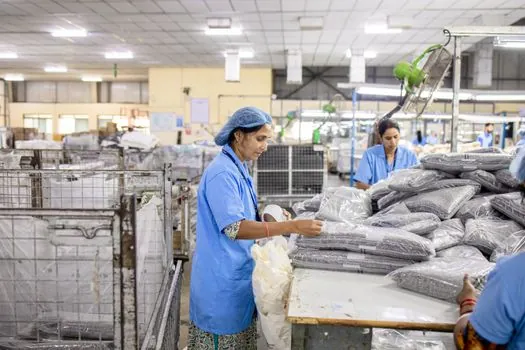
Refurbished packaging machinery sells at roughly a 40% discount to new equipment, and the channel is most active in low-cost Asia Pacific manufacturing locations where regulatory acceptance is more lenient [S3].
For 2026, the procurement rule is mechanical: where the line runs a non-aseptic, non-pharma product and the regulatory environment is permissive, refurbished is the default; where the line touches pharma, beverage aseptic fill, or any code-regulated date/traceability stack, the new-OEM spec is still the correct call. The vacuum and modified-atmosphere packaging tiers sit in between, because vacuum packaging machine uptime, seal-integrity test data, and chamber-pressure cycle counts are auditable on a refurbished unit if the integrator documents them.
Standards, Classification, and Spec Gates: GB/T 7311 as the Common Vocabulary
GB/T 7311-2008 "Packaging Machinery Classification and Model Preparation Method" defines 13 official machine categories, including filling, sealing, wrapping, multi-function, labeling, cleaning, drying, sterilizing, strapping, setting-mounted and auxiliary packaging machinery [S1]. That 13-category frame is the vocabulary procurement, OEM, and end-user engineering all share; any 2026 RFQ that does not map its required functions to one of those 13 slots is a spec hole, not a spec.
The sub-segment that drove the highest unit growth in the 2012-era baseline, and that still moves volume in 2026, is labeling and coding equipment, supported by food-safety regulation, traceability rules, and rising non-durable-label consumer goods [S1]. Filling and sealing remain the largest installed base, holding roughly a quarter of packaging-equipment market value in the 2012 baseline [S1]. For 2026 sourcing, the most reliable cross-vendor comparison axis is throughput (units/min), format-changeover time (min), and accepted pack-size range; vendor-specific software stacks, servo counts, and OEE telemetry should be evaluated on the same line, not across separate RFQs.
Comparison: New OEM vs Refurbished vs Flexible-Format Platform
Three procurement options line up against four decision criteria. New OEM equipment: highest capex, full warranty and validation documentation, fastest regulatory acceptance for pharma/aseptic lines, longest lead time. Refurbished: roughly 40% lower capex [S3], shorter delivery, regulatory-acceptance risk in pharma/aseptic, limited format-changeover support. Flexible-format platform: higher unit capex than fixed-format, but a single line covers 2-3 pack formats, which is the model pharmaceutical OEMs are explicitly buying to amortize smaller-batch biologics and pre-filled syringes [S3].
The line-speed ceiling, the changeover-time target, and the regulatory class of the product being packed should be locked before the OEM/format decision is taken. A flexible-format line on a non-pharma, high-SKU product is over-spec'd; a fixed-format new OEM on a multi-format pharma pipeline is a 24-month capex write-off waiting to happen.
Supply-Chain Pressure Points: Lead Time, Format Changeover, and Sustainability Pressure
Three pressure points are visible in the 2026 sourcing data. First, lead time for new packaging lines is long enough that refurbished is treated as a working alternative rather than a fallback [S3]. Second, biopharma and laboratory production runs increasingly need small-batch capability at longer intervals, which forces frequent changeovers and higher maintenance, pushing demand toward equipment platforms that handle small batches without sacrificing line speed [S3]. Third, sustainability and circular-economy pressure on packaging waste is now a documented supply-chain research stream: a systematic review of sustainable packaging in supply chain management literature found dominance of reuse-and-return practices, with three main supply-chain structures and persistent under-coverage of developing economies and the social dimension [S2].
For an engineer spec'ing a line in 2026, the practical meaning is that end-customer RFPs now routinely include reuse, recyclability, and pack-weight-reduction clauses, and OEM selection is no longer a pure throughput decision. Related reference material on adjacent industrial buying cycles is useful context: see the hydraulic valve suppliers 2026 OEM map for how Chinese OEM pricing tiers compare against European OEM lead times in adjacent motion-control categories, and the shaft coupling selection map for a parallel example of how a generic mechanical component spec gate is structured in 2026.
Procurement Signals Worth Tracking Through 2026
Two signals are worth pinning. The Packaging Innovations & Empack Birmingham event series runs on a 2026/2027 cycle and is one of the clearer UK/EU datapoints for primary-pack, secondary-pack, robotics, filling, and coding equipment releases, with the 2026 edition live and the 2027 registration window open [S4].
Track the next revision of that MarketsandMarkets report for any revision to the 4.1% CAGR or the 2027 USD 56.7 billion value, and watch the Packaging Innovations & Empack Birmingham 2027 program for OEM-level announcements on flexible-format and aseptic platforms, since those are the two categories where 2026 spec-writing is least settled.