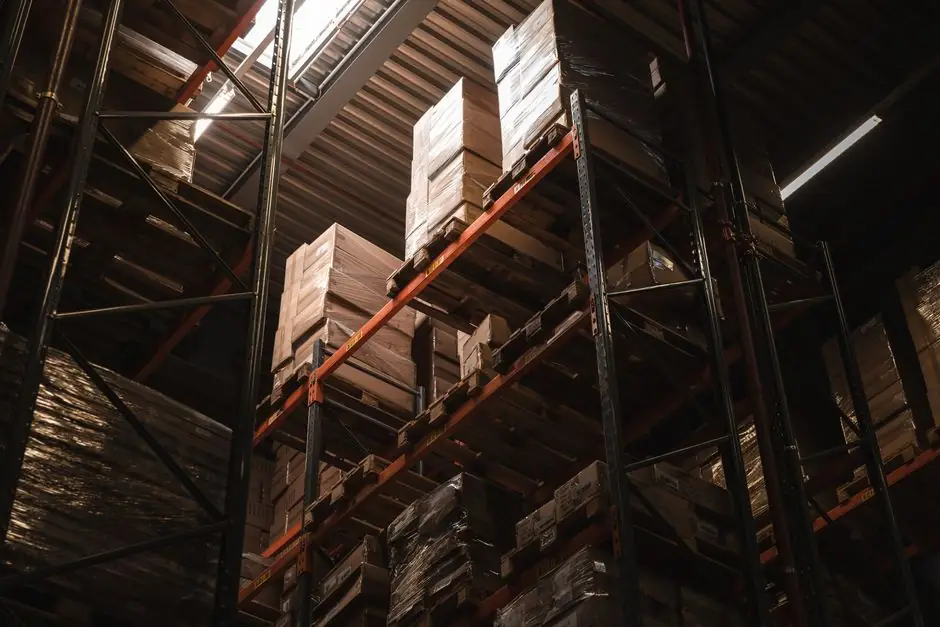
VLMs sold for pallet duty and VLMs sold for small-parts trays are not the same machine class, and treating them as interchangeable is a fast way to overspend or fail a site survey [S1][S2].
Pallet-class VLMs are engineered around full-unit-load handling in a 30+ ft clear-height envelope, while tray-class VLMs target totes, tools, and fasteners in 20-25 ft ceilings and recover 600-1,000+ sq ft of floor per installed unit [S2][S4]. The wrong match either starves the throughput case or forces a building extension that an ASRS comparison framework would have caught early.
Definition and Scope: What Changes Between the Two Classes
Both VLM classes use a central extractor that retrieves a storage carrier and presents it at a waist-height access opening, but the carrier geometry and the column mechanics diverge sharply [S5][S6]. Small-parts VLMs store totes and trays on both sides of the extractor and compress unused vertical air by measuring item height per tray, which is why a 25 ft ceiling can eliminate up to 65 shelving sections and reclaim more than 600 sq ft per unit [S2]. Pallet VLMs lift unit loads on dedicated pallets or pallet-sized carriers, require reinforced floor slabs, and generally need a 30 ft or taller clear height to make the crane/elevator envelope pay back [S4].
Selection Criteria: Ceiling, Floor Load, and Tray Footprint
Clear height is the first hard filter: most full unit-load ASRS configurations, including pallet VLMs, require a 30 ft minimum to be economic, while small-parts VLMs are designed for facilities where horizontal footprint is constrained but ceiling height supports the enclosed tower [S4]. Floor load capacity is the second filter, because pallet VLMs concentrate significant column loads and frequently demand slab evaluation that standard racking does not [S4]. A third, often overlooked, filter is tray footprint: a typical VLM tray for small parts is sized for totes and cartons in the tens-of-pounds range, whereas a pallet VLM tray is engineered for full unit loads and is therefore heavier, wider, and slower per cycle. The encyclopedia entry on vertical lift modules treats these as the same equipment class, which is why the spec sheet, not the category name, has to drive the decision.
Who Each Class Is For (and Who It Is Not)
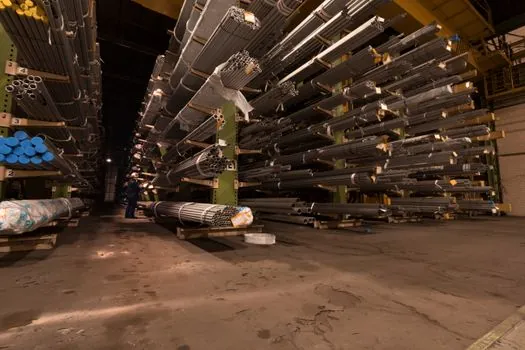
Small-parts VLMs fit high-SKU, fast-moving inventory: medical and industrial parts, tools, machine components, and any operation where pickers currently walk aisles for fasteners or MRO items [S5]. They are not the right tool for full pallet reserve stock, oversized dies, or low-SKU bulky goods, which are better left on standard racking or sent to a unit-load ASRS [S2][S4]. Pallet VLMs and unit-load ASRS sit further up the throughput curve, targeting operations processing hundreds of pallet moves per day at consistent volume, and they are explicitly not justified below that threshold [S4]. The hybrid storage strategy covered in the dynamic-slotting note is the same logic at SKU scale: fast movers go into the VLM, slow and bulky stock stays on the rack.
Criteria Comparison: Pallet VLM vs Small-Parts VLM vs Traditional Racking
On footprint, small-parts VLMs can recover up to 85% of the floor space required by traditional shelving in the same SKU range, while pallet VLMs replace dedicated pallet-rack zones rather than shelving aisles [S3]. On ceiling, small-parts VLMs hit economic density at 20-25 ft, whereas pallet VLMs typically need 30 ft or more, and below that the crane envelope cannot pay back [S2][S4]. On throughput, traditional racking is bound by walking speed and ladder or forklift retrieval, while both VLM classes deliver goods-to-person and report drastic improvements in pick rate and accuracy, though pallet-class units have longer per-cycle times because the carrier mass is higher [S1][S3]. On capex, a traditional shelving rack costs far less than any VLM, which is why the same vendors routinely recommend shelving for bulky, irregular, slow-moving, or low-SKU inventory and VLMs for the opposite profile [S2][S5].
Real Use Cases and Quoted Numbers
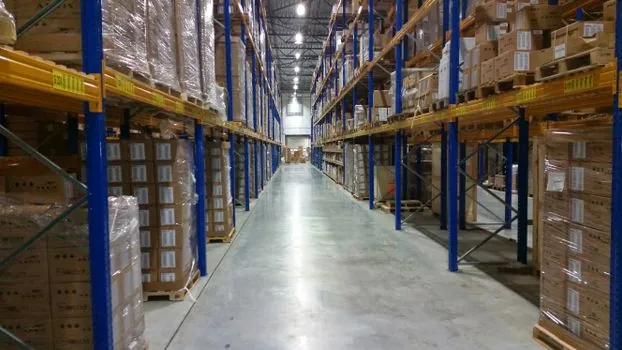
Kardex's site examples give concrete replacement ratios: a 20 ft ceiling eliminates 45-49 shelving sections per VLM, saving roughly 83% of floor space, while a 25 ft ceiling eliminates up to 65 sections and returns more than 600 sq ft, and a 40 ft ceiling returns up to 100 sections and nearly 1,000 sq ft [S2]. The same vendor notes that in a 25 ft ceiling with 12 ft racks, "roughly half the building's vertical cube is wasted" before any VLM is installed, which is the baseline number to use when justifying either VLM class [S2]. Tray-class VLM capacity is documented at "at least one short ton (2,000 lbs.)" per tray on modern units, and pallet-class units are typically specified per the heavier load cases in the manufacturer's datasheet [S9].
Limitations, Failure Modes, and Sourcing Constraints
VLMs are not a universal fix. Sprinkler clearance to the top of the storage envelope can force in-rack sprinklers and add cost that is "frequently discovered after planning is underway rather than before it starts," and column spacing in the existing building grid constrains how a pallet VLM or ASRS crane can be laid out [S4]. Fire suppression, slab capacity, and column grid are the three site constraints that decide whether a pallet VLM is even buildable, and they need a site assessment before any equipment commitment [S4]. Small-parts VLMs avoid the worst of those constraints because the column loads are lighter and the envelope is shorter, which is why they are the default first ASRS purchase for parts rooms and MRO stores. The encyclopedia note on linear modules is a useful reminder that VLM throughput also depends on the upstream conveyor or pick-station layout, not just the tower.
Decision Guidance and What to Track Next
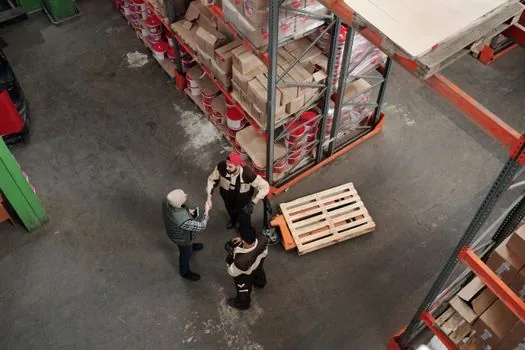
For a parts-dense operation under a 25 ft ceiling, specify a small-parts VLM, plan for 600+ sq ft of reclaimed floor, and verify tray load rating against the heaviest single SKU rather than the average. For a pallet-throughput operation above 30 ft of clear height with engineered floor capacity, evaluate a pallet VLM or unit-load ASRS against the "hundreds of pallet moves per day" threshold and budget for a multi-month installation rather than a quick retrofit [S4]. For anything in between, default to standard racking and revisit only when SKU count or pick frequency crosses the threshold where a wireless module on the pick station can no longer keep up with the WMS events.