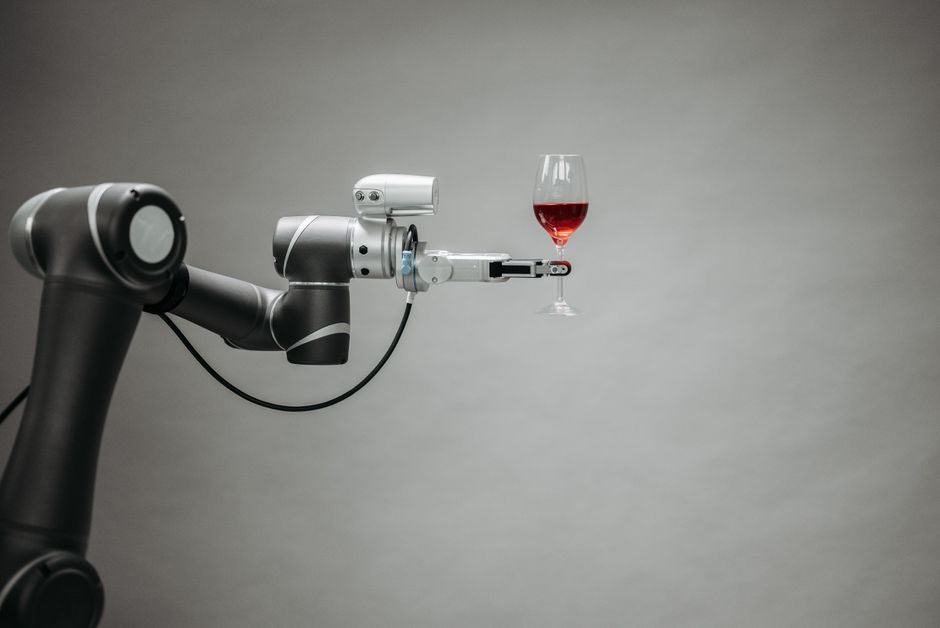
A palletizing robot stacks product onto a pallet; an AGV robot moves that pallet across the plant. They are two different stages of the same end-of-line flow, and buying one does not displace the other.
Spec-led buyers separate the two on four axes: payload class, repeatability, work envelope, and the upstream/downstream interface. The 2026 generation of four-axis palletizers (e.g. ER120-4-2400 through ER450-4-3200) covers 120-450 kg loads with ±0.2-0.5 mm placement repeatability and IP65 protection [S3].
Palletizing Robot Capability Envelope
A palletizing robot is typically a four-axis articulated arm with a vertical work envelope, sized around the pallet footprint plus stack height [S3]. The Smecta ER series shows the practical scaling pattern: 120 kg payload at 2.4 m wingspan and 1200 kg machine weight, climbing to 450 kg at 3.2 m wingspan and 2100 kg weight, with each axis speed ranging from 67°/s on the heavy end to 300°/s on the wrist [S3].
Repeatability tightens as payload drops: ±0.2 mm on the 120 kg model, ±0.4-0.5 mm on the 180-450 kg models [S3]. Protection class holds at IP65 across the range, which is the floor for dusty packaging lines [S3]. Cycle path numbers from compact palletizers, such as the YSRD-series 0.5 s cycle time and 0.5 kg payload class, show that small-bag work is a different machine than case stacking [S4].
The YUPACK product family groups palletizer variants into single-column, low-level, high-level, robotic, and truss categories, which mirrors how integrators actually pick a stacker [S2]. For mixed-SKU lines, an articulated robot with a bag or clamp end-effector is the typical answer, because it can be retaught for new patterns without mechanical retooling [S6].
AGV Robot Capability Envelope
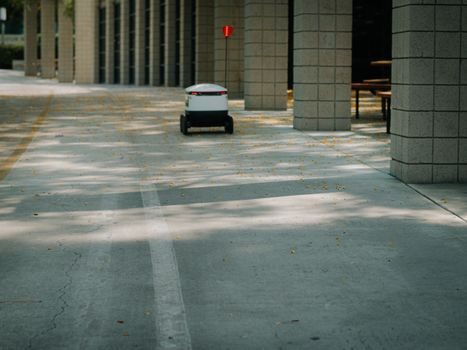
An AGV robot is a wheeled platform that follows a defined path — magnetic tape, QR codes, or SLAM — and carries a pallet or tote from point A to B. Its defining spec is payload (commonly 500 kg to 2000 kg for pallet variants) and navigation method, not arm repeatability. [S2]
Where a palletizer is judged in mm and °/s, an AGV is judged in mm of docking accuracy, mm/s travel speed, and battery cycle count. The two classes share IP65 as a common floor for plant-floor deployment, but the AGV adds safety-scanner requirements (typically SICK or Hokuyo LiDAR zones) that a stationary arm does not need.
Palletizing robots are also being deployed as end-of-line cells in chemical fiber, home appliance, food, and sheet-metal plants, which is the same industries where AGV fleets move the finished stack to the warehouse [S3].
Decision Matrix: When to Specify Which
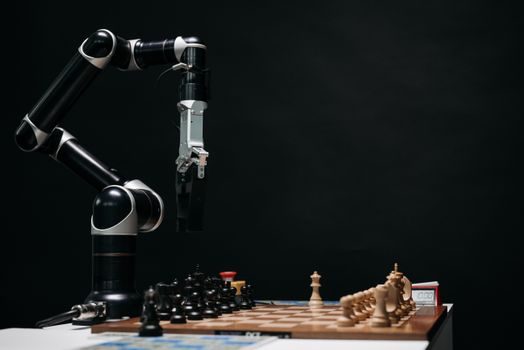
Buy a palletizing robot when the bottleneck is stacking rate, stack pattern variability, or operator injury risk on a fixed station. Buy an AGV when the bottleneck is finished-goods travel distance, dock-to-dock handoffs, or labor scarcity in the warehouse yard. [S3]
Criteria: payload, mobility, accuracy, integration effort. On payload, a palletizer peaks at 450 kg in the cited commercial range, while a heavy-duty AGV is typically rated 1000-2000 kg [S3]. On mobility, only the AGV is mobile; the palletizer is anchored in ground or bracket mounting [S3]. On accuracy, the palletizer wins (±0.2 mm vs roughly ±10 mm for an AGV docking on a pallet jack interface). On integration effort, a palletizer drops into a conveyor upstream, while an AGV requires fleet management software, traffic rules, and charging dock layout.
If the operation is small-batch with 5-20 SKUs and 800-1500 bags/hr, a robotic palletizer with a Teijin reducer and KEBA controller is the standard answer [S6]. If the operation is moving 200+ pallets/day across a 5000 m² warehouse, the AGV fleet is the standard answer. Plants running 24/7 with both high stacking volume and high pallet flow almost always buy both, with the AGV receiving pallets from the palletizer's discharge conveyor.
End-Effector and Tooling Trade-offs
Palletizing end-effectors split into clamp, vacuum, and fork variants. The carton-palletizing clamp variant handles cases, with model codes like ER180-4-3200 carrying 180 kg at 3200 mm wingspan and 1400 kg machine weight [S3]. The bag palletizing variant with zero-disc recognition handles woven and paper bags without a vacuum supply [S6].
A clamp tool needs no external air, which simplifies utility routing in dusty plants. A vacuum tool needs -0.06 MPa class vacuum and a dust filter, but it can handle unstable surfaces that a clamp cannot. For food and chemical-fiber lines where bag surfaces deform, the clamp or scoop variant is the safer pick; for rigid cartons, vacuum is faster [S3][S6].
The SAN-RPM series, a four-degree cylinder-coordinate palletizer using horizontal and vertical linear axes, is the lower-cost alternative when an articulated robot is over-spec [S5]. Buyers should weigh that against the longer pattern-changeover time of a Cartesian-style palletizer.
Integration and Sourcing Signals in 2026
Chinese suppliers (YUPACK, Smecta, YoungSun, San Qingdao) dominate the mid-payload palletizer catalog, with four-axis articulated models shipping in 120-450 kg classes and IP65 protection as standard [S2][S3][S4][S5][S6]. Yamaha and other Japanese vendors remain present in the higher-precision and higher-speed tier [S1].
The 2026 purchasing signal is to treat the palletizer and the AGV as one cell, not two. Lead time for a four-axis 180 kg palletizer with a KEBA controller is typically 30-45 days from the major Chinese integrators; AGV lead time runs 45-75 days because of safety-scanner certification. Specifying the palletizer conveyor height to match the AGV fork pocket centerline (typically 600-800 mm) is the single biggest integration mistake buyers still make, and it is worth locking that dimension on the purchase order, as discussed in the Industrial Robot Capacity Planning sourcing signals guide.
Trackable signals to watch over the next two quarters: a second source for KEBA-class controllers (single-supplier risk), and EU Machinery Regulation 2023/1230 alignment dates for palletizer safety stop categories, both of which will reshape cell-level cost in 2026-2027.
For component-level specifications, see amr robot.