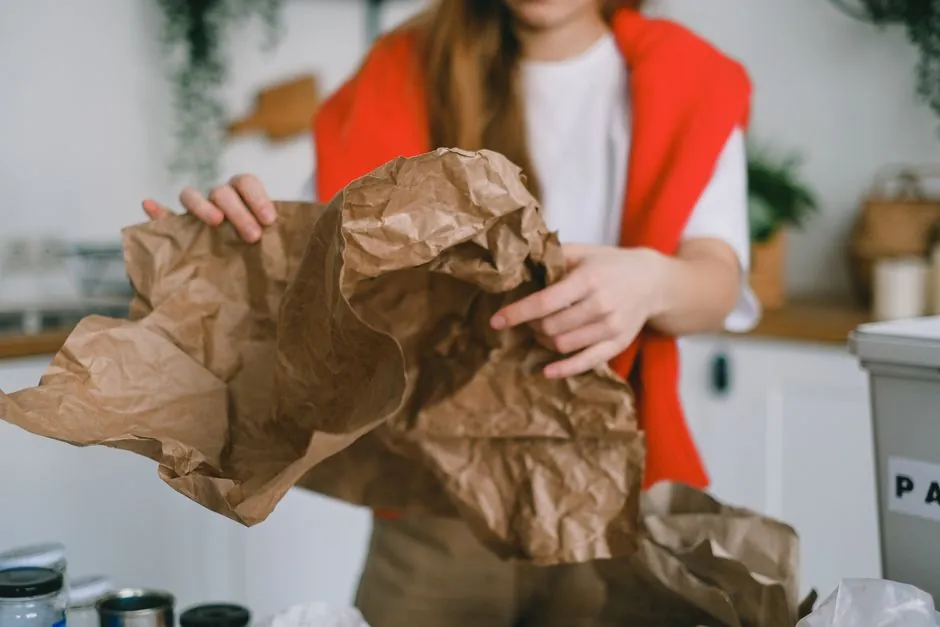
Paper packaging is expanding into moulded-fibre trays, paperboard cartons, protective inserts and flexible formats as manufacturers seek alternatives to conventional plastics [S4].
The shift is being shaped by fibre-first design, recycled-content sourcing, recyclability requirements and extended producer responsibility, but material substitution must be judged against protection, line performance and end-of-life recovery [S1][S3][S5].
Paper replacement requires a lifecycle comparison
Paper is a feedstock, not a sustainability verdict. Fibre-based formats can replace conventional plastic, but coatings and treatments for moisture, grease and oxygen resistance can complicate recycling, while heavier formats can increase transport emissions [S4].
A study published on November 19, 2026 found that substituting alternative materials for plastic packaging can increase global warming potential. Its conclusion is blunt: “plastic packaging can have lower potential environmental impacts than alternative packaging materials” under the assessed conditions [S2].
This finding applies packaging decisions to the full production and recovery chain. Fiber source, converting energy, coatings, product weight, transport distance and collection rates all affect the outcome. A package that is technically recyclable but rarely collected and sorted does not establish a circular system [S1][S4].
Compare the leading material options
Paper provides familiar fiber recovery streams and renewable feedstocks, but may need barriers and greater structural mass [S4]. PLA is a compostable bio-based alternative, yet its disposal route must exist at the point of use; a general call to compost should not be treated as proof that the material will be composted [S6].
For procurement, the comparison is straightforward: fibre scores for renewable feedstocks and established consumer familiarity, recycled plastic scores for processing continuity, and PLA scores for compostability only where the recovery system exists. None wins automatically on global warming potential [S2][S4][S6].
Use packaging format to fit the recovery system

Paper cups, tubes, thermoforms, films and other contested formats require evidence covering collection, sortation, access and end markets, not merely a recyclability label [S1].
Packaging teams should distinguish curbside recyclability from store drop-off. Shorr reported rising demand for packaging accepted through either route, with 90% of surveyed consumers more likely to buy from companies offering sustainable packaging and almost 40% having switched to a competitor that provided it [S5].
That consumer evidence supports testing, not automatic material substitution. The packaging specification must identify the accepted recovery route, required consumer actions and local processing constraints. A logistics and packaging specification should capture that evidence before artwork approval or line conversion.
Design paper around product protection and production
Improved barrier coatings, stronger fibre structures and more sophisticated forming processes now allow paper-based formats to enter applications previously dominated by plastics [S4]. That does not make paper suitable for every product. Moisture, grease and oxygen barriers may require additional treatment, and coatings can make separation more difficult during recovery [S4].
Manufacturers must test the complete pack rather than the substrate alone. Acceptance criteria should cover load, compression, drop exposure, shelf-life protection, sealing or closure, line speed and pack-to-line performance. The 2026 packaging assessment identifies product protection, production-line efficiency and recovery through established systems as the conditions separating stronger fibre-based solutions from simple plastic volume substitution [S4].
Material reduction remains a separate engineering lever.
Compliance is necessary but cannot decide the material

Extended Producer Responsibility programs in the United States, the European Union’s PPWR legislation and United Kingdom recyclability assessments and reporting requirements are driving packaging teams to rebuild internal data and reporting processes [S1]. EPR exposure, producer fees and eco-modulation make the economics of packaging formats more consequential, but compliance does not provide the missing collection, sortation and end-market data [S1].
Paper specifications should therefore record total material weight, recycled content, coatings, adhesive, closure, inks and the intended recovery route. The 2026 Sustainable Packaging Trends Report calls for closer data on collection, sortation, access and end markets across cups, tubes, thermoforms and films [S1].
Claims should also be separated from product performance. Shorr recommends quantifying changes in waste diversion and environmental outcomes because measurable packaging data reduces greenwashing risk. Its 2025 consumer survey found that just as many respondents were willing to pay more for sustainable packaging as had switched brands because of it [S5].
Fit the material to the use case and disposal route
Paper-based packaging is best suited to protected products, dry goods and formats that can operate within existing fibre recovery systems. It is less suitable where a complete moisture, grease or oxygen barrier requires inseparable material combinations, or where lower transport weight is critical to the lifecycle result [S4].
PLA-based packaging fits selected applications where an industrial composting route is accessible and specified. Paperboard cartons and moulded-fibre trays suit many presentation and secondary-packaging formats, while flexible paper and corrugated formats can address protective inserts. Recycled plastic remains relevant where line compatibility and barrier performance outweigh the environmental case for fibre [S3][S4][S6].
Eight alternatives to single-use plastic identified in the supplied material include paper-based solutions, illustrating that paper can address several packaging formats rather than serving as one universal replacement [S7]. The commercial decision still depends on cost, barrier performance, converting speed, recovery access and end-market capacity.
Track recovery and measured impact before scaling
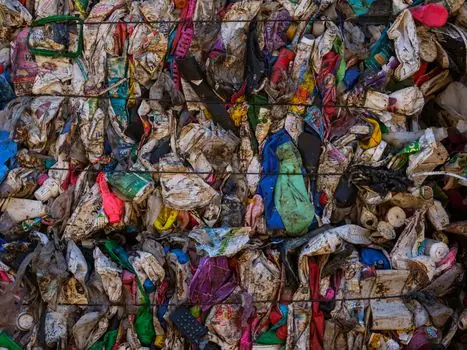
The next decision node is package-specific verification: confirm the local recovery route, quantify material and transport changes, run production trials and document how coatings or mixed layers affect recovery. A 2026 comparison paper warned that materials described as recyclable may not be collected or processed in practice, while technically innovative formats can fail cost, performance and scalability requirements [S4].
Track two signals after launch: the proportion of units entering the stated recovery stream and measured environmental performance against the incumbent package. Scale only when those results confirm that paper replacement improves the specified impact without weakening protection or creating a recovery burden.