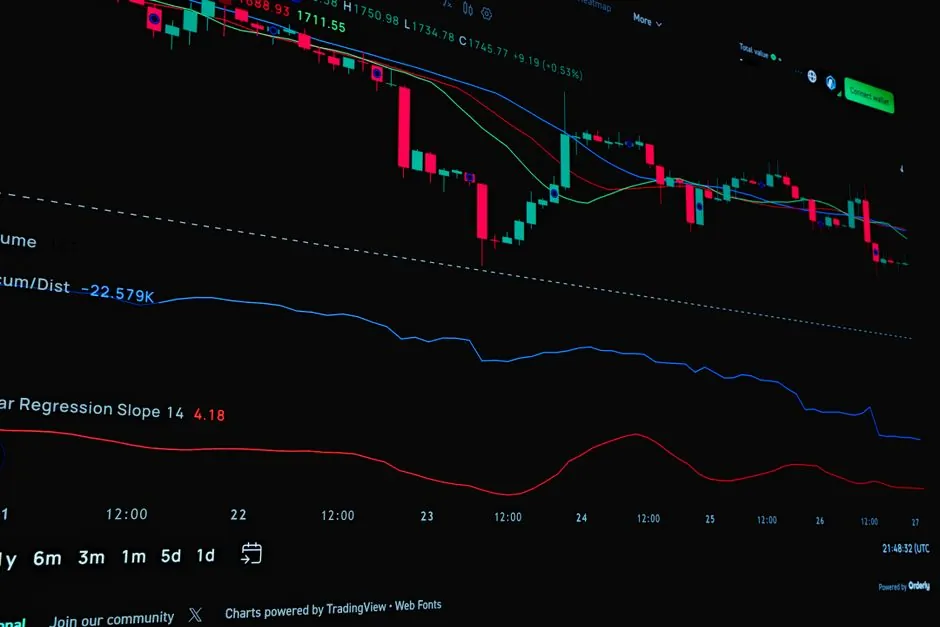
Global servo motor and drive demand is projected to expand at 5.94% to 6.83% annually through 2031–2035, supporting a market that remains in a growth phase rather than entering a broad price decline [S1][S2][S3].
The practical question is not whether every servo quote rises, but which technical and commercial variables will move the total installed cost of a servo motor and its matching servo drive.
What the 2026 market data actually establishes
Published estimates place the 2026 global servo motors and drives market between USD 17.34 billion and USD 24.60 billion, while 2035 forecasts range from USD 40.3 billion to USD 44.55 billion [S1][S2][S3].
Those values are not interchangeable price indices because the studies use different market boundaries and estimation methods. The more defensible signal is the shared direction: reported compound annual growth rates range from 5.94% for 2026–2031 to 6.83% for 2026–2035 [S1][S2][S3]. Another estimate places the 2026 combined market at USD 23.3 billion and its 2035 value at USD 40.3 billion, a 6.3% CAGR [S1].
A separate servo-drive forecast values the drive-only segment at USD 2.63 billion in 2026, compared with USD 2.51 billion in 2025, and projects USD 3.80 billion for 2034 [S5]. Demand growth does not translate one-for-one into a unit-price increase, because motor power, voltage, encoder options, brake construction, network protocol, certifications, and project volume materially alter each quotation.
Price comparison by technology and application
This makes a standard low-voltage package the volume benchmark, but it does not make it the lowest-cost solution for every machine.
Power class changes the market structure. Small systems therefore provide the largest pricing pool, whereas high-power systems carry greater engineering, cabinet, and commissioning costs. The stepper drive remains a valid comparison point for suitable loads, but a servo system is generally justified when closed-loop speed, position, and acceleration control justify the extra component and commissioning content.
What drives the quotation
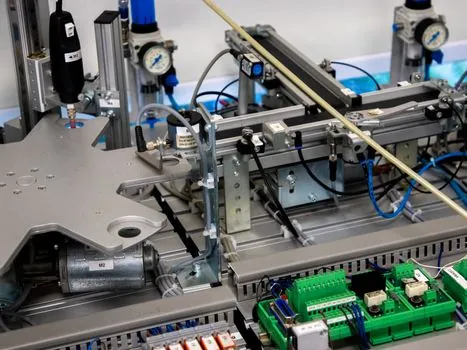
Three cost drivers deserve priority in a 2026 purchase review: motor construction, drive functionality, and compliance scope. The motor side includes rated power, speed, torque, rotor technology, encoder resolution, shaft and mounting geometry, brake requirements, environmental protection, and whether a geared unit is required. [S3]
The drive side adds voltage class, output current, overload capability, fieldbus or network interface, tuning functions, safety functions, regeneration handling, and cabinet integration. A connected drive may raise component cost while reducing commissioning effort and improving diagnostics, so a sensible comparison must include both hardware and engineering hours.
Volume tier also changes commercial terms. A production-line order combining several axes can be priced differently from a one-off replacement because the supplier can amortize documentation, programming, test setup, and logistics across multiple units. Lead time must be tracked against the machine builder’s schedule rather than treated as a generic market statistic. A lower quoted motor that arrives after the commissioning window may cost more than a higher-priced available unit.
For a servo motor, AC construction is identified as the fastest-growing product segment, and the broader study expects continued demand tied to automation, reliable equipment performance, and predictive maintenance [S3]. An AC motor replacement should still be matched to the drive, feedback device, mechanical inertia, and required motion profile rather than selected from motor power alone.
Installed cost changes the price decision
A motor-and-drive quote covers only part of the economic decision. Installation includes cable procurement, panel design, protective devices, grounding, braking arrangements, parameter tuning, controller integration, safety validation, commissioning, and operator training.
A servo upgrade can improve efficiency and production utilization, but the claimed saving must be verified against the machine duty cycle, load, operating hours, and energy tariff. A motor that is oversized for a lightly loaded axis may add purchase cost without delivering a useful energy return.
Maintenance and reliability should be costed as well. For an aging machine, compatibility checks must cover encoder feedback, control architecture, connector pinout, mechanical dimensions, cable length, voltage, safety architecture, and stored motion parameters.
Retrofit economics can also benefit from integrated motor-drive units, which reduce cabinet footprints and simplify wiring [S2]. However, that simplification does not remove the need to check thermal conditions, grounding, interference, motor-cable length, fault response, and service access. The cheapest conversion is not necessarily the integrated unit if it constrains future expansion or makes field replacement harder.
Which applications face the strongest pressure
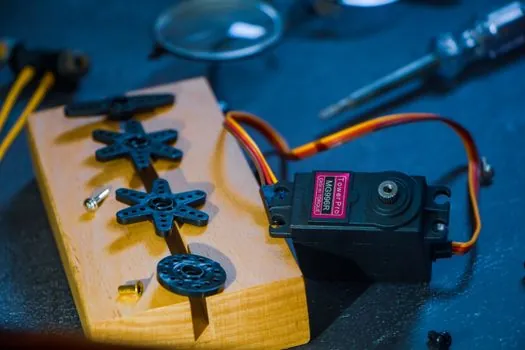
Automotive and electric-vehicle manufacturing accounted for 27.91% of 2025 revenue, while healthcare and medical devices were forecast to grow at 7.51% annually from 2026 through 2031 [S2]. These are volume and mix indicators rather than direct quote increases, but they identify where supplier capacity and application engineering demand are concentrated.
Asia Pacific represented 39.73% of global revenue in 2025, and South America was forecast at 6.91% CAGR through 2031 [S2]. A separate study assigns Asia Pacific a 41% share in 2025, while North America was valued at USD 5 billion in 2025 with a 6.5% forecast CAGR for 2026–2035 [S3][S8]. Regional purchasing conditions, freight routes, local certification, and distributor inventory should therefore be tracked separately.
Robotics is another structural driver: global annual industrial robot installations reached 542,000 units in 2024 [S1]. Each controlled axis adds demand for compatible motor and drive hardware, but it also increases the value of common drive families, stocked spares, and repeatable commissioning. A servo press package has different load and safety demands from a packaging conveyor, so project type must drive the comparison.
How to set the 2026 buying threshold
A defensible price threshold should compare three quotations on the same mechanical and control basis: motor torque and speed duty, encoder and brake configuration, drive voltage and overload profile, network protocol, safety requirements, environmental rating, delivery date, and commissioning scope. [S3]
Buyers should then calculate total cost over a defined period using purchase price, freight, installation, energy, spare parts, expected downtime, and technician labor. The supplied research contains no verified transaction-price series for individual servo models, so any claim that a motor rose by a specific percentage in 2026 would be unsupported.
The stated baseline should be tied to a dated manufacturer quotation, a defined bill of materials, and the project currency. Track quote revision, lead time, freight, and commissioning exclusions monthly. If a supplier removes encoder, brake, protocol, or installation scope from the headline price, restore those items before comparing suppliers.
Market breadth, supplier concentration, and regional mix are the clearest trackable signals for 2026 purchasing: the five leading suppliers named in one study held 42% combined share in 2025, and Asia Pacific held 39.73% in another estimate [S1][S2]. Those figures support maintaining at least two qualified sources, while Servo Motor and Drive Market: 2026 Sizing and Selection provides the technical sizing context needed before price comparisons begin.