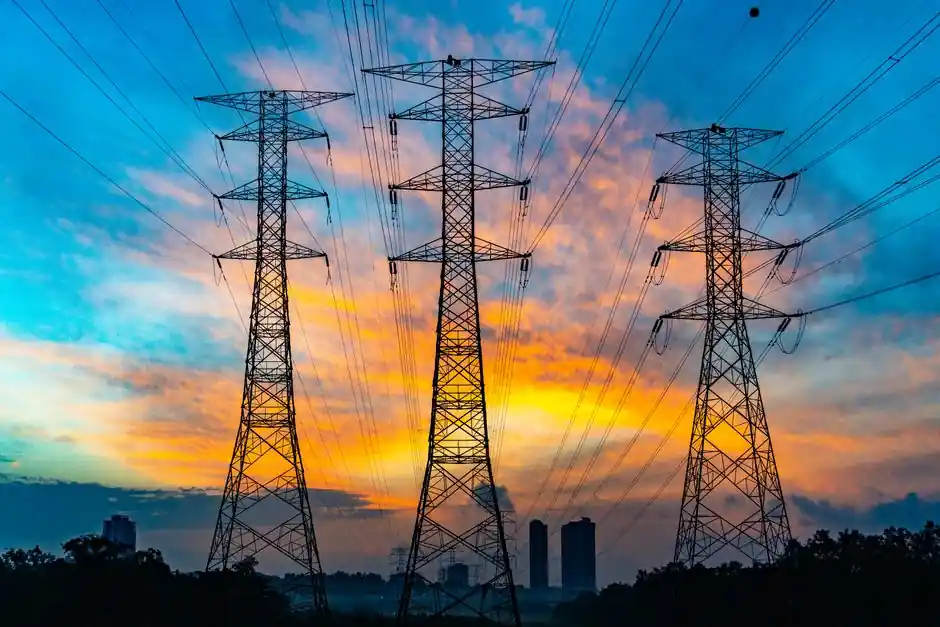
Medium-voltage switchgear, defined as 1–36 kV, is used across utilities, industry, renewables, and data centers [S3].
High-voltage switchgear, defined as equipment above 36 kV, is the narrower class for transmission connections and large substations; a separate 2026 estimate placed medium voltage at 42.0% of the overall market [S7].
Voltage Class and Market Position
The useful dividing line is functional: medium voltage distributes power from substations and site incomers, while high voltage connects transmission networks, large generation plants, and major system interties. The 2026 market classification uses low voltage up to 1 kV, medium voltage from 1–36 kV, and high voltage above 36 kV [S3].
Medium voltage is the larger installed segment because it serves the broadest range of assets. One estimate assigns medium-voltage switchgear 42.0% of the switchgear market in 2026 [S7]. The variation illustrates why procurement teams should verify whether a report measures revenue, units, or a narrow product category.
Market forecasts also differ materially. The medium-voltage segment was valued at US$17.80 billion in 2025 and projected at US$19.66 billion for 2026, with an 8.3% CAGR through 2035 [S4]. Another forecast estimated US$20.14 billion for 2026 [S6], while
MV and HV Selection Criteria
Choose medium voltage when the required operating voltage is 1–36 kV, the installation is a distribution substation, industrial feeder, renewable interconnection, or commercial campus, and the design must support protection, switching, automation, and local serviceability [S3][S4].
Choose high voltage when the equipment must operate above 36 kV and form part of transmission infrastructure or a large utility or industrial substation. The research supports the voltage boundary, but it does not provide a complete HV technical comparison covering short-circuit ratings, insulation levels, breaking capacity, or bushing construction, so those values must come from the project specification and manufacturer datasheet rather than market reports [S3].
Cost should be compared on installed system scope, not switchgear price alone. Relevant MV additions include integrated protection relays, IEC 61850 communications, condition monitoring, alternative insulation, commissioning, and service access [S4]. HV evaluation requires a separate utility-specific design package.
Option Comparison Across Decision Criteria
On breadth of demand, medium voltage serves utilities, renewables, industrial sites, and data centers because these applications use equipment in the 1–36 kV range [S3]. On application scope, high voltage is more specialized because its duty begins above 36 kV and concentrates on transmission and large-substation interfaces [S3].
On environmental compliance, medium-voltage gas-insulated equipment is the more visible transition area. SF6-free and alternative-gas switchgear is identified as the fastest-growing type because of environmental regulation [S1], and the market analysis for 1–36 kV equipment forecasts an 8.3% CAGR through 2035 [S4]. On supplier concentration, the five leading medium-voltage suppliers held about 55% of that market in 2025, indicating meaningful qualification and service barriers [S4].
These market figures do not establish that high-voltage equipment has a lower growth rate or a simpler approval process. The defensible conclusion is narrower: medium voltage offers the broadest standard product market and a visible insulation-technology transition, while high voltage requires a more transmission-specific engineering and approval basis.
Where Medium Voltage Fits
Data centers are a strong MV application because their incoming distribution and transformer feeds remain within the 1–36 kV class for much of the campus power chain. The data-center switchgear study identifies medium voltage as the leading revenue type and hyperscale data centers as the dominant demand segment [S1].
Industrial plants, utility distribution networks, substations, and renewable-energy connections provide additional MV demand. The 42.0% estimate for medium voltage in 2026 is linked to use across utility distribution, industrial substations, and related infrastructure [S7].
MV switchgear can also support equipment selection for downstream motor and control systems. The medium-voltage VFD page is relevant when a variable-frequency drive requires an MV supply, while AC motor selection becomes part of the same feeder and protection review rather than a separate voltage decision.
Where High Voltage Fits
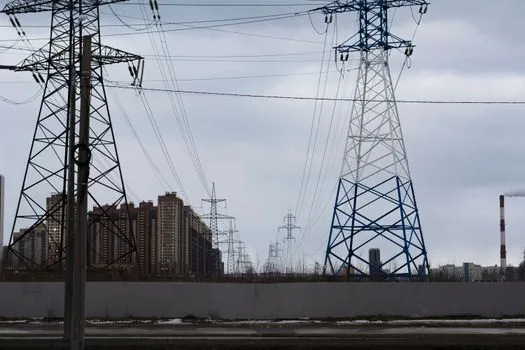
High-voltage switchgear belongs where system voltage exceeds 36 kV, particularly in transmission substations, generation interconnection, and interfaces between transmission and distribution networks [S3]. Its smaller addressable equipment class reflects fewer voltage applications than the broad MV distribution market.
Do not force a high-voltage package into a standard MV tender merely because the upstream line is high voltage. The correct boundary is the operating voltage of the switchgear and its required insulation and protection arrangement. MV equipment serves the 1–36 kV distribution system; HV equipment serves the interface above that range [S3].
The practical cost consequence is that a misclassified voltage level can produce unnecessary equipment or inadequate protection. For installations containing a servo motor, the motor voltage determines the local drive and distribution architecture, but it does not determine whether the incoming campus switchgear is MV or HV.
Insulation, Regulation, and Technical Constraints
The insulation decision is increasingly material because the data-center market study identifies SF6-free and alternative-gas switchgear as the fastest-growing type, driven by environmental regulation [S1]. The market research also separates air-insulated, gas-insulated, vacuum-insulated, and hybrid switchgear [S3].
EU F-Gas Regulation 2024/573 is identified as creating a replacement cycle affecting more than 80% of installed GIS infrastructure across European utility networks [S3]. That figure describes the regulatory context used by the market study, not a universal claim about every GIS installation or product specification.
Automation is another differentiator. Utility modernization programs are shifting toward integrated protection relays, IEC 61850 communications, and IoT condition monitoring in new MV installations [S4]. The procurement requirement should therefore specify protection, communications, and monitoring separately from the physical switchgear.
Procurement, Standards, and Supplier Checks
A defensible tender separates five documents: the single-line diagram, applicable IEC and utility standards, the required short-circuit and insulation data, the protection and automation schedule, and the lifecycle service scope. Market sizing does not replace this technical package. [S4]
For insulation selection, ask the supplier to identify the dielectric medium, rated voltage, insulation level, short-time withstand level, and breaking duty. For digital functions, request IEC 61850 configuration evidence and the required interoperability profiles [S4]. For environmental compliance, request the gas type and regulatory basis rather than relying on the label “green.”
Supplier consolidation also merits attention. Schneider Electric, Siemens, ABB/Hitachi Energy, Eaton, and GE Vernova Grid Solutions collectively represented about 55% of the medium-voltage market in 2025 [S4]. A shortlist should therefore be scored on service capability, approved drawings, test records, protection coordination, delivery slots, and local field support, not only price and brand.
For the next procurement decision, extract the system voltage from the one-line diagram, classify it as 1–36 kV MV or above 36 kV HV, then issue the same technical data schedule to both classes with the voltage-specific requirements filled in.