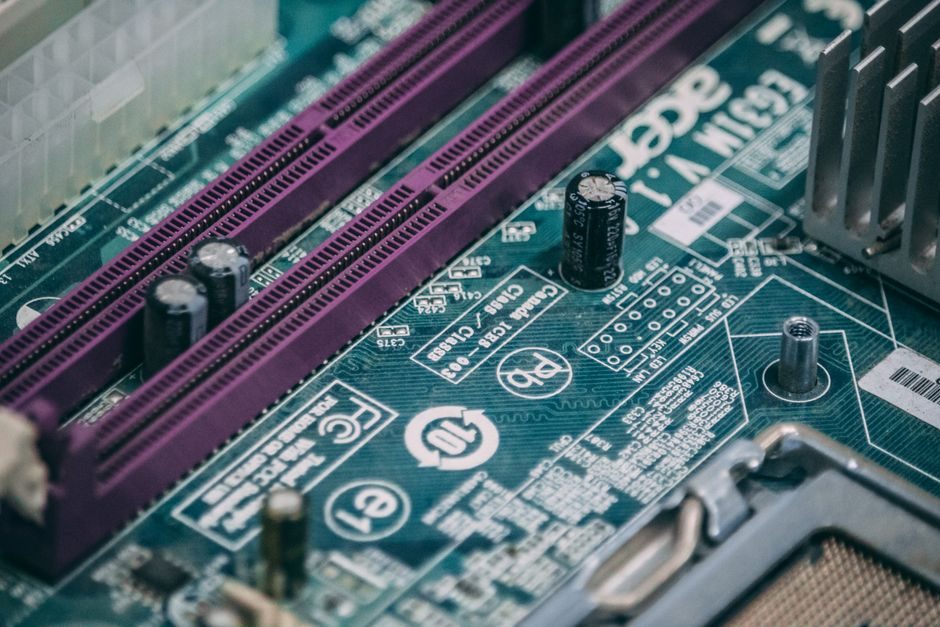
Siemens Digital Industries Software closed its acquisition of DownStream Technologies on 2025-04-07, absorbing a Marlborough, MA-based CAM350 and BluePrint-PCB vendor founded in 2002 into the Xcelerator portfolio [S2][S3].
The deal binds PCB design data preparation (the upstream EDA-to-manufacturing step) directly to fabrication, assembly and test (the downstream shop-floor stack) under a single PLM-shell owner, sharpening EDA-to-CAM continuity for the small and mid-sized fab customer segment that DownStream has long served [S2][S3].
What "PCB upstream" and "PCB downstream" actually cover
The upstream stack runs substrate, copper foil, glass-cloth, dry-film photoresist, chemical-etch consumables, CCL lamination, plus the EDA toolchain that produces Gerber/ODB++/IPC-2581 outputs and the CAM350-class DFM pre-flight that catches drill, mask and stackup violations before the fab sees the data [S2][S3]. A "PCB upstream" decision is mostly a chemistry, glass style (1067/1080/2116/7628), copper-weight (1/2 oz to 6 oz) and impedance-stackup decision, not an EDA brand decision.
The downstream stack picks up after panel-level fab and runs SMT stencil printing, pick-and-place, reflow (SAC305 lead-free ramp typically 245-260 °C peak), AOI, AXI, ICT, bed-of-nails or flying-probe test, conformal coating, potting, and finally box-build integration, so a flow-meter-style discipline of measuring yield, defect-per-million-opportunities and first-pass-yield at each handoff is what makes the chain auditable.
In the "upstream vs downstream" framing, the EDA vendor and CCL maker sit upstream of the fab, while EMS/ODM contract assemblers Foxconn, Flex, Jabil, Pegatron and the new-wave Southeast Asia EMS shops sit downstream of fab output, a structure visible in most 2025-2026 PCB industry-chain maps [S1].
Selection criteria: where the Siemens-DownStream move actually changes a buyer's choice
Buyers evaluating EDA + CAM in 2026 should score options on five concrete criteria: native data-format coverage (Gerber X2, ODB++, IPC-2581C, IPC-DPMX), DFM rule-set depth (drill-to-copper clearance, acid-trap detection, mask-slit minimums), CAM automation (drill/rout/mask generation, net-list compare, panelization), ECAD-MCAD-ERP integration (downstream to MES, WIP tracking, work-order routing), and the size of the installed user base feeding the rule-set library [S2][S3].
CAM350 is positioned as a long-standing CAM and visualization tool with broad downstream user adoption, while BluePrint-PCB automates the fabrication-drawing documentation step that small shops have historically built by hand [S2][S3]. Inside Siemens Xcelerator the combined bundle is meant to hand PCB design data into Valor, Opcenter and Teamcenter for assembly process preparation, which is the lever the seller is selling into the SMB fab and EMS segment [S2][S3].
For a procurement engineer, the practical question is whether the consolidated Xcelerator + DownStream bundle beats a stand-alone CAM350 renewal plus a separate assembly-process-prep tool, and the answer depends on how much of the fab's data is already inside Teamcenter — if it isn't, the integration value of the deal thins out fast.
Comparison of main EDA-CAM-Assembly stacks against decision criteria
Against the five criteria above, the 2026 market lines up roughly as: Cadence Allegro + OrCAD CAM350 plug-in path, Siemens Xcelerator (formerly Mentor Graphics Expedition/Valor) + now-DownStream CAM350, Zuken CR-8000 + DfMcenter, Altium Designer + Altium 365 CAMtastic-class output, plus the open-source KiCad + FlatCAM/PCB-Rnd route used by low-volume and education buyers [S2][S3].
On data-format coverage, IPC-2581C and ODB++ adoption keep widening across Asia fabs, but Gerber X2 remains the lowest-common-denominator; on DFM depth, the longer a tool has been on the market, the thicker its rule library; on CAM automation, the differentiating axis is panelization and step-and-repeat for HDI and substrate-like-PCB (SLP) products, not just single-board outputs; on integration, only Cadence and Siemens own the full ECAD-to-MES chain; on installed base, the Asian mid-tier EMS shops still over-index on CAM350 as a brand.
A reader who needs a single rule: pick by fab-data format first, by DFM rule-set second, by CAM automation third, and treat "industry chain integration" as a bonus rather than the deciding axis, because the EMS contract handoff is still brokered by IPC-2581C or ODB++ in 2026 regardless of which EDA tool authored the board.
Who the Siemens-DownStream move is for — and who it is not for
The acquisition is squarely aimed at SMB fabs and EMS shops that have been buying CAM350 as a stand-alone product and that already run some slice of Xcelerator (Teamcenter, Opcenter, Valor) on the assembly side, so the bundle reduces the number of separate vendors they pay maintenance to [S2][S3]. For those accounts the value is consolidation, not new capability.
It is not aimed at large OEM captive PCB design teams running Allegro or CR-8000, where switching cost is dominated by library, simulation and signoff data, not by CAM prep, and it is not aimed at the KiCad-class open-source community that is driving a growing slice of low-volume industrial and academic board design in 2025-2026.
Real use cases: where the upstream-downstream chain actually breaks in 2025-2026

First, HDI and any-layer HDI board fab for smartphone SiP and wearables, where drill-to-copper clearances below 75 µm and stacked-via aspect ratios above 1:1 make CAM-stage DFM the single biggest yield lever, and where CAM350's drill-file and stackup rules historically caught the errors that designers miss [S2][S3].
Second, IC-substrate-like PCB (SLP / mSAP) production for advanced packaging, where the upstream chemistry (modified semi-additive copper) and the downstream AOI/AXI recipe are tightly coupled and the EDA-to-CAM hand-off has to carry impedance and length-matching data verbatim, not as a redrawn Gerber.
Third, the new wave of Southeast Asia (Vietnam, Thailand, Malaysia) EMS diversification away from China, where the bottleneck in 2025-2026 is no longer PCB fab capacity but PCB CAM and DFM talent — a constraint that a single-vendor Xcelerator + DownStream bundle only partially solves if the local team has not been trained on the rule set [S2].
Limitations, constraints and failure modes buyers should price in
Vendor consolidation cuts the number of maintenance contracts but raises switching cost: CAM350 rule libraries are largely customer-tuned, and migrating them to a different CAM engine is a 3-6 month engineering project that most SMB fabs will not pay for twice. The acquisition also concentrates DFM rule-set stewardship inside a single EDA-stack owner, which can slow independent bug fixes that a stand-alone CAM350 vendor historically pushed within weeks [S2][S3].
For the broader upstream chain, CCL capacity (especially high-Tg, low-Df material for 5G base-station and 800G switch boards) remains the dominant 2025-2026 supply constraint, not CAM tooling; the Siemens-DownStream deal does not touch that layer. The downstream EMS side still has to manage solder-paste print, reflow profile and AXI yield as separate engineering problems, and no EDA acquisition resolves the pressure-sensor-class metrology gap when a process engineer cannot measure head-and-pressure on a stencil cleaner with the right repeatability.
Standards, sourcing and what to track next

The chain is governed at the data-handoff level by IPC-2581C, IPC-DPMX, ODB++ and Gerber X2, at the fabrication-process level by IPC-6012 (rigid) and IPC-6013 (flex), at the assembly level by IPC-A-610 and IPC-7711/7721 rework, and at the materials level by IPC-4101 for CCL and IPC-SM-840 for solder-mask durability — these are the cited references a spec engineer should pin in any PCB RFQ in 2026, regardless of which CAM tool sits between design and fab [S2][S3].
For a buyer tracking the upstream-downstream chain in the second half of 2026, two signals are worth watching: first, the cadence of Xcelerator releases that bundle CAM350 rule libraries into Teamcenter/Opcenter (the cadence of releases is the tell on whether the integration is real or paper-only); second, CCL capacity announcements in high-Tg and low-Df grades from Shengyi, Kingboard and Panasonic, because the fab capacity that consumes the new CAM data still depends on the substrate glass-cloth queue. The Siemens-DownStream close on 2025-04-07 is the event of record, but the engineering question is whether 2026 productized releases shorten DFM hand-off from days to hours in an actual SMB fab.
For component-level specifications, see pressure transmitter.
For related coverage, see Steel Suppliers 2026: Maker Density, MOQ Bands and Sourcing Reality.