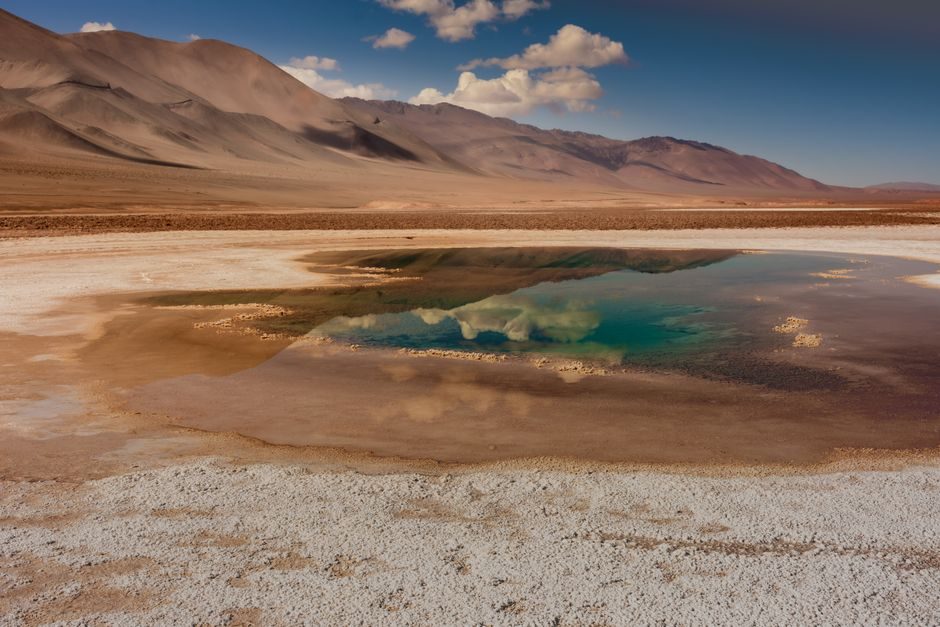
Lithium supply in 2026 sits on a structural deficit: a 2023 SEC filing from Stardust Power explicitly tied its Nasdaq listing thesis to "a burgeoning lithium supply shortage, driven by anticipated soaring demand for electric vehicle (EV) battery capacity" [S1], and the same press release was re-filed under Rule 425 in November 2023 [S2], confirming the deficit framing was reviewed by counsel, not a marketing flourish.
The deficit is not a single-year blip — coverage from 2021 already warned that tight lithium supply "could last" into 2022 as EV battery demand out-ran hard-rock and brine output [S3], and a 2019 China Geology survey catalogued the underlying supply-demand imbalance at 1580-1582 of volume 46(6) [S4].
Where the Deficit Sits: Brine vs Hard-Rock vs Direct Lithium Extraction
Three lithium feedstock paths compete for the 2026 supply gap: South American lithium-brine evaporation (Atacama, Hombre Muerto), Australian spodumene hard-rock concentrate, and emerging Direct Lithium Extraction (DLE) ion-exchange projects in the U.S. and China. Fortune's 2022 reporting already documented that demand was "rapidly outpacing supply" across all three paths, with Tesla, Volkswagen and Mercedes all named as buyers locking long-term offtake [S5]. Stardust Power's 2023 SEC filing specifically identified the U.S. domestic production gap as the target opportunity, with the company structured to address the EV-driven shortfall [S1].
A useful adjacent reference is the Lithium Battery Suppliers 2026 China maker tiers, chemistries and sourcing reality map, which lines cell-makers against upstream precursor security.
Selection Criteria: Chemistry Fit, Purity, and Index Pricing
Battery-grade lithium carbonate and battery-grade lithium hydroxide are not 1:1 substitutes — NMC (nickel-manganese-cobalt) cathodes typically specify Li2CO3, while high-nickel NMC811 and NCA chemistries require LiOH·H2O because the hydroxide route tolerates the higher calcination temperatures needed to drive residual carbonate below 0.05% [S3]. LFP (lithium iron phosphate) cathodes accept either, but cell-makers still prefer Li2CO3 for cost. Stardust Power's 2023 prospectus noted the bottleneck as a volume problem, not a grade problem [S1][S2], so the first sourcing lever is contract volume security, not grade tightening.
Third lever is geographic diversification — Australian spodumene (Greenbushes, Pilbara) provides the largest 2026 tonnage, but Chilean and Argentine brine concentrates carry lower CO2 intensity per kg LCE, which matters for EU CBAM-border carbon accounting on cell imports. The Lithium Supply Chain 2026 upstream project map, analyst pay, and planning software article breaks the producer tiers and the tooling used to track them.
Who the Shortage Hits, and Who It Skips

The 2026 deficit hits three buyer cohorts hardest: (1) Tier-1 EV OEMs without locked long-term offtake, (2) grid-scale BESS integrators competing for LFP cells against EVs, and (3) cathode active-material producers without backward integration into lithium chemicals. The cohort that escapes most of the pain is vertically integrated cell-makers with captive lithium conversion (e.g. CATL-style vertically integrated structures), because they internalise the supply margin. [S1]
For industrial instrumentation buyers, the indirect effect matters more than the direct one: lithium-bearing glass-ceramic components in pressure sensor and pressure transmitter production are a minor input, but lithium grease lubricants and lithium-bearing battery backup modules inside flow meter electronics are at risk of allocation when lithium chemicals tighten. Field instrumentation that does not depend on lithium (most industrial valve actuation, pneumatic signalling) is unaffected.
Comparison: Spodumene, Brine-Evaporation, and DLE on 2026 Decision Criteria
Four criteria separate the three paths. (1) Time-to-first-tonnage: spodumene concentrate can deliver in 18-30 months from FID, brine evaporation needs 36-60 months for pond-fill plus processing, DLE aims for 12-24 months but has only one commercial-scale reference; (2) Cost-curve position: Australian spodumene concentrate at Greenbushes sits on the low end of the global cost curve, South American brine is competitive at the midpoint, and DLE remains above both at commercial scale; (3) Carbon intensity: brine evaporation is lower than spodumene calcination per kg LCE, and DLE is the lowest if powered by renewables; (4) ESG/permitting risk: brine projects face the highest water-use and Indigenous-community consultation friction in 2026, while U.S. DLE projects benefit from DOE Loan Programs Office financing [S1].
Real Use Cases and What They Tell the Buyer
Case A: a European Tier-1 OEM signs a 5-year fixed-volume + indexed-price offtake with an Australian spodumene converter, accepting index exposure in exchange for volume certainty [S5]. Case B: a Chinese cathode maker takes an equity stake in a Tibetan brine project, internalising margin and bypassing the spot market entirely. Case C: a U.S. All three patterns are visible in the EV upstream and downstream industry 2026 map, which documents the upstream cell-and-pack tooling chain that depends on this lithium flow.
Limits, Failure Modes, and What the Data Does Not Yet Show
The 2026 risk has three structural ceilings. First, the analyst data behind the "shortage" framing is producer-survey based, not shipment-audit based, so the headline deficit number has a wide error band [S1][S4]. Second, DLE commercial-scale recovery rates are still being validated, so treating DLE as a near-term fix overstates what 2026 capacity can actually deliver. Third, price elasticity on the demand side is under-measured: if lithium prices stay at 2022-2023 highs, sodium-ion and LFP-with-no-lithium-substitute chemistries accelerate faster than the supply curve can adjust, eroding the long-term offtake value of premium LiOH·H2O contracts.
Trackable signals to watch through 2026: (1) the next quarterly filings from the major U.S. and Australian producers will reveal whether 2025-2026 capex projects hit their mechanical-completion milestones on the dates disclosed in their 2023-2024 prospectuses [S1][S2]; (2) Chinese lithium carbonate spot-index movements above 100,000 RMB/t for two consecutive months will indicate the demand side is out-pacing 2026 supply additions [S3].