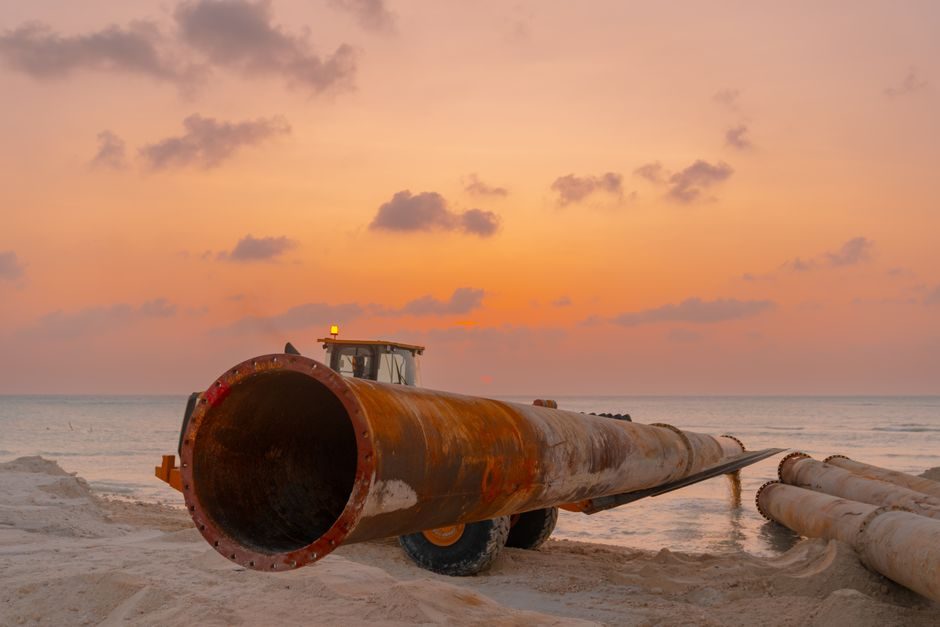
Polyethylene (PE) pipe pricing in mid-2026 is not a single number — it is a stacked-cost problem where resin grade, SDR/PN pressure class, outside diameter, wall tolerance and order quantity each move the figure materially; sourcing from Chinese factories on Made-in-China.com shows finished PE pipe quoted in roughly US$0.30–US$15.00 per metre bands depending on diameter and PE80/PE100 grade, while dedicated PE water-pipe extrusion lines list at US$12,900–US$76,000 per set as of 2026-05-12 [S5].
Buyers comparing offers should anchor on PE80 vs PE100 resin, SDR 11 / SDR 13.6 / SDR 17 / SDR 21 / SDR 26 pressure classes (PN 16 / PN 12.5 / PN 10 / PN 8 / PN 6 equivalents), and whether the run is for potable water, gas, mining slurry or cable ducting — each carries a different certification overhead and minimum order quantity, which is why MOQs on PE pipe listings range from sample coils to full-container loads.
Material Grade and Resin Cost Stack
PE100RC and PE100 grades carry a premium over PE80 because of higher hydrostatic design stress (MRS 10 MPa vs 8 MPa) and tighter batch-to-batch dispersion; virgin PE100 resin in 2026 trades in the upper resin band while recycled PE80 sits noticeably lower, and the price gap between PE80 and PE100 compounds narrows as order volume rises [S1].
Buyers who only compare per-metre price without the material callout frequently over-spec PE100 where PE80 would pass, or under-spec PE100RC where slow-crack-growth resistance is the actual service driver.
For gas distribution, PE80 yellow or PE100 orange compounds carry additional third-party certification cost (e.g. ISO 4437 / EN 1555 system) and traceability paperwork; this typically adds a low single-digit percentage to the unit price but a much larger percentage to the documentation cycle. The PE pipe material properties page summarises how MRS, SCG and RCP performance shift between grades.
Diameter, SDR and the Per-Metre Curve
Per-metre PE pipe price is not linear with diameter — it follows a near-exponential curve because wall mass scales with diameter × wall thickness, and larger diameters require heavier extrusion equipment and longer cooling/haul-off tanks; small-bore coils (dn 20–dn 63) at PN 16 can sit at low single-digit US dollars per metre, while dn 500+ HDPE100 PN 10 segments move into the tens of US dollars per metre bracket [S5].
SDR 21 / SDR 26 (PN 8 / PN 6) gravity-flow and irrigation runs are typically the cheapest bands per metre but are not interchangeable with pressure classes.
For trenchless and HDD pulls, SDR 11 PE100RC with protected-core design commands a premium over standard PE100 of the same SDR because of the additional scratch-resistance and slower crack-propagation requirements; this is a case where spending more on the pipe line reduces the contractor risk line, and procurement needs to evaluate both columns together.
Extrusion Equipment Cost and the Sizing Question

Buyers evaluating whether to buy pipe or make pipe need the equipment number as a sanity check: Chinese PE water-pipe extrusion lines on Made-in-China.com list at US$12,900–US$76,000 per set in 2026-05 listings, with the lower end covering small-diameter single-screw lines (dn 20–dn 110 range) and the upper end covering multi-layer co-extrusion or large-diameter dn 800+ lines [S5].
Higher-output and higher-speed lines (60 m/min+ for small-bore, with laser/SPC diameter control and gravimetric dosing) cluster around US$35,000–US$50,000 per set; lines with offline marking, socket-forming and integrated quality logging push past US$60,000. Compare that to a finished-pipe MOQ buy, and the break-even for in-house extrusion only makes sense at sustained annual volumes well above what most distribution or EPC buyers consume.
Adjacent machinery for cable ducting and conduit (PVC/UPVC/CPVC/HDPE/LDPE/PPR extruders) quotes at US$30,000–US$45,000 per piece on the same platform, useful as a sanity check for any buyer being offered a PE line well below that band, which would warrant a closer look at the screw geometry and gearbox rating [S1].
MOQ, Container Loading and Volume Discount Tiers
[S1]
Container loading is not a paperwork detail — it is a cost driver. A 40-ft HQ container holds roughly 25–28 m³ of finished PE pipe depending on coil vs straight-length format, and freight quoted per container swings the landed price more than a moderate resin move; a buyer who only benchmarks EXW pipe price without comparing FOB vs CIF terms will see apparently wide "price differences" that are really shipping incoterm effects. The pipe clamp and support system selection on the receiving side is a related but separate cost line that buyers should not roll into the pipe price.
Lead time on custom SDR/diameter runs sits at 15–30 days for stock tooling and 30–60 days for new dies; expedite options exist but typically add a percentage surcharge that beats the cost of a stock-size substitution in most projects. PE pipe selection criteria covers how to avoid paying a premium for sizes that could have been value-engineered to a stock run.
Certification, Standards and Hidden Cost Overlays
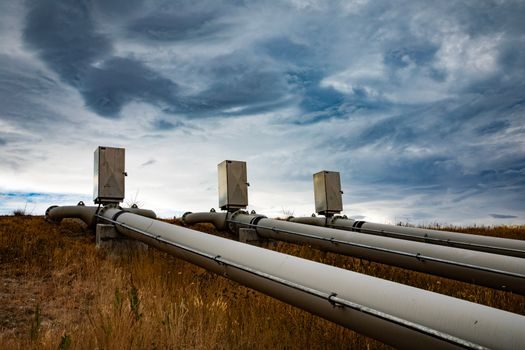
Potable-water PE pipe requires DWI / WRAS / NSF / ACS regional approvals depending on market, and gas-grade PE80/PE100 must satisfy ISO 4437 or EN 1555 plus the local gas utility's QA audit — these add 3–8% to the unit price but are non-negotiable for the application; substituting a non-certified line for either use case is a spec risk that no procurement discount justifies. [S2]
The plastic pipe family overview is a useful cross-reference for confirming which standard family applies to the fluid/service case.
For connection systems, electrofusion and butt-fusion fitting costs (couplers, elbows, tees, reducers) are usually priced per piece at roughly 2–6× the equivalent per-metre pipe cost in the same diameter; under-specifying fittings and over-specifying pipe is a common budget error. See the pipe fitting selection reference for the rule-of-thumb sizing logic.
2026 Market Signals Worth Tracking
Resin feedstock (naphtha, ethylene) and steel-pipe market sentiment are the upstream signals that most directly move PE pipe offers; SteelOrbis's 2026-06 commentary on Chinese steel pipe export prices and billet movement is a useful cross-check even for plastic pipe buyers because it indicates whether the broader Chinese mill-output economy is tightening or loosening [S3].
Track the next Made-in-China.com price refresh on PE extrusion lines (last seen 2026-05-12 [S5]) and any new PE100RC line announcements as the cleanest signal of capacity direction; also watch freight indices on China–EU and China–US West Coast routes, because a 20% freight move lands straight on FOB-to-CIF conversion and frequently outweighs the resin delta in any given month.