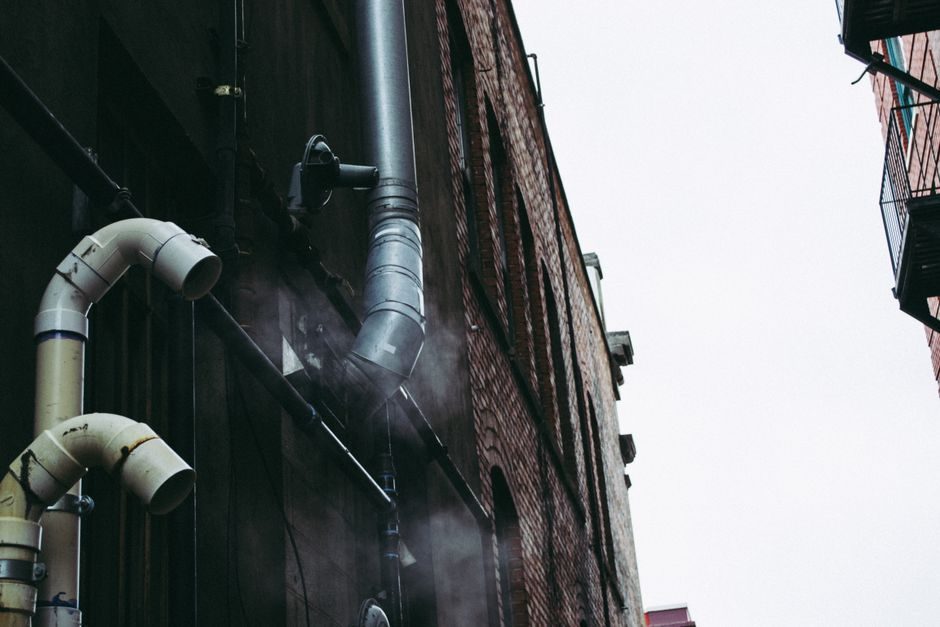
Specifying PE pipe on a municipal or industrial job in 2026 means resolving five engineering gates in order — SDR/PN pressure class, resin grade (PE 80 vs PE 100 vs PE 100-RC), service temperature envelope, jointing method (butt-fusion, electrofusion, or mechanical), and the certification stack (ISO 4427, EN 12201, ASTM F2620, NSF/ANSI 61 for potable) — before a vendor shortlist is even opened.
Most field failures on polyethylene pipe trace back to one of those gates being assumed, not verified: a PN 16 pipe on a 12 bar operating line, a PE 80 fitting on a 90 °C process drain, a socket-fused joint on a ditches section that never saw a pressure decay test. The pipe itself rarely fails; the specification does. Process engineers in water, gas, mining and chemical service have converged on the same evaluation order, and that order is what this article lays out.
Pressure Class: SDR, PN and the 6.25 mm Wall-Floor
PE pipe is sold by SDR (Standard Dimension Ratio, outside diameter ÷ wall thickness) or by PN (nominal pressure in bar at 20 °C with a 1.25 design factor). The two correlate but are not identical: PN 16 water service at 20 °C maps to SDR 11 in PE 100, PN 10 to SDR 17, PN 6 to SDR 26 [S1]. The minimum wall on a butt-fused coil is usually capped at ~6.25 mm by most European fabricators; anything below that and the heat-soak time in the heater plate becomes the controlling variable, not the resin's MRS rating.
Design factor is the second lever. Water-service standards (ISO 4427, EN 12201) typically run C = 1.25; gas service under ISO 4437 / EN 1555 drops to C = 2.0–2.5 depending on population density tier. Specifying PN 16 in PE 100 SDR 11 gives 16 bar at 20 °C with C = 1.25, which de-rates to roughly 10 bar at 40 °C continuous service — a derating curve almost every plant forgets to apply. For PE pipe selection across pressure classes, that 10 bar hot-line number is the figure that should drive pump shutoff head, not the catalogue 16 bar.
Resin Grade: PE 80, PE 100, and PE 100-RC
The MRS — Minimum Required Strength at 20 °C over 50 years per ISO 12162 — is the single number that separates the families; everything downstream (SDR table, PN table, derating curves) is calculated from it. [S1]
PE 100-RC is the right answer for trenchless installation (HDD, pipe bursting, plough-in) where the pipe sees point loads from rocks and bedding defects. Plain PE 100 fails the notched-pipe test (ISO 13479) at higher stress levels than PE 100-RC, and the gap shows up after year 10 in the field, not at commissioning. For open-cut municipal water at PN 16, plain PE 100 is still the cost-optimised default; for any installation where sand-bed compaction cannot be guaranteed, step up to PE 100-RC. UHMW-PE (ultra-high molecular weight) sits outside this comparison — it is a lining/liner material with a different MRS regime and is not butt-fused in the field, so it does not substitute for PE 100 in pressure pipe [S2].
Temperature Envelope: -40 °C to +40 °C and the Derating Curve
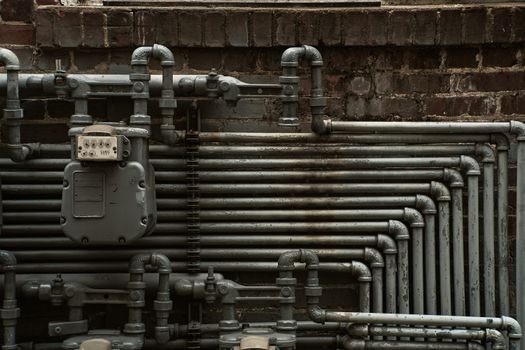
PE pipe pressure rating is anchored at 20 °C. Move the line to 40 °C continuous and the allowable pressure drops by ~30%; at 60 °C it drops by ~70% on PE 100; at 80 °C the polymer has effectively no long-term strength. The lower bound is more forgiving: PE 80 and PE 100 both retain ductility to -40 °C, with some PE 100 grades rated to -60 °C, which is why cold-climate gas and water utilities in Scandinavia, Canada and northern China have standardised on PE 100 for buried service. [S2]
A common specification error is to use a PN 16 PE 100 line for a process cooling-water return at 50 °C: the 16 bar becomes ~7 bar at 50 °C continuous, and any pump trip that delivers a 10 bar surge will exceed the new rating. For service above 40 °C, the correct path is either to derate aggressively (target ≤ 6 bar at 50 °C), switch to PP-R or PVDF, or accept a plastic pipe change entirely. PPR pipe, by contrast, is rated to 70 °C continuous at PN 20–25 and is the standard pick for hot process water, hospital hot-water risers, and food-grade hot CIP loops — but it is a different spec tree entirely.
Jointing Method: Butt-Fusion, Electrofusion, and Mechanical
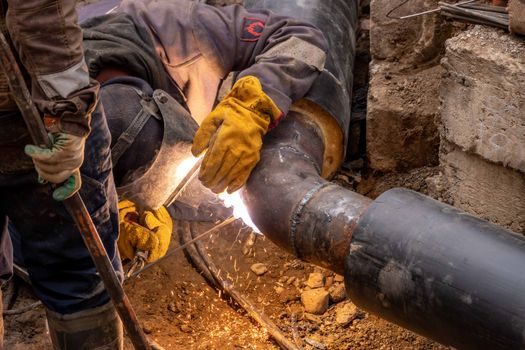
Jointing decides the tooling, the crew skill profile and the leak-test regime more than the pipe choice does. Butt-fusion (ISO 21180, DVS 2207) uses a heated plate at 200–220 °C and a hydraulic clamp to push two pipe ends together at ~0.4–0.6 N/mm² interface pressure. It is the lowest-cost, highest-throughput method for ditches work above DN 90. Electrofusion (ISO 12176, DVS 2207) uses an embedded resistive wire in a fitting; the installer scans a barcode on the fitting, the box applies 8–48 V for a fixed time, and the joint is made. It is slower, more expensive per joint, but the right call for repair saddles, DN < 90 tie-ins, and confined-space work. [S3]
Mechanical joints (compression fittings per ISO 14236, flanged adaptors) are used where the PE line transitions to metal, where the joint must be demountable, or where a fusion machine cannot be deployed. For buried service, the spec should call out a fully restrained mechanical joint — a push-fit that does not resist pull-out will eventually part under thermal contraction or soil movement. The ASTM F2620 standard is the reference for the heat-fusion procedure; pairing it with a 1.0× system pressure decay test for 1 h (or per local code) is the field acceptance gate.
Certification Stack: ISO 4427, EN 12201, ASTM F2620, NSF/ANSI 61
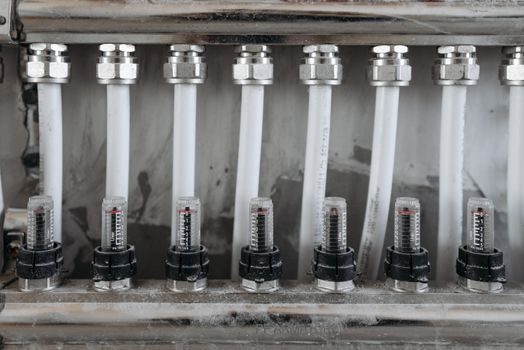
Four certifications cover ~90% of PE pipe procurement scenarios. ISO 4427 governs PE pipe for water supply (with parts 1–5 covering pipes, fittings, valves, ancillary equipment, fitness for purpose). EN 12201 is the European equivalent and is broadly harmonised with ISO 4427 — most European fabricators dual-mark. ASTM F2620 covers the heat-fusion joining procedure in North America; it is a procedure standard, not a product standard. NSF/ANSI 61 is the potable-water extraction standard required by most North American utilities and is the single most common cause of import rejection on Chinese-fabricated PE coils. [S4]
For gas service, ISO 4437 / EN 1555 replaces ISO 4427, with the additional requirement of a yellow or yellow-with-black-stripe outer jacket and a tighter MRS safety factor. For mining and industrial slurry, the spec should additionally call out ISO 21809 (factory-applied coatings) and a wear-rate agreement with the vendor — UHMW-PE liner inserts are the typical upgrade for tailings lines with high silica content. For process engineers cross-referencing plastic pressure pipe options, the PPR pipe family carries the same certification logic (ISO 15874, EN ISO 15874) but with a different temperature window and a different fusion machine.
Where PE Pipe is the Wrong Choice
Three service conditions disqualify PE outright: continuous service above 60 °C, exposure to UV without a UV-stabilised black jacket (unprotected PE 100 loses ~50% of its MRS-equivalent performance after 2–3 years of direct sunlight), and concentrated hydrocarbon service. PE swells and stress-cracks in diesel, gasoline, and most aromatic solvents; HDPE chemical resistance charts list hydrocarbons as "not recommended" above 40 °C. For those services the swap is to PVDF (up to 140 °C, broad chemical resistance), PP-R (up to 70 °C, hot water), or stainless — not a "better grade" of PE. [S5]
Vacuum service is also a soft disqualifier. PE has good ring stiffness in buried service but thin-wall PE collapses under vacuum above 200 mbar (absolute) at moderate temperatures. If the line sees vacuum, either upsize the wall (SDR 17 → SDR 11) or switch to a vacuum-rated stainless pipe / pipe fitting assembly. Finally, fabricated pipe clamp supports on PE lines need elastomeric liners — a bare metal u-bolt on PE will cold-flow and lose grip within months.
Quick Comparison: PE 80 vs PE 100 vs PE 100-RC at PN 16 / SDR 11
On a water-service spec at PN 16 (20 °C, C = 1.25, ISO 4427), the three resins line up: PE 80 SDR 11 delivers 12.5 bar allowable (older design factor); PE 100 SDR 11 delivers 16 bar; PE 100-RC SDR 11 delivers 16 bar plus a 2× to 5× margin in the notched-pipe test (ISO 13479). Cost premium runs roughly 0% (PE 80 is now EOL at most fabricators), 0% (PE 100 is the baseline), and +15–30% (PE 100-RC). For trenchless or poor-bed projects, that +15–30% is the cheapest insurance on the BOM; for open-cut municipal water on a sand bed, plain PE 100 remains the cost-optimised pick. [S6]
For new engineers building a process-pipe spec, the rule of thumb: PVC-U for above-ground cold water and irrigation where fusion is impractical; PE 100 for buried potable, gas and process water where fusion is available; PPR for hot water and food-grade hot CIP; PVDF or stainless for chemical service above 60 °C or in hydrocarbons. A related PVC-U pipe buying guide walks the same evaluation order on the PVC side for direct cross-comparison.
The second signal is a flag for procurement: any quote still led with PE 80 in mid-2026 is either a stock-drain sale or a distributor clearing old inventory — both worth a COC trace.