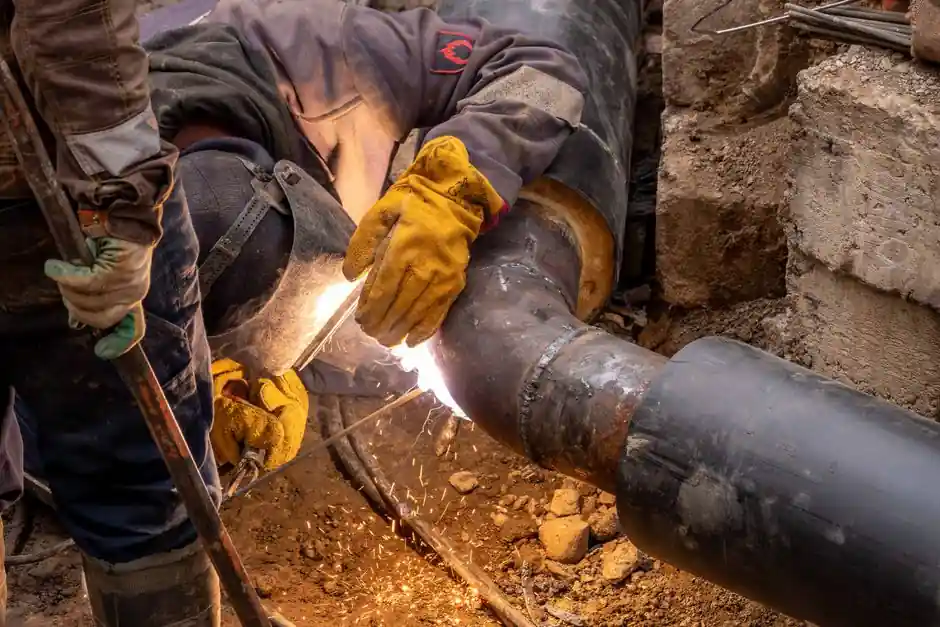
Steel-plastic composite pipe is the single largest material segment by value in the data center pipe market, with MarketsandMarkets sizing the global market at USD 6.46B in 2025 on its way to USD 16.26B by 2032, a 14.1% CAGR [S1]. Plastic and composite pipes as a category are projected to grow at a 24.6% CAGR through 2032, the fastest of any material family tracked in that report [S4].
That growth is being pulled by hyperscale builds. Hyperscale data centers are the fastest-growing site type at a 28.2% CAGR, and the cooling systems application segment is set to dominate total spend [S4]. The U.S. hosts nearly 50% of global data center capacity, and 2026 project spending is forecast to rise 13% over 2025 [S2]. For specifiers, this is no longer a niche plumbing question; it is a primary equipment decision on every new build.
What "Steel-Plastic Composite Pipe" Actually Means in a Data Center
A steel-plastic composite pipe pairs a metallic core, usually a welded or seamless steel or aluminium carrier, with bonded polymer layers, typically PE, PEX, PPR, or PVDF, that handle all fluid contact [S3]. The steel skeleton absorbs pressure loads and supports the pipe across long rack-room spans, while the plastic liner carries the coolant and resists corrosion. This construction sits between pure plastic systems like PP-R (which weigh 75% to 80% less than comparable metal runs) and full stainless circuits in both cost and duty [S3].
For data centers, the relevant service is almost always a liquid cooling loop, either direct-to-chip, rear-door heat exchanger (RDHx), or facility chilled water. Coolant chemistry is a mix of water/glycol, dielectric fluids, or treated water, so the liner material, not the steel, sets chemical compatibility. Compared with seamless steel pipe running bare, the composite form removes the corrosion mechanism that forces stainless or coated carbon steel into the spec, and compared with plastic pipe alone, it adds the pressure rating and fire performance the steel layer provides.
Selection Criteria: What to Lock Down Before You Choose a Wall
Start with five numbers: design pressure (typically 6 to 16 bar for facility chilled water, higher in some DLC racks), design temperature (commonly 5 to 60 °C for chilled water, up to 95 °C in hot-water loops), coolant chemistry, required fire-rating (ASTM E84 / EN 13501-1 class for plenum use), and service life target, almost always 50 years minimum for new builds. PP-R and PP-RCT systems are now routinely published with service lives in excess of 60 years in benign water service [S3].
Pressure class is a composite-specific decision. The steel carrier carries the hoop load; the plastic liner carries the chemical barrier. A common failure mode during sourcing is treating the composite like a thin-wall stainless line, which over-specs cost, or like a plain PE line, which under-specs pressure. For a sense of scale, FRP composite systems in the same duty class generally run 10 to 25 bar at room temperature depending on diameter, and steel-plastic composites land in a similar window once the steel core is sized in.
Steel-Plastic Composite vs Stainless vs PP-R vs Carbon Steel
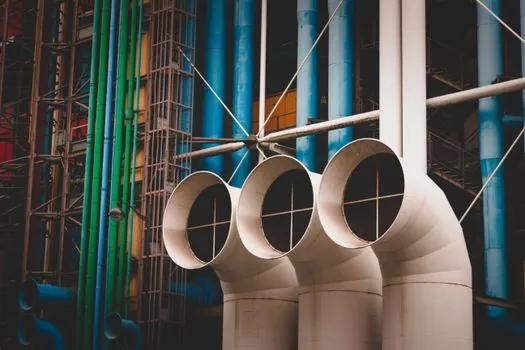
For typical data center chilled-water duty the four common options line up roughly as follows. (1) Stainless steel 304/316: Type 316 is the default in liquid cooling loops because of chloride and high-temperature corrosion resistance; Type 304 covers general-purpose lines where chemistry is mild [S2]. Cost is high; lead time can stretch in hyperscale boom years. (2) PP-R / PP-RCT: lightest option, 75% to 80% less weight than metal, heat-fusion jointing, no open flame, 60+ year service life claim, and stable pricing versus metal [S3]. Temperature ceiling is the limiter versus metal. (3) Carbon steel with corrosion allowance or internal coating: lowest first cost, but it needs treatment, monitoring, and a planned replacement window. (4) Steel-plastic composite: middle path, holding a pressure class near stainless while inheriting most of the chemical resistance of a plastic liner.
Decision rule of thumb: specify stainless 316 where chloride exposure, high temperature, or a fire-sprinkler duty demands it; specify PP-R or PP-RCT for cold/hot water plumbing and modular builds where weight and prefabrication dominate; specify steel-plastic composite for the in-between band, large-diameter risers, headers, and chilled-water mains where the steel skeleton earns its keep.
Joining, Fire Performance, and Code Fit
Jointing method drives both schedule and long-term reliability. Heat-fusion PP-R systems produce essentially monolithic connections, which is why they are increasingly paired with prefabricated rack-room spools [S3]. Steel-plastic composite typically uses flanged, grooved, or mechanical couplings, with the liner sealed at the joint by an O-ring or a heat-shrink sleeve. ANSI weldneck, slip-on, and lap joint flanges are the most common data center flange types, supplied in carbon steel, stainless (Type 304/316), duplex, super duplex, and nickel alloys [S2].
Fire code is where many composite specs fall apart. Bare plastic pipe rarely clears plenum ratings on its own; the steel core is what carries the ASTM E84 / EN 13501-1 listing for the assembly. Confirm with the manufacturer that the listed rating is for the full composite wall, not just the steel skin. If the local AHJ requires a non-combustible line in a return-air plenum, a steel-plastic composite usually clears it where a plain plastic pipe does not. The same logic is why steel-plastic composite pipe is being adopted for adjacent cooling duties in cold storage, where both corrosion and condensation control are needed in parallel, as detailed in this cold-storage selection guide.
Failure Modes, Limits, and Sourcing Signals

The most common specification mistakes in the field are: (a) running a composite at temperatures above the liner rating, which delaminates the PE/PPR skin from the steel; (b) using a carbon-steel-compatible gasket with a plastic liner and a glycol coolant, which attacks the elastomer; (c) ignoring galvanic isolation at transitions to copper or stainless headers, which sets up a hidden corrosion cell; and (d) under-sizing the steel core in large-diameter runs, which then deflects at supports and cracks the liner at the crimp. [S1]
Two trackable signals to watch through 2026. First, the MarketsandMarkets report names GF Piping Systems, Aquatherm, IPEX USA LLC, BRUGG GROUP COMPANY, and ISCO INDUSTRIES as leading players in data center pipe, with ZHONGTONG PIPE, ERA Co., and JM EAGLE flagged as fast-moving SMEs [S4]. Second, the flexible pipe sub-segment is projected at a 30.0% CAGR through 2032, the highest of any pipe-type category, which signals that prefab modular spools (where steel-plastic composite is dominant) will keep taking share from field-fabricated carbon steel [S4].
For PE-only comparison points on service pressure, disinfectant ceilings, and SDR selection, the residential PE pipe selection guide and the commercial PE selection guide cover the plastic-only decision path; the steel-plastic composite sits one tier above both in pressure and fire class. Specifiers should request the manufacturer's published 50-year design stress curve at the project operating temperature, the full-assembly fire rating, and a confirmed compatibility statement for the exact glycol mix in the rack.