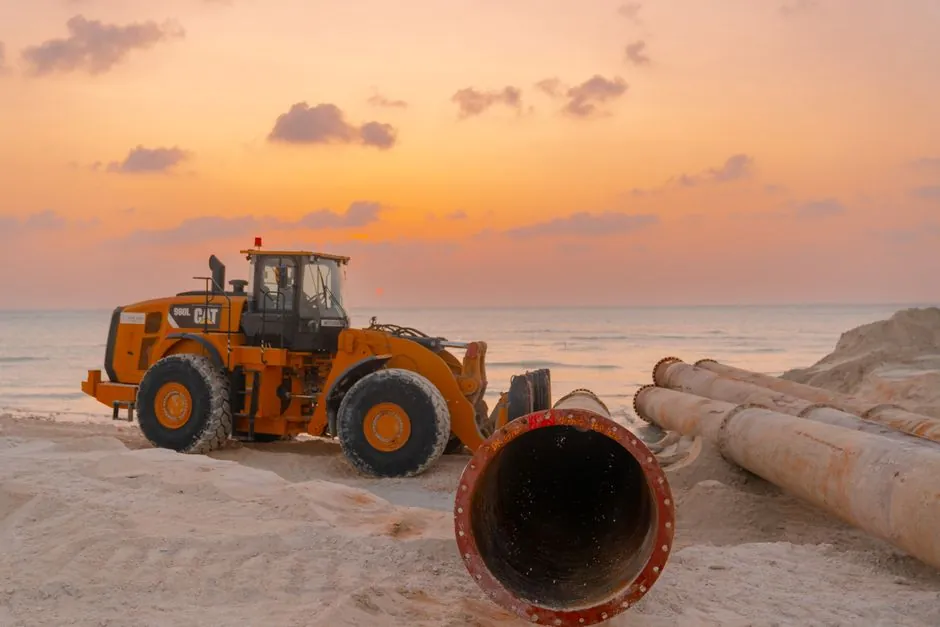
Residential water service and irrigation runs on small-diameter HDPE, 20-32 mm, with the same selection logic used for industrial service lines scaled down to household flow and pressure [S1].
Specifying PE for a home boils down to four decisions: material family (HDPE vs MDPE vs PEX), sizing standard (IPS, DIPS, CTS, SIDR), pressure class via Standard Dimension Ratio (SDR), and certification for the fluid carried (NSF/ANSI 61 for potable water, ASTM D2513 for gas) [S1][S4].
Why HDPE, and where PEX fits (or does not)
HDPE is a thermoplastic polymer made by polymerising ethylene, with a high strength-to-density ratio that keeps the pipe lightweight and flexible for cold-bend pulls through trenches and wall cavities [S5]. For residential potable distribution inside the building envelope, the HBN Water Pipes Hazard Spectrum ranks PP and HDPE above PEX, citing fewer end-of-life and use-phase concerns for the un-crosslinked grades [S3]. The same source flags that all plastic pressure pipe, including HDPE, is produced from petroleum feedstock, so lifecycle embodied carbon is a real trade-off against the corrosion and joint-leak failures seen on copper [S3]. PEX still has a place for interior hot/cold risers and manifold runs because of its crosslinked flexibility, but the residential *service line* and *site water main* are almost universally HDPE today.
For a deeper dive into how plastic pressure pipe stacks up against alternatives, the PE pipe engineering guide walks through the material families, while the pipe fitting reference covers the transition fittings that tie HDPE service lines to copper or PEX risers.
Sizing standards: IPS, DIPS, CTS, SIDR
Four sizing systems show up in residential PE work, and confusing them is the single most common ordering mistake [S1]:
- IPS (Iron Pipe Size): the legacy default for water, irrigation, and gas. Residential taps off an IPS main are typically 1 in or 1.25 in nominal, with 1.5 in ID common for longer runs [S1][S2].<br>- DIPS (Ductile Iron Pipe Size): based on a fixed inside diameter, used where HDPE is replacing ductile iron in municipal water and sewer. Rare on a single-lot residential build, common on master-planned developments.<br>- CTS (Copper Tubing Size): the go-to for 0.75-2 in residential service lines and gas distribution. 1.5 in ID CTS HDPE at 200 psi was the spec on a 550 ft residential run in the GreenBuildingAdvisor case study, supplied in 500 ft coils so only one joint was needed in the trench [S2].<br>- SIDR (Standard Inside Diameter Ratio): defined by a constant inside diameter, mostly used in conduit and some water service. It is being phased out of many standards as IPS and CTS dominate [S1].
The diameter band that matters for a single home is narrow: 20-32 mm small-diameter PE covers domestic supply laterals and micro-irrigation; 50-110 mm medium-diameter PE is the trigger point for sub-divisional mains and shared services [S1].
SDR, pressure class, and the wall-thickness trade
SDR is the ratio of outside diameter to wall thickness, so a lower SDR means a thicker wall and a higher pressure rating [S1]. For residential service at 160-200 psi working pressure, DR 11 (SDR 11) and DR 9 are the typical classes on CTS HDPE; the GBA thread priced 1.5 in ID 200 psi NSF PE at about 1.20 USD/ft, against 2.25 USD/ft for 160 psi CPVC and 5.50 USD/ft for copper at the same date [S2].
Use the plastic pipe entry for a side-by-side of PE, PP, PVC, and CPVC pressure ratings when the run includes a hot-water section or a code-listed fire sprinkler tap, and the pipe clamp reference for the support spacing rules that change with SDR.
Disinfectant, UV, and temperature limits: where HDPE fails
HDPE's reputation is built on chemical resistance, but oxidising disinfectants are the documented weak point. In the same long-run residential case, the owner noted that exposure to chlorine dioxide can shorten HDPE service life to roughly 10 years, and that other oxidising disinfectants (free chlorine, chloramine) still pull expected life down to about 20 years [S2]. For a specifier, the actionable rule is to call out the disinfectant chemistry from the local utility in the design basis, then derate the design life or select a higher-grade resin (PE 4710) accordingly.
Other operating envelopes to respect on residential PE: continuous service temperature is generally capped well below the 60-80 °C range of PEX or CPVC, so PE is for the cold side and the service line only; UV exposure degrades unprotected black PE slowly but degrades coloured striped co-extrusions faster, so keep stored coils covered; and for gas, stick to yellow MDPE or HDPE rated to ASTM D2513 with the appropriate tracer wire, never reuse a water-service SKU on a gas line [S1][S4].
Selection criteria: a side-by-side for the residential service line

Three materials cover most residential service and main runs. Against the criteria a homeowner or light-commercial specifier actually weighs, the comparison reads as follows [S2][S3]:
Cost per foot (1.5 in ID class, 2017 reference): HDPE CTS 200 psi at 1.20 USD/ft, CPVC 160 psi at 2.25 USD/ft, copper Type L at 5.50 USD/ft [S2].<br>Joint count on a 500 ft run: HDPE coil 1 joint, CPVC in 20 ft sticks ~25 joints plus solvent welds, copper ~25 soldered joints [S2].<br>Disinfectant tolerance: HDPE degraded by ClO2 and chloramine; CPVC carries similar oxidative ageing with temperature compounding; copper is broadly tolerant but pitting failures are reported in aggressive soils at 4 ft burial [S2].<br>Health ranking (HBN, interior pipes): HDPE and PP preferred over PEX; copper soldered without lead is the reference benchmark for metals [S3].
On those criteria HDPE wins on cost, joint count, and seismic tolerance for the cold service line, copper wins on interior hot-water and on long-proven track record, and PEX keeps its niche for interior distribution because of its crosslinked flexibility and higher continuous-temperature rating.
Installation, fittings, and the field gotchas
HDPE's flexibility lets long small-diameter runs ship as coil, which is why a 500 ft residential service can be pulled with a single fusion or mechanical joint instead of 25-50 stick-pipe joints [S1][S2]. Joints are still the failure hotspot: electrofusion couplings, butt fusion, and ASTM F1055 brass transition fittings dominate, and the cost of those fittings is where HDPE loses some of its material-price advantage [S2][S5]. For trenching, keep the bedding sand-cleaned, avoid sharp rocks in the first 6 in of backfill, and respect the minimum bend radius (typically 20-30 times the OD for HDPE) so the coil does not kink and weaken the wall [S5][S6].
Equipment-side, PE fusion requires a dedicated construction machinery and equipment kit (butt fusion machine, electrofusion box, data-logging recorder) and the construction tools needed to prep the pipe ends square and clean. For a step outside residential scale into larger mains, the Steel-Plastic Composite Pipe Selection for Residential Builds piece covers when a PE-steel transition is worth the cost.
For the specifier, the verifiable next node is the local utility's disinfectant chemistry plus the NSF/ANSI 61 listing on the print: confirm those two, and the rest of the residential PE selection collapses to a clean SDR/SDR-class choice and a single electrofusion-coupling count.