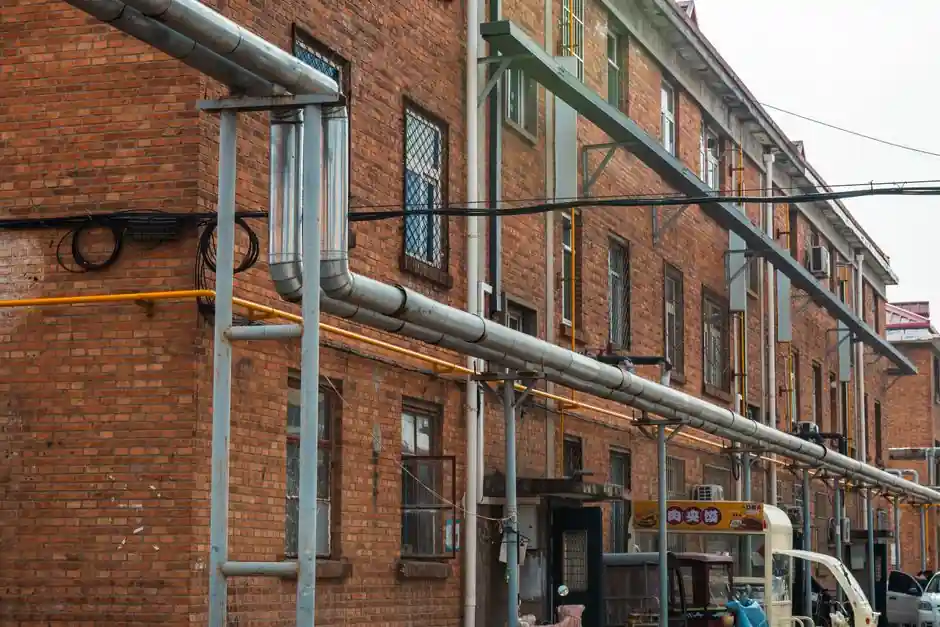
Steel-plastic composite pipe pairs a steel pressure-bearing core with a polymer inner and outer liner, and the hybrid routinely outperforms either parent material in mixed-duty commercial risers and aggressive-water service [S1][S4].
Selection turns on three numbers: working pressure class, continuous operating temperature, and liner chemical compatibility. Get those right first; everything else (jointing, support spacing, fittings) follows from them.
What a Steel-Plastic Composite Pipe Actually Is
A steel-plastic composite pipe bonds a welded or seamless steel core to one or more polymer layers, typically PE, PPR, or PVC, producing a single wall that carries pressure on the steel and chemical resistance on the plastic [S6][S8].
Compared with monolithic steel pipe, the composite drops the corrosion risk that forces galvanizing or internal coating. Compared with monolithic plastic pipe, the steel skeleton raises the working pressure ceiling and reduces thermal expansion, so support spans can be longer and hot-water creep is contained [S1][S2].
The hybrid is distinct from FRP composite systems, which use fiberglass reinforcement rather than a steel core, and from seamless steel pipe with internal coatings, which still rely on the coating integrity for corrosion control [S3][S5].
Pressure, Temperature, and Liner Selection
Continuous operating temperature is the harder ceiling. Most PE-lined steel-plastic composite pipe is rated to about 95 °C for hot-water service, with PPR-lined versions pushing toward 110 °C in heating distribution [S6][S7].
A safety margin of 1.5× the design pressure is a sensible baseline where local codes do not specify otherwise.
When a spec calls for the steel core to carry surge loads, the underlying steel grade matters: ASTM A106 Grade B and API 5L line pipe remain the common substrates, mirroring the selection logic used in pure-steel infrastructure [S3].
Where Steel-Plastic Composite Wins, and Where It Fails
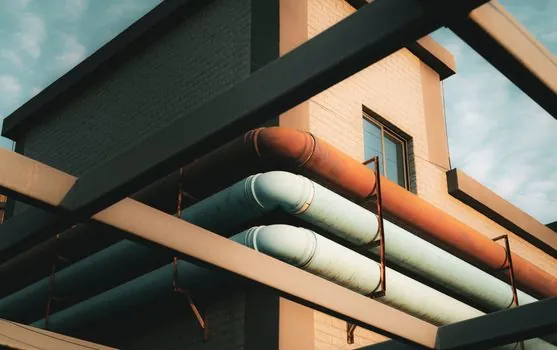
The composite is well matched to commercial hot-water risers, chiller and condenser water lines, and aggressive-water mains (high chloride, variable pH) where pure steel pipe would need lining and pure plastic would creep or burst [S1][S2].
It is a poor choice for direct-buried petroleum service, where reinforced thermoset FRP composite or carbon steel with FBE coating dominates, and for outdoor UV-exposed runs unless the outer jacket is explicitly UV-stabilized [S5][S7]. Composite inner diameters also do not match steel nominal diameters, so standard steel pigs and steel-spec fittings will not drop in [S5].
For more on how pipe selection feeds into fitting datasheets, the complete pipe fitting datasheet checklist covers the pressure/temperature/liner fields a spec writer should require on every submittal.
Jointing, Trenching, and Site Handling
Jointing is where the hybrid earns its keep and where projects lose money. Most steel-plastic composite systems use threaded, flanged, or mechanical-compression couplings rather than solvent cement, so installer skill is closer to steel work than to PVC work [S1][S7].
Trench width can be narrower than for rigid steel because the composite tolerates small radius bends without fittings, and the lighter mass per metre cuts lift equipment needs. Against that, trench bedding still needs to be sand or fine-grain fill, not sharp aggregate, to protect the outer polymer jacket [S1][S4].
For renovation work where existing sleeves and chases are tight, PVC-U pipe selection covers the schedule/pressure logic on the plastic-only side; the composite sits one tier heavier but with the same installation philosophy.
Comparison: Steel, Plastic, and Steel-Plastic Composite on Four Decision Criteria
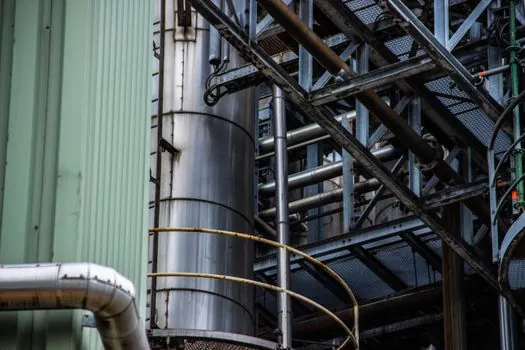
On the four criteria that drive commercial-building specs, steel-plastic composite sits in the middle of steel and plastic rather than at either extreme. [S1]
Working pressure: solid steel (especially seamless steel pipe) is highest, with seamless rated up to about 20 % above welded of the same schedule; composite is mid-range; plastic is lowest [S3][S6].
Corrosion resistance: plastic is best in aggressive water, composite is close behind because the polymer liner isolates the water from the steel core, and bare steel is worst without coating [S1][S2].
Installation speed and weight: plastic is fastest and lightest, composite is mid (lighter than steel, heavier than plastic), and steel is slowest and heaviest because of welding and lifting needs [S1][S7].
Lifecycle cost: plastic often wins on installed cost but loses on hot-water derating; composite sits between, with longer support spans than plastic and lower maintenance than coated steel; bare steel has the highest coating-replacement overhead over a 30-year horizon [S2][S4].
Standards and Sourcing Anchors
In Canada, CSA Z662 Clause 13.1 specifically governs non-metallic reinforced composite pipelines used in oil and gas service, including design and installation requirements that differ from steel-pipe clauses [S5].
For water-supply material selection, the F1000Research 2026 AHP study evaluated five common materials (thin-walled copper, PVC-lined galvanized steel, PP-R, PVC-U, thin-walled stainless steel) on safety, cost, and health criteria; steel-plastic composite variants fall in the same decision framework even where the study uses PVC-lined galvanized steel as its closest analogue [S4].
Buyer-side checks before signing a PO: confirm the liner material and its temperature rating in writing, ask for a hydrostatic test certificate at 1.5× the design pressure, and verify the steel substrate grade (ASTM A106 or API 5L are common). For aggressive-water mains, a chloride-resistance data sheet from the liner maker is non-negotiable.
For higher-pressure bolted joints on the steel side of a hybrid system, RF flange gasket choices covers the spiral-wound vs ring-joint tradeoff that often decides whether a steel-plastic transition flanges up cleanly to existing plant piping. Track Q1 2027 manufacturer datasheet revisions for hot-water PP-R liner creep curves, and watch for any update to CSA Z662 Annex E that touches reinforced composite qualification testing.