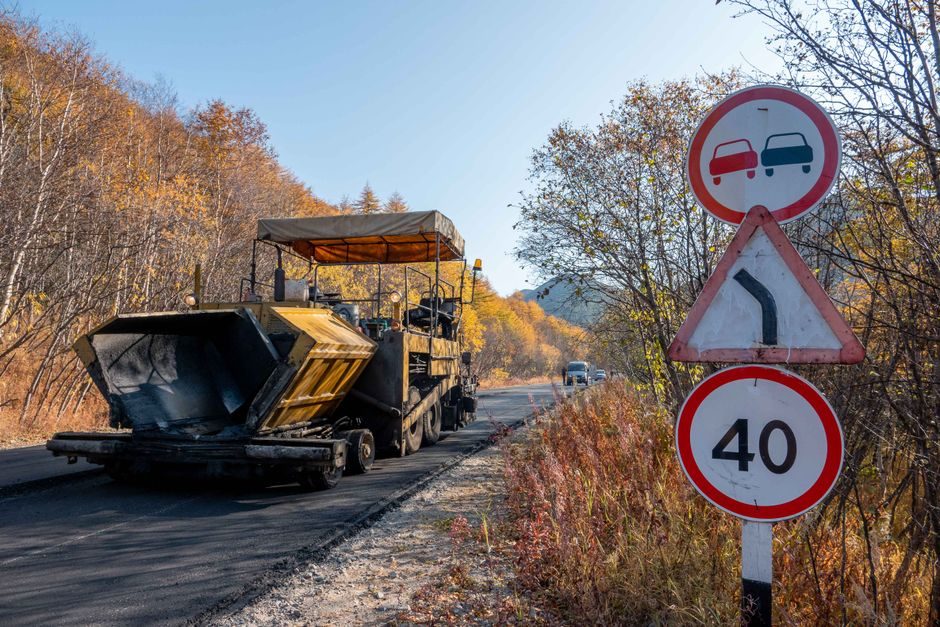
Plastic folding warning sign boards on Made-in-China list at US$0.20–2.00 per piece with a 2,000-piece MOQ, while PMMA + PET reflective truck rear plates cluster at US$0.85–1.15 per set at a 1,000-set MOQ, giving a usable 2026 factory-price reference band for road, construction and fleet buyers [S3].
The two clusters sit on different cost stacks: the plastic folding board is a PE (polyethylene) frame product with no reflective sheeting, while the truck plate combines an aluminum or plastic substrate with a PET reflective face — which is exactly why the per-piece ceiling on the reflective SKU is roughly an order of magnitude higher despite the lower MOQ [S3].
Buyers running a fleet or roadworks tender should treat reflective grade, substrate, MOQ and printing method as the four independent cost drivers, then read the warning sign encyclopedia entry against the same checklist before issuing an RFQ.
Material Substrate and Per-Piece Price Spread
Substrate choice is the single largest cost lever on a non-reflective folding sign: PE plastic frames anchor the floor at roughly US$0.20 per piece, while aluminum-framed or galvanized-steel folding signs sit at the US$1.50–2.00 end of the same Made-in-China band because metal stamping, hinge hardware and powder-coat finishing add fixed conversion cost per unit [S3].
For reflective road signs, substrate ranking runs aluminum sheet > aluminum composite panel (ACP) > galvanized steel > plastic honeycomb, and the substrate tax alone can move a 600 × 600 mm triangle yield sign from roughly US$3 to over US$12 per piece at the same reflective sheeting class — a band the Made-in-China truck-plate listings only partially expose because they bundle substrate and reflective film into a single SKU [S3].
Engineers specifying under MUTCD, EN 12899 or AS 1743 should pin substrate in the RFQ and reject "equivalent" substitutions at the sample stage, since a plastic-honeycomb swap at the same price typically halves the wind-load rating and voids the reflective sheeting warranty on Class 1 / Type IV films.
Reflective Sheeting Class and the Cost Stack
Reflective sheeting class is the second cost driver, and the standard typology — engineer grade (EG), high-intensity prismatic (HIP), diamond grade (DG / DG3) — sets a stepwise price ladder where each step roughly doubles the per-square-foot sheeting cost relative to the one below it. [S1]
On a 600 mm triangle, an EG film faces adds roughly US$0.40–0.80 per sign, HIP adds US$1.20–2.00, and diamond grade lands in the US$3.00–5.00 zone before substrate and printing — which is why a "warning sign" line item in a tender is meaningless without the sheeting class written next to it.
For roadworks and construction sites, the practical floor is HIP-class reflective sheeting because most European and US jurisdictions will not accept EG on public roads above 50 km/h zones, so the price floor in practice — not in catalog — is the HIP step, not the EG step.
MOQ Floors, Tooling Cost and Per-Unit Math
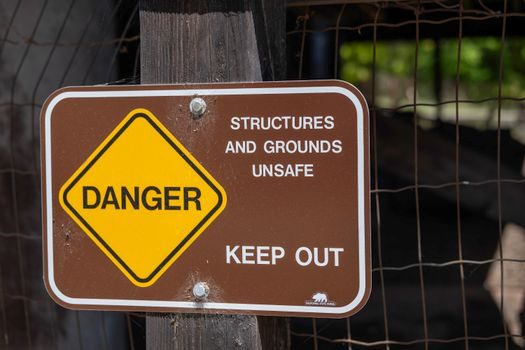
The Made-in-China data shows the MOQ floor sitting at 1,000 sets for the reflective truck plate and 2,000 pieces for the folding plastic sign, and that floor is not arbitrary — it reflects the minimum run length that amortises the silk-screen or digital printing setup, the die-cut tooling for the substrate, and the reflective sheeting lamination jig [S3].
Custom tooling (a private logo, a non-standard size or a new pictogram mould) adds a one-off US$150–500 mold charge on plastic signs and US$300–1,200 on aluminum substrate dies, which is why most small buyers fold their requirement into a stock size and stock pictogram set to avoid the tooling premium — a trade-off covered in the warning sign reference page.
Printing, Pictogram Set and Certification Cost
Printing method is the third lever, and it interacts with order size: silk-screen is the cheapest at 2,000+ piece runs but charges US$50–150 per color per setup, UV digital printing eliminates the setup fee but costs US$0.05–0.20 more per piece, so the crossover sits in the 500–1,500 piece range depending on the number of pictogram colors. [S2]
Certification is the silent cost driver.
For a road authority or EPC buyer the certification premium is non-negotiable, but for an in-house factory floor-warning application the same warning sign category applies without the road-traffic certification, and the warning tape reference covers the lighter-duty visual-barrier alternative for indoor use.
Use-Case Mapping: Which Warning Sign SKU Fits
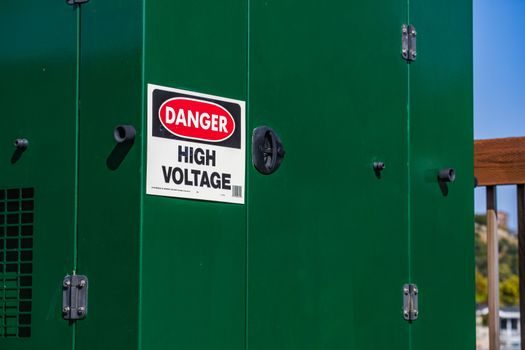
Construction sites and roadworks with vehicle exposure need HIP-or-better reflective sheeting on aluminum or ACP substrate, with a per-piece landed cost in the US$8–18 band for 600–750 mm triangles at a 200–500 piece run — well above the Made-in-China folding-board floor because reflective sheeting and metal substrate dominate the bill of materials [S3].
Warehouse and factory indoor applications can use the PE folding sign at US$0.20–2.00 per piece since impact resistance and portability matter more than reflective performance, and the same SKU doubles as a portable cordon around a wet floor or a maintenance zone.
Fleet and truck rear markings are a separate category where the Made-in-China US$0.85–1.15 reflective plate band [S3] applies, but ECE R70 / DOT-C2 compliance is a separate certification and should be specified in addition to reflective class.
Comparison: Material × Reflective Class × Indicative Price
On a decision matrix the four main SKU types line up against three buying criteria as follows: cost-floor — PE non-reflective (lowest); outdoor service life — aluminum + HIP (best balance, 7–10 years reflective life); wind-load rating — aluminum + diamond grade (highest, suitable for expressway gantry); indoor/portable use — PE folding (only sensible option).
Buyers running multi-SKU tenders should pin substrate, sheeting class, MOQ and certification in the RFQ as four separate fields, then read the linear guide entry only as a side reference if the warning sign is being installed alongside machine-guarding hardware — different product family, but the same MOQ-and-tooling logic applies.
Sourcing Channels and Verification Signals

Made-in-China is the dominant low-MOQ channel for Asian OEM warning-sign production, with on-time delivery and customization flagged as the two most-cited buyer filters on the platform listings themselves [S3]. The same logic on cable and conductor sourcing — where power cable price guide 2026 covers copper conductor, XLPE vs PVC, and voltage class cost levers — applies: explicit substrate, explicit sheeting class, explicit MOQ.
Verification signals worth tracking: a supplier's reflectivity test report (EN 12899 or ASTM D4956), substrate thickness in mm, and a sample batch photo under flash at night — the last is a quick proxy for whether the reflective film is genuine HIP or downgraded EG relabelled.
For road authorities and EPCs, the next trackable node is the EN 12899 / CE marking audit report revision cycle, and the parallel practical signal is the per-piece price movement on 3M Diamond Grade DG3 and Avery Dennison OmniCube — both sheeting concentrates that move with petrochemical feedstock cost and tend to set the floor for the HIP-and-above bracket.