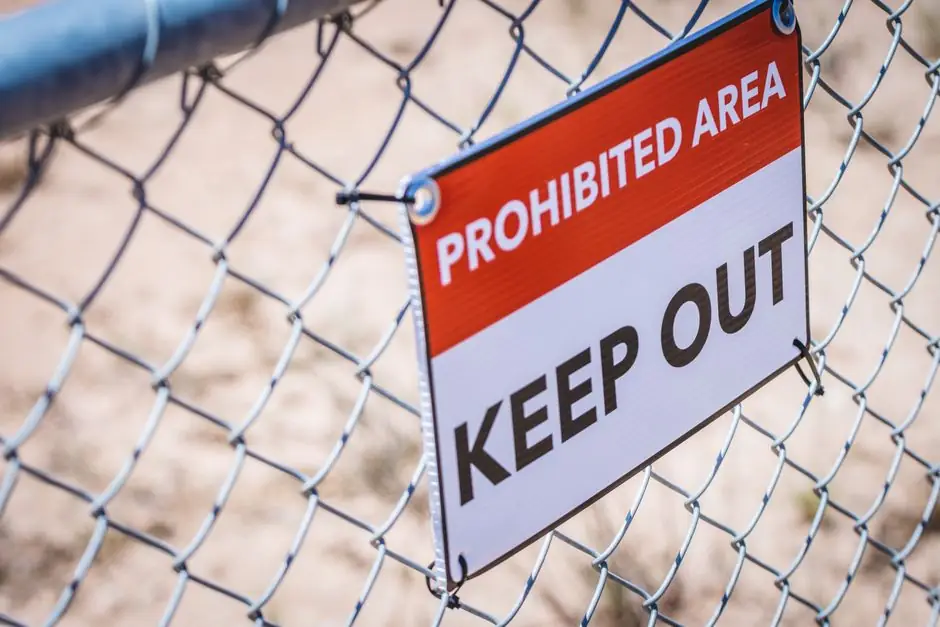
Confined space work kills roughly 130 U.S. workers per year, with OSHA defining any space large enough to enter, with limited egress, and not designed for continuous occupancy as a permit-required confined space under 29 CFR 1910.146 [S1][S5].
Selecting a perimeter alarm for a confined space is a system decision, not a hardware purchase: the perimeter layer only earns its keep when it is hard-wired to a 4-gas personal monitor at the entrant's breathing zone, a continuous attendant link, and a documented non-entry rescue plan [S2][S3].
What the perimeter layer actually has to do
A confined-space perimeter is not a fence alarm; it is a working boundary that controls access, signals atmospheric danger, and supports a single attendant supervising one or more entrants [S2]. The first engineering call is coverage geometry: how many openings, vertical entries, or horizontal entries must the perimeter cover, and does the alarm need to differentiate "opened" from "breached." For a single manhole entry, a tripod with a retrieval winch and one alarm hub is the common minimum; for a multi-opening tank, a daisy-chained hub with one beacon per opening is the typical build [S5].
Perimeter alarm selection for confined space work lives or dies on three electrical and environmental numbers: ingress protection, alarm output type, and power autonomy. A confined space entry often runs in a wet, dirty utility vault or wastewater wet well, so the perimeter hub should be specified to at least IP65; the alarm output should be a dry-contact or addressable module that the site's gas alarm controller can read, and battery runtime should clear a full 8-hour shift on a single charge at ambient temperature [S3][S7].
Sensor stack: 4-gas is the floor, not the ceiling
A standard confined space monitor carries sensors for O2, LEL (combustibles as a percentage of lower explosive limit), CO, and H2S, the four hazards most commonly named in municipal and industrial entry permits [S4][S8]. O2 is reported in percent volume (typical alarm setpoints 19.5% low and 23.5% high), LEL in %LEL (alarm at 10% LEL is common), CO in ppm (typical 25 ppm low, 50 ppm high), and H2S in ppm (10 ppm low, 15 ppm high) [S3][S7].
Beyond the four-gas floor, confined spaces in ammonia refrigeration, chlorine water treatment, semiconductor fabs, and solvent recovery need a fifth or sixth sensor: NH3, Cl2, or a PID for VOCs. A PID (photoionization detector) is the standard add-on whenever solvent vapor, fuel vapor, or off-gassing from cured coatings is in scope, and it reports in isobutylene-equivalent ppm [S7]. Whichever sensor stack you pick, it must be bump-tested before each shift and calibrated on the manufacturer's interval; uncalibrated monitors are the most common audit finding on 1910.146 programs [S3][S6].
Communication and attendant link: the part most teams under-spec

29 CFR 1910.146 requires the attendant to maintain constant communication with entrants whenever direct visual contact is lost, and the standard names radio, voice, visual, or hardwired systems as acceptable means [S1][S2]. A confined space perimeter alarm that cannot relay to the attendant is a local beacon only: useful at the opening, useless the moment the attendant steps back to manage retrieval lines or a second opening.
Spec the attendant link as a separate line item from the perimeter alarm. In practice this means either a UHF/VHF radio on a dedicated channel, a wireless pull-cord transmitter, or a wired intercom with a jack at the perimeter hub. The alarm hub should expose a relay output that triggers a remote sounder at the attendant station, so an atmospheric alarm at the entrant is duplicated at the attendant position within one second [S3][S7].
Integration with the broader life-safety system
Confined space work is rarely a standalone event. The same entry that needs a perimeter alarm usually sits inside a process area covered by a fixed fire alarm control panel and a fixed gas alarm controller. The perimeter alarm should share a common relay convention with those panels: dry-contact, normally-open, fail-safe on power loss, so a single supervisory signal can be wired to the plant's central station. [S3]
For multi-opening entries, the perimeter hub can be expanded with addressable modules so each opening shows up as a separate point on the gas alarm controller front panel. This matters during rescue: if the alarm logs show "opening 2 breached" 4 minutes before "opening 2 atmospheric alarm," the rescue team knows which entrant to extract first [S5][S9]. The same logic is why a perimeter alarm for confined space is best treated as a node on a plant-wide safety network, not a stand-alone box.
Decision criteria: portable kit vs. fixed rig vs. tripod build
Three perimeter alarm configurations cover almost every confined space entry. The portable kit (one to two openings, short duration) is the cheapest and fastest to deploy, with a single 4-gas monitor, a tripod, a winch, and a local sounder; runtime is set by the monitor battery, typically 12 to 24 hours on a fresh charge. The semi-fixed rig (two to four openings, full-shift work) adds a hub with relay outputs, a remote attendant sounder, and a calibration gas cylinder on the cart. The fixed rig (permanent openings on a process vessel, repeated entries) hardwires the perimeter into the plant gas alarm controller and ties each opening to an addressable point. [S3]
On four decision criteria the configurations split cleanly. Cost per entry: portable kit is lowest for one-off work, fixed rig wins for repeated entries. Setup time: portable kit is 10 to 15 minutes, fixed rig is zero after install. Compliance traceability: fixed rig, with logged alarm history, is the strongest at audit; portable kit depends on the operator's handwritten log. Rescue integration: fixed rig can trigger a plant-level muster, portable kit depends on the attendant's radio [S2][S5][S9].
Failure modes and field constraints
The most common failure on confined space perimeter alarms is not the sensor, it is the cable. A 150-foot sampling hose to a remote sensor can introduce a 30 to 60 second lag, which is too slow for a rapidly changing LEL reading in a solvent tank; if the space allows, shorten the hose and put the sensor at the entrant's chest [S5]. The second most common failure is dead batteries on the attendant link; the alarm fires, the attendant is 30 feet away around a corner, and the radio is off. Lock the attendant link to the same charger as the perimeter hub so both leave the crib fully charged.
Confined space entry frequently runs in environments with RFI from welding inverters, VFD drives, and two-way radios; specify the perimeter hub for high RFI immunity and confirm with the manufacturer, not just the datasheet [S8]. Dust and water are the third constraint: an IP65 hub is acceptable for most utility and wastewater work, but a manhole in a combined sewer overflow may need IP67 during wet-weather entries [S3][S7].
Sourcing, standards, and what to ask the vendor
The governing U.S. regulation is 29 CFR 1910.146 (permit-required confined spaces), and any perimeter alarm claim should be cross-checked against the standard's "communication" and "rescue" paragraphs before purchase [S1]. For atmospheric monitoring, the relevant performance guidance comes from the sensor manufacturer and the monitor's IECEx or UL certification for the hazardous area classification of the space; a Class I Div 1 entry (continuous flammable gas present) needs a monitor rated for that division, not a generic four-gas consumer unit [S3][S4].
For spec writing, ask the vendor five questions: (1) What is the monitor's runtime on a fresh charge at the lowest expected ambient temperature, in hours? (2) What is the bump-test interval and the calibration interval, in days, for each of the four sensors? (3) How many relay outputs does the perimeter hub expose, and are they normally-open or fail-safe? (4) What is the IP rating of the hub, and is it third-party tested? (5) Can the alarm log be exported in CSV or PDF for the 1910.146 training record [S3][S5][S6]? On the broader system level, plants running a perimeter alarm alongside a sorting system or a shuttle system inside a warehouse should confirm the alarm wiring does not share a conduit with the VFD-driven conveyor or it will see continuous RFI noise. A vetted spec flow for adjacent process areas is laid out in this spec-first map for food processing perimeter alarms, and the mining-sector equivalent in this 2026 perimeter alarm map for mining is a useful cross-check on the same questions asked in a harsher atmosphere class.