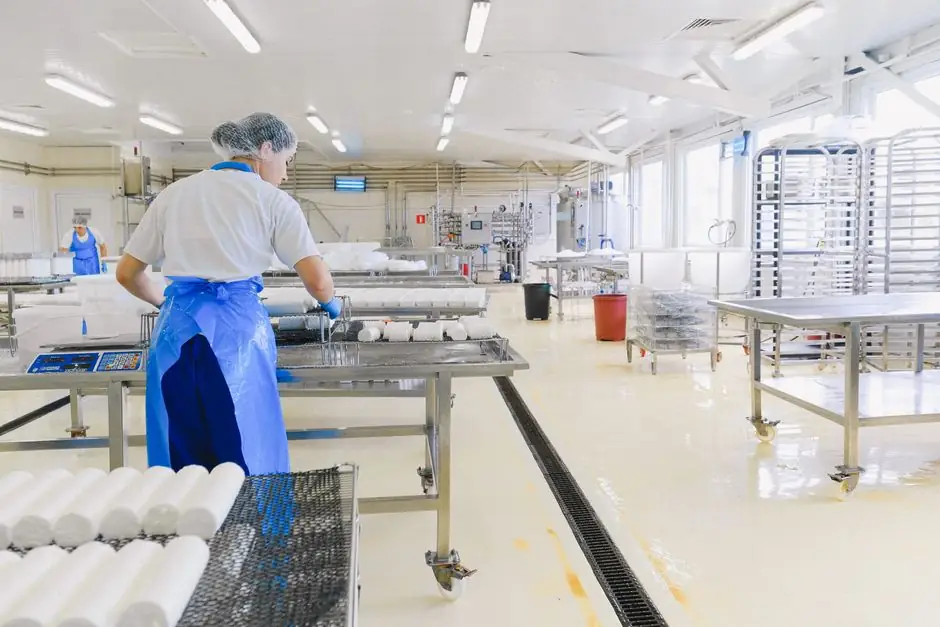
Food processing facilities face a unique perimeter problem: the fence line has to defend high-value, perishable inventory from theft, activist intrusion, and dock-side contamination, while surviving constant washdown, steam, temperature swings, and grease aerosols that punish exposed hardware [S4]. A perimeter alarm system (often called a Perimeter Intrusion Detection System, or PIDS) is best specified by matching the detection technology to the site's physical conditions rather than picking by brand [S5].
Across industrial security guides, the same four technology families keep surfacing: buried or underground seismic sensors, fence-mounted sensors, free-standing beam systems (infrared or microwave), and camera-based video analytics [S5]. A short comparison matrix from one of the comparison sources lines them up on visibility, weather resilience, false-alarm sources, terrain adaptability, and maintenance burden, and the structural gap is clear: buried detectors avoid wind, rain, and sunlight exposure, while fence and beam systems trade that concealment for lower install cost [S5]. For background on what a perimeter alarm system actually does at the boundary of a site, the perimeter alarm reference is the starting point.
Detection Technologies and Where Each Fits
Underground seismic sensors are concealed below grade, so they read footstep, vehicle, and digging vibration through soil without any visible hardware on the fence line, which is a structural advantage in outdoor environments exposed to wind, rain, and direct sunlight [S5]. Fence-mounted sensors attach to fabric or posts and trigger on cutting, climbing, or vibration, but they only protect the fence line itself and are sensitive to wind-driven fence movement, animals, and debris strikes [S5]. Free-standing IR and microwave beam systems fire a signal between a transmitter and receiver and trip when the beam is broken, which keeps them independent of any existing fence but requires a clear, straight line of sight and degrades in fog, heavy rain, or snow [S5]. Camera-based video motion detection uses analytics (and increasingly AI) on defined zones; on its own it needs a clear view of the whole perimeter, and is most often paired with a buried sensor that cues the camera to the exact detection point as a verification layer [S5].
For food and beverage sites specifically, a video analytics layer often pays off because operators need visual evidence of a breach before dispatching a response to a washdown corridor or cold-storage dock, and AI-assisted flame and smoke detection has been deployed for the same reason in similar industrial settings [S2]. Selection should weight the three highest-cost failure modes first: false alarms in high-wind fence runs, beam misalignment on long sightlines, and missed detection in vegetated or sloped terrain.
Decision Criteria Specific to Food Processing
The criteria that matter for a food plant perimeter differ from a generic industrial site. AMAROK, a perimeter integrator focused on food and cold-storage customers, structures its selection around five plant-specific drivers: product integrity and safety, continuity of operations, response to external threats such as protests and activist intrusions, efficient access control, and regulatory compliance with food safety and food defense rules [S4]. Each one of these maps to a measurable spec on the detector side: washdown tolerance, integration with access control and video, 24/7 remote monitoring coverage, and rejection of nuisance alarms from steam plumes and forklift traffic.
Senstar's published selection framework expands the engineering checklist beyond detection capability: false alarm rate (driven by adaptive analytics), scalability, integration with surveillance and access control, ease of installation, total cost of ownership, reliability in harsh conditions, remote monitoring and control, regulatory compliance with surveillance and data protection rules, vendor support and warranty, cybersecurity features, customization, data analytics and reporting, response coordination, and environmental fit [S3]. For a refrigerated or washdown-heavy plant, the dominant items on that list narrow to four: false alarm rate, environmental durability, integration with existing access control, and cybersecurity on any networked device.
Comparison Matrix: Four Technologies on Plant-Relevant Criteria
The cleanest way to pick a perimeter system for a food site is to line the four options against criteria the plant engineer already cares about. Buried seismic detection is fully concealed, unaffected by rain, wind, and fog, and terrain-adaptable across open ground, slopes, and vegetation, with a low false-alarm rate when adaptive algorithms are enabled and minimal maintenance because the hardware is buried and self-contained [S5]. Fence-mounted sensors are visible on the fence line, require an existing fence, are sensitive to wind-driven fence vibration, and degrade against false alarms from animals and debris, with maintenance tied to fence condition [S5]. Free-standing IR and microwave beams need a clear line of sight, are degraded by fog, heavy rain, or snow, and are vulnerable to nuisance trips from birds, foliage, dust, and beam misalignment, plus the possibility of being crawled under or jumped over [S5]. Camera-based video analytics adds an AI verification step that is well suited to food and beverage plants where operators want visual confirmation before triggering an emergency workflow; the same AI approach is used for in-plant fire and smoke detection on processing lines, as documented for AVIOTEC deployments in food and beverage facilities [S2].
System Integration and Regulatory Anchors
Perimeter detection in a food plant is rarely a standalone purchase; the selection criteria explicitly call out integration with surveillance cameras, access control, and monitoring centers, plus coordination with internal teams and external agencies during a breach [S3]. AMAROK's reference architecture for food processing pairs a perimeter layer (electric fence or equivalent) with high-definition video surveillance, 24/7 remote and mobile video monitoring, and credential-based gate access control, with the four layers tied together through a single management workflow [S4]. Umbrella Security's Chicago food manufacturing deployments make the same integration point from a different angle: a buyer is rarely asking for "more cameras" but for an integrated view of who entered, what moved, what happened at the dock, and whether the right people were notified during an exception [S1].
On the regulatory side, food defense planning bodies recommend documenting CCTV and perimeter alarm selection, setup, and operation as part of a facility security plan, which puts the perimeter spec on the same audit trail as access control and visitor management [S6]. For fire-adjacent risk, video-based flame and smoke analytics have become a recognized supplement to traditional detection in food and beverage plants, with the stated value being earlier and more accurate localization of the ignition source on the processing line [S2]. The fire alarm control panel and gas alarm controller references are the natural companion selections once a perimeter layer is in place, since cold-storage ammonia refrigeration and dust-handling areas bring their own detection requirements.
Failure Modes, False Alarms, and Washdown Reality
False alarms are the single biggest operational cost on a food plant perimeter, because every nuisance trip during a sanitation shift pulls a supervisor off the line. The published selection criteria put false alarm rate ahead of detection capability for that exact reason, and they recommend advanced analytics as the primary mitigant [S3]. Buried systems have a structural advantage here because the sensor is not directly exposed to wind, rain, or sunlight the way fence-mounted or beam-based detectors are, and the published comparison specifically lists wind, animals, and debris as the dominant false alarm sources for fence systems versus birds, foliage, and dust for beam systems [S5]. For sites with steam plumes, washdown spray, or heavy forklift traffic near the fence line, the practical move is to bury the primary detection and use video analytics as a verification layer on confirmed events.
Environmental durability also drives spec. Outdoor perimeter systems have to handle weather, temperature swings, wildlife, and vegetation without constant false alarms, and the comparison frames this as a structural rather than tuning problem: a buried sensor is simply not exposed to the same weather load as a fence or beam [S5]. For plants that need to extend detection to indoor / line-side risks, AI-assisted flame and smoke cameras have been documented as a way to localize the actual source of a flame or smoke signature on a food processing line, reducing the time to verify and respond [S2]. Vector Security's industrial food security offering also folds in environmental monitoring alongside alarm and access control, which is consistent with the food plant reality that perimeter breach, cold-chain excursion, and dock intrusion are reviewed in the same operator workflow [S7].
Cost, Cybersecurity, and Vendor Selection
Total cost of ownership on a perimeter project is more than the detector price tag: the published criteria explicitly include initial investment, installation, ongoing maintenance, and future upgrade path [S3]. A buried seismic system typically carries higher civil work cost (trenching, conduit, soil restoration) but lower lifetime maintenance because the hardware is sealed and self-contained [S5]. A fence-mounted or beam system is cheaper to install but pays that back in alignment, vegetation management, and weather-driven service calls. Either way, the lifecycle math should include integration cost into the existing access control and video management system, not just the detector.
Cybersecurity now sits next to physical reliability in the selection checklist, because modern perimeter systems are networked devices and a compromised detector is a silent attacker on the same plant network that runs the gas alarm controller and SCADA [S3]. Vendor support, warranty terms, training, and the ability to scale or customize over time are listed alongside cybersecurity as the non-detector criteria that separate a serious industrial integrator from a commodity installer [S3]. The perimeter alarm encyclopedia entry is the natural next stop for engineers who need to translate these criteria into a written spec before issuing an RFP.
Use Cases and Trackable Signals

Three food-plant archetypes show up repeatedly in the source material. The first is a high-value ingredient or finished goods site (Nielsen-Massey Vanillas is cited as a multi-building case where access control, video, alarms, and humidity sensors were deployed together to protect inventory and support emergency awareness) [S1]. The second is a cold-storage and dock-heavy facility, where a broken shipping container seal can reject an entire shipment and where 24/7 remote video monitoring plus credential-based gate access is the spec backbone [S4]. The third is a multi-tenant industrial park, where per-tenant perimeter layering is impractical and a shared fence with buried seismic plus video verification is the more defensible architecture. Two signals worth tracking on the next planning cycle: AI-assisted flame and smoke detection continues to move from a novelty to a documented food-and-beverage deployment, and remote video monitoring has become a default expectation rather than an upgrade [S2][S4]. For a deeper look at how the same spec-first logic applies to a different high-risk industrial site, the Perimeter Alarm Spec Map for Welding and Cutting Yards article applies the same selection framework to a yard with hot-work and ignition risk.