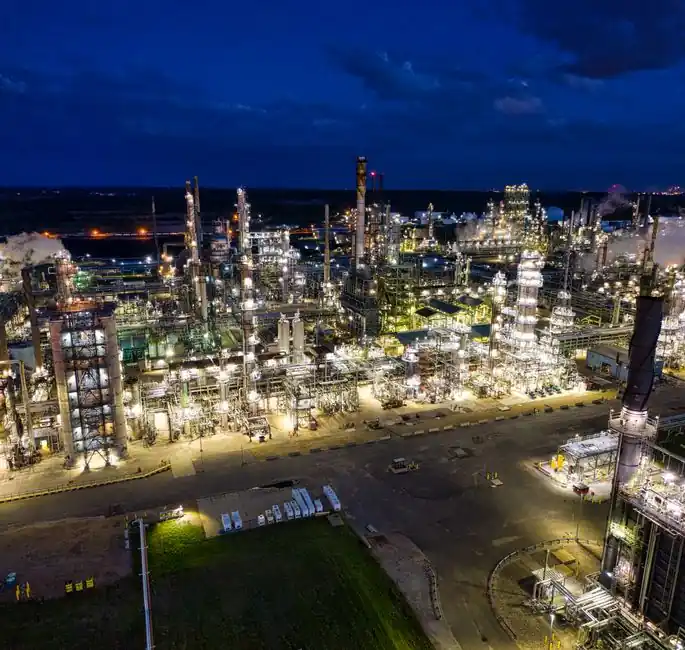
Chemical plant perimeter alarm selection is driven by four hard constraints: a fenced site that commonly exceeds several hundred acres, hazardous-material storage zones that demand tiered authorization, round-the-clock operations where guard staffing thins overnight, and dense process infrastructure that blocks camera sight lines [S2].
The four dominant sensor classes for this application are buried/underground sensors, fence-mounted sensors, free-standing beam systems, and microwave or infrared links; effective chemical-facility projects typically segment the perimeter into independently alarmed zones sized to a single guard's visual observation range [S8][S1]. Because intrusion consequences differ from those at a typical industrial site, perimeter alarms are specified as the first layer of a layered architecture that pairs detection with video verification, access control, and an integrated fire alarm control panel for process-area fire events [S3][S2].
Threat Tiering and Zone Segmentation
Chemical plant sites typically map to three concentric threat zones: outer perimeter fence line, intermediate buffer or isolation zone around tank farms and process units, and inner restricted zone covering control rooms, valve manifolds, and hazardous material storage [S2][S3]. NRC Reg Guide 5.44 Rev. 1, applicable to fuel-cycle and similar high-consequence sites, requires the isolation zone surrounding the physical barrier to be monitored for the presence of individuals or vehicles so armed response can be initiated at the time of penetration [S1].
For a practical chemical-facility build, the perimeter is divided into segments that are independently alarmed and uniquely monitored, with each segment length limited to what one guard at one end of the segment can visually observe in full; this segmentation also allows testing and maintenance of one segment while the remainder stays under monitoring [S1]. Yard size drives the math: tank farms, raw material yards, and loading docks frequently sit beyond main production footprints and see inconsistent coverage, so segmentation must follow the actual guard-tour geometry, not a notional fence length [S2].
Sensor Classes and Selection Criteria
Free-standing infrared and microwave beam systems, often solar-powered and wireless, are commonly deployed at chemical-warehouse perimeters where trenching for power or signal is impractical and where line-of-sight between towers is preserved along a flat fence run [S5]. A microwave perimeter system typically operates effectively in the range between roughly 70 and a few hundred metres per link, with the upper bound set by terrain flatness, antenna pattern, and climate attenuation; NRC documentation notes that at present no single perimeter alarm system is capable of operating effectively in all varieties of environment [S1].
Fence-mounted vibration, strain, and piezoelectric-cable sensors suit sites with existing chain-link or welded-mesh perimeter fabric and where nuisance from wind loading and wildlife is controllable; the transducer is self-excited by mechanical stress from cutting or climbing attempts [S1]. Buried ported-coax, fiber-optic, and seismic sensors fit high-security inner zones where the fence line is short relative to the protected area and where covert detection is preferred over a visible deterrent; free-standing beam systems deliver a clear visible deterrent and are well matched to solar-powered, low-infrastructure deployments at remote chemical-warehouse yards [S5][S8].
Criteria Comparison: Sensor Type vs Site Reality
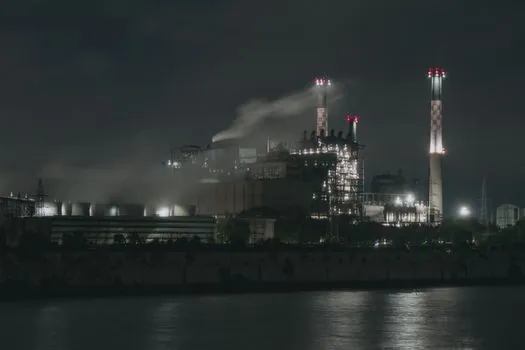
The decision matrix for chemical-facility perimeter detection should weigh at least four criteria: detection probability under the actual terrain and climate, nuisance-alarm rate (driven by wildlife, wind, rail and truck vibration), infrastructure cost (trenching, power, signal), and integration cost with cameras, access control, and a gas alarm controller for hazardous-area monitoring. Fence-mounted sensors score well on detection probability along an existing fabric but degrade where fabric is loose, where heavy rail or truck traffic shakes posts, and where temperature swings change cable tension. [S2]
Free-standing beam systems score well on visible deterrent, low infrastructure cost, and solar-power viability for remote chemical warehouses, but they require a clear linear line of sight and can be defeated by climbing over or tunnelling under the beam plane [S5][S8]. Buried sensors score well on covert detection and on tolerating above-grade obstacles such as tank shadows and pipe racks, but they need civil works, drainage design, and stable soil conditions. Microwave links score well on long range per link but are sensitive to metal objects moving in the Fresnel zone, which is a real concern near tank farms with frequent truck movement [S1][S2].
Integration with Fire, Access, and Verification
Perimeter alarm segments at a chemical plant are normally tied to a central monitoring station that also supervises the perimeter alarm array, the chemical anchor fast-fixings holding the fence posts, and the fire detection network covering paint shops, chemical storage, welding areas, fabrication, and electrical rooms. A 1 million square-foot automotive component plant case study, relevant to the manufacturing chemical-adjacent class, divided its site into 23 fire zones and used addressable panels with distributed intelligent nodes to keep fault isolation per zone and reduce cabling; the same segmentation logic translates directly to the perimeter [S4].
For hazardous process buildings, the detector mix follows occupancy: flame and heat detectors in paint and coating areas, multi-sensor smoke-plus-heat in fabrication, beam detectors in high-ceiling warehouses, addressable smoke on assembly lines, photoelectric smoke in offices, and aspirating detection in electrical rooms; aspirating systems are also common in chemical reagent storage cabinets where incipient smoulder must be caught before reagent off-gassing [S4]. Video verification paired with the perimeter segment is the practical answer to nuisance filtering: a guard force cannot respond to every beam break in a remote yard, so alarm-to-camera handoff is the only way to convert an event into a verified incident in the time window that matters [S2].
Testing, Maintenance, and Failure Modes
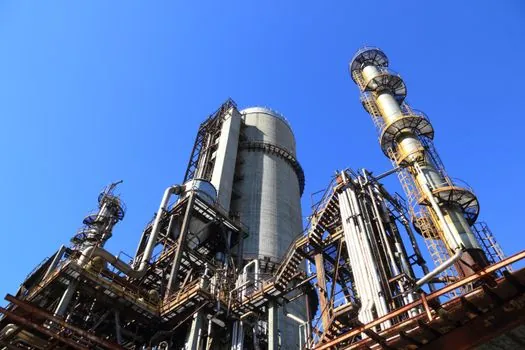
Testing for operability can be performed by a guard or watchman penetrating the protected zone during routine patrols, while functional performance testing is more elaborate and meaningful only when conducted under controlled circumstances such as direct visual observation of the area being tested [S1]. Many commercially available perimeter alarm systems provide little or no self-checking circuitry; for those, the specifier should require periodic manual sensor and signal-line verification rather than assume the system is monitoring itself.
Common failure modes to design around: signal-level drift on microwave and infrared receivers from temperature or precipitation, self-checking circuits that fail open after a sensor fault, segment cabling damaged by excavation near a chemical pipeline trench, and the documentation gap where handwritten patrol logs cannot reconstruct an event for an EHS review or insurance inquiry [S1][S2]. Remote fence lines, low-traffic sections near tank farms, and after-hours activity near process units are the three scenarios most often cited as the source of unresolved events; the engineering response is shorter segment length, redundant sensor classes on the same segment, and a digital event log that captures segment ID, sensor ID, time, and the verification clip [S2].
Selection Walk-Through and Project Signals
A defensible spec package for a chemical plant perimeter should list, in order: a tiered zone map with segment lengths tied to a single guard's visual range, one primary sensor class per segment plus a secondary class for high-consequence inner zones, a self-checking requirement written into the sensor procurement line, and an integration interface to the site fire alarm control panel and gas-detection network so a single operator console sees both security and process-safety events [S1][S3][S4].
Trackable signals for the next planning cycle include: vendors publishing segment-level false-alarm rate curves tied to documented chemical-facility deployments, and integrators offering perimeter-plus-fire-plus-gas packages on a single addressable backbone rather than three parallel systems. A cross-applied reference for perimeter selection in a comparable hazardous yard class is this perimeter alarm spec map for welding and cutting yards, and the related spec-first logic used in adjacent industrial buys is detailed in this explosion-proof electrical selection guide.