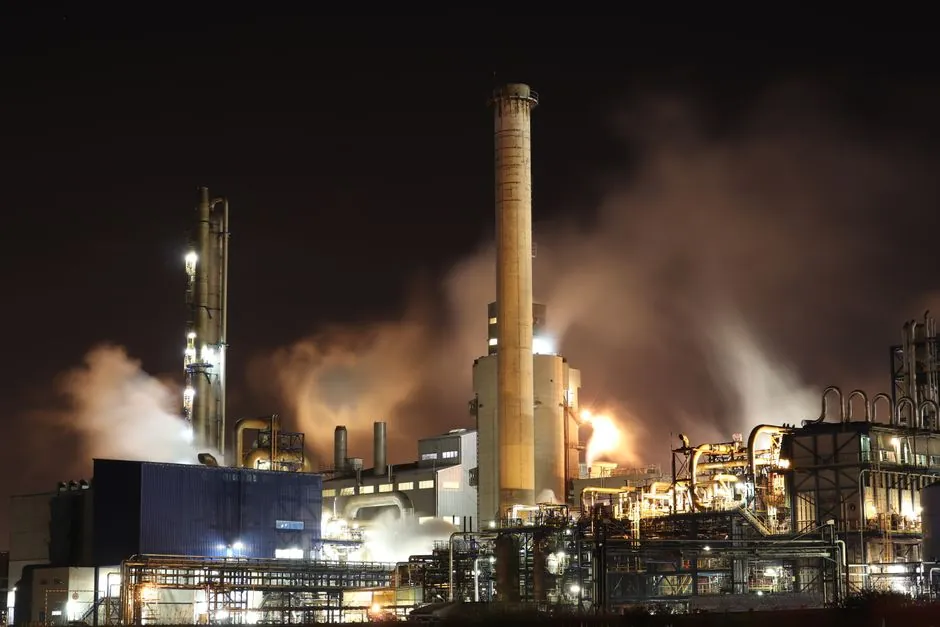
Perimeter alarm selection for oil and gas facilities is a layered engineering problem: an upstream offshore platform, a 200 km midstream pipeline, and a downstream refinery each demand different sensor physics, power budgets, and hazardous-area certifications, with false-alarm budgets typically held under 1 event per 24 h per 100 m of fence line [S5][S7].
The oil and gas sector accounts for almost 55% of global energy consumption and absorbs 39% of reported critical-infrastructure attacks, which is why modern perimeter stacks now combine physical fence, motion sensors, access control, and analytics-driven cameras as a single integrated system [S4].
Threat Class and Sector Mapping
Perimeter alarm design starts with sector classification, because upstream, midstream, and downstream assets face different threat profiles and require different detection ranges [S2]. Upstream assets such as FPSOs, FLNGs, offshore rigs, and gas compressor stations demand long-distance detection and classification against vehicles, pedestrians, swimmers, RHIBs, and small boats, with most threats appearing inside a 500 m to 5 km water-side zone [S1]. Midstream pipelines are vulnerable to theft, sabotage, vandalism, and leakage, so solar-powered, motion-activated, and night-vision-capable cameras are typically deployed at 1 to 5 km spacing along the right-of-way [S2]. Downstream refineries and tank farms face eco-terrorism, vandalism, and physical breach from vehicles or personnel, with perimeters ranging from 2 m weldmesh to 3 m anti-ram rated fabric [S4].
A perimeter alarm system is the first electronic layer of that defence, and the sensor choice changes with each threat class [S5].
Detection Technology Comparison
Fiber-optic fence-mounted cables detect vibration and strain along a continuous fiber, are immune to EMI, and survive in Class I Div 1/2 hazardous areas, making them common on refineries and tank-farm boundaries where electromagnetic interference from VFDs and large motors is severe. Thermal-radar and panoramic infrared cameras such as 360° thermal imaging units provide non-contact, all-weather detection and classification of pedestrians, vehicles, and small boats at ranges from 200 m to over 1.5 km, with the HGH Spynel series used for long-range oil-and-gas surveillance [S1][S7]. PIR and dual-tech microwave-plus-PIR detectors suit short, well-defined perimeters but degrade in heavy rain, fog, or heat shimmer common to coastal and desert sites. LiDAR creates a 2D or 3D virtual fence and tracks target size, speed, and trajectory, which makes it strong for sterile-zone enforcement around wellheads and compressor stations. CCTV with embedded video analytics (line crossing, loitering, object left) forms the verification layer and is positioned as offering clear video detail across large sites [S3].
On a 1 km refinery boundary, fiber-optic and LiDAR deliver the lowest nuisance-alarm rate, while thermal-radar wins on detection range and PIR wins on unit cost for short inner rings [S5][S7].
Selection Criteria and Hazardous-Area Compliance
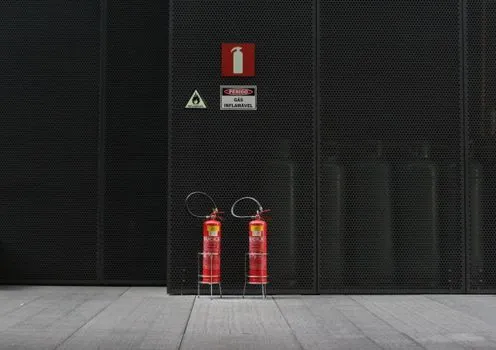
Selection criteria reduce to six engineering questions: detection range, false-alarm rate, power, networking, hazardous-area classification, and integration with the fire alarm control panel and gas alarm controller [S5]. Fiber-optic and PIR detectors draw under 5 W per segment and can be solar-powered, which fits solar-powered midstream camera poles rated for remote locations [S2]. Thermal cameras and LiDAR nodes need 15 to 60 W and typically require PoE+ or 24 VDC power with UPS, while offshore platforms require 316L stainless or ATEX/IECEx-certified housings for Zone 1 and Zone 2 areas [S1]. Networking on brownfield sites often rides on existing fiber or wireless bridges, and modern perimeter systems expose ONVIF, REST, or Modbus interfaces to the VMS and SCADA so a single alarm event can trigger camera call-up, barrier gates, and the perimeter alarm stack simultaneously [S3][S5].
For greenfield builds, specifying a perimeter alarm architecture alongside the construction machinery and equipment package lets the civil, electrical, and security scopes land in the same IFC revision.
Layout, Power, and Integration Architecture
A typical brownfield refinery perimeter runs a double-fence layout: an outer 2.4 m anti-climb fence, a 3 to 10 m sterile zone, and an inner crash-rated barrier, with fiber-optic cable on both fences, LiDAR or radar in the sterile zone, and fixed thermal or PTZ cameras every 60 to 100 m for verification [S2][S5]. Power is taken from the site's 24 VDC instrument bus or 110/230 VAC distribution, with UPS sized for 8 to 24 h autonomy; for unmanned wellheads, midstream compressor stations, and remote pipeline valves, solar with lithium-ion battery banks has become the default, sized at roughly 200 to 400 Wp per pole [S2].
Integration with site lamps and light fittings is a quiet spec driver: high-intensity LED lighting with motion-activated modes is a primary deterrent, and pairing it with the alarm layer means a single trigger illuminates the affected zone, drops the camera preset, and dispatches the guard response [S4].
Limitations, Failure Modes, and Sourcing
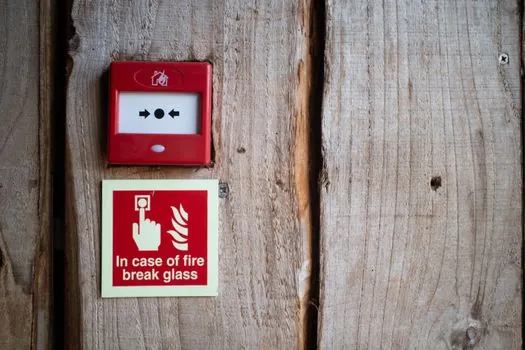
Every technology has a real failure mode. Fiber-optic cables need tension control and proper grounding; thermal cameras lose contrast in heavy rain, fog, or direct sun glare; PIR and microwave detectors generate false alarms from wildlife, vegetation, and heat shimmer; and LiDAR performance drops in blowing dust and heavy snow, which is common to many upstream sites [S5][S1]. A well-designed perimeter system combines at least two different sensor physics so the failure modes do not overlap, and it routes every alarm into a single event management platform with time-stamped, geo-referenced logs [S3][S5].
For specification, draw the threat matrix first, match each threat to a sensor, then add power, networking, and hazardous-area certification, rather than starting from a vendor catalog [S2][S5].
Track these near-term signals: the move toward AI-classified edge analytics on thermal cameras to cut nuisance alarms below 1 per km per day, broader adoption of solar-powered fiber-on-fence for Class I Div 2 midstream sites, and tighter integration between the perimeter alarm stack and the fire-and-gas shutdown matrix in the DCS.
This topic is covered further in Linear Module Selection for Textile Mills: Drive Type, Accuracy, Environment.