
Listed transaction prices on Made-in-China (2026-05-30) put a basic digital bench pH tester (model pH-25s) at US$ 52.00–60.00 per unit [S3], which is the cleanest public floor price for a working laboratory-grade pH meter in 2026.
From the same Made-in-China vertical (2025-06-11), automatic / OEM-grade pH-ORP probe-sensor controllers with RS485 output sit in the low-hundreds window when priced per piece, and bulk MOQ lots push per-unit cost down further [S2]. The wide gap between a US$ 52 bench unit and a four-figure process transmitter is set by probe chemistry, body material, and signal stack, not by the "pH" label on the box.
What you actually pay for in a pH meter
Three hardware blocks determine pH-meter cost: the glass / polymer sensing membrane, the reference electrode (and its junction), and the transmitter / display electronics [S1][S2]. Soil and slurry applications need rugged reference junctions, which is why the soil-pH-meter subcategory on Made-in-China is priced and filtered separately from lab bench units [S1].
Probe consumables are a hidden line item. A replacement pH or ORP probe for an industrial controller typically costs 30–60% of a new instrument; budgeting should treat the probe as a service item with a 6–18 month replacement cycle, not as a one-time purchase. Buyers comparing total cost should fold probe price, calibration buffer cost, and storage solution into the per-channel annual figure rather than comparing sticker prices alone.
Price tiers seen on public 2026 listings
Across the Made-in-China catalogs (2026-01 to 2026-05), three tiers are clearly visible. Tier 1 is the bench / pocket tester at US$ 52–60 for a basic digital pH-25s unit [S3]. Tier 2 is the industrial / OEM controller with RS485 output and replaceable probe, priced per piece with sample availability, common in chemical and water-treatment OEM panels [S2]. Tier 3 is the reference-class lab / energy-meter comparator priced at US$ 30,000 per piece, which is the GF312V2s three-phase reference standard [S6] — a different instrument class entirely, but a useful ceiling anchor.
On go4worldbusiness (2026-01-27), wholesale listings for general-purpose pH meters show a US$ 340 hit with MOQ not specified, sold by a Brazil-based supplier. That sits between the bench and industrial tiers and is closer to what a small QA lab or a startup R&D bench actually pays. Anyone modeling 2026 spend should treat US$ 50, US$ 300–500, and US$ 1,500+ as the three step-changes where the probe class, body rating, and output options change materially.
Bench vs portable vs process: a criteria-based comparison
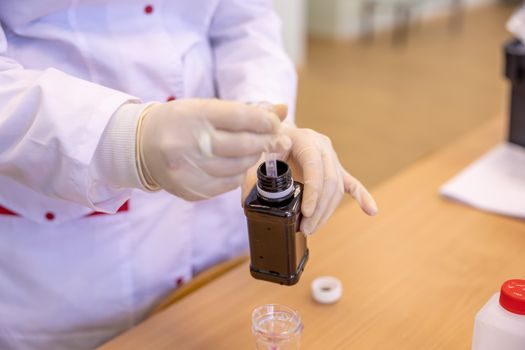
For a buyer choosing between styles, the main options line up against four decision criteria: accuracy class, environment rating, output / comms, and total cost of ownership. A bench unit such as the pH-25s is cheap (US$ 52–60 [S3]) and accurate to typical educational / QA levels, but has no industrial enclosure and no analog or digital field output. A portable / soil meter [S1] trades bench accuracy for IP-rated housing and a hardened reference junction for direct insertion into soil or sludge. A process / OEM controller [S2] adds 4–20 mA or RS485 output, panel-mount hardware, and a replaceable probe — at a price roughly 5–10× the bench tier.
On total cost of ownership, the bench unit wins on day-one cost but loses on probe-replacement logistics in a 24/7 plant; the industrial controller wins on integration cost (one RS485 drop per skid) and on calibration traceability, because buffers, ATC, and self-diagnostics are part of the firmware. Plants that already run a conductivity meter on the same skid usually buy the pH controller from the same vendor to keep the comms stack and the calibration workflow uniform — a decision pattern the same way energy meter channels share Modbus registers on a switchgear line.
What pushes cost up, and what does not
The single biggest cost driver is the reference-junction design: a single-junction gel-filled probe is the cheapest, a double-junction reference with refillable KCl is mid-tier, and a sealed solid-reference probe rated for high-temperature or organic solvent service is the expensive end. Body material is the second driver — epoxy / plastic bodies for water and mild chemical service, PVDF or stainless for aggressive chemistry, and glass for clean lab work. Output options (plain BNC, 4–20 mA + HART, RS485 Modbus, Foundation Fieldbus) add a step-change each time you go up the stack. [S1]
What does not push cost up much: the display itself, even on color TFT panels, because the same LCD modules are shared with the broader water-analysis line. Brand premium is also smaller than in clamp meter markets, where CAT-IV ratings and True-RMS silicon drive a 10× spread — the pH-meter spread is closer to 3× from bench to industrial and is dominated by probe chemistry, not by the display. Buyers who fixate on brand name tend to overpay for the same glass-membrane technology.
Who a cheap bench pH meter is — and is not — for

A US$ 52–60 bench pH tester [S3] is appropriate for school labs, light incoming-inspection checks on parts washers, and small-batch QC where ±0.1 pH is enough. It is not appropriate for chemical dosing skids, USP-purified-water loops, or wastewater discharge compliance, where a documented calibration trail, a panel-mount enclosure, and an analog / digital output to a PLC or SCADA are required. For those, the OEM / industrial controller class [S2] is the entry point, and buyers should budget probe-replacement spares and NIST-traceable buffers separately.
The reference-class US$ 30,000 instrument [S6] is not a pH meter at all — it is a three-phase energy-meter reference standard — and is included only as a ceiling anchor to show how far the "meter" category can scale. Specifying engineers should never let the ceiling of one category distort the budget for another. Cross-linking into flow metering, the turbine vs ultrasonic flowmeter selection logic follows the same tier-and-criteria pattern: cheap plastic turbine for non-custody service, ultrasonic with diagnostics for custody, and Coriolis when both accuracy and density are required.
Procurement signals worth tracking in 2026
Two signals are worth a watch. First, the Made-in-China automatic-pH-meter vertical was updated 2025-06-11 with RS485 OEM/ODM sample-availability options [S2], which suggests Chinese OEMs are pushing modular controllers at the low-hundreds for skid-builders — a price point that compresses margin for legacy European brands. Second, the 2026-05-30 bench-meter refresh [S3] held the US$ 52–60 floor steady, which is consistent with commodity probe-glass pricing rather than a shortage. The next trackable signal is whether probe-replacement SKUs start appearing as standalone catalog lines at sub-US$ 100, which would convert the installed base of industrial controllers into a recurring-revenue stream for the OEM — a pattern already familiar to electricity meter vendors selling CTs and shunts as accessories.
For an adjacent decision on temperature compensation, probe type, and signal stack — the same decision frame used in radar level meter selection — buyers should treat the pH-meter spec sheet as a bundle: electrode, body, cable, output, and ATC, and price them as one line. Cross-linking into broader test-instrument spend, an infrared-thermometer refresh on the same site (see the 2026 IR thermometer buying guide) shows the same bench-tier vs industrial-tier split, which is the dominant cost shape across this category in 2026.