
Pharmaceutical ball-valve selection depends on fluid compatibility, pressure, temperature, drainability, cleanability, and aseptic risk, not simply bore size or pressure class.
For product-contact service, the strongest baseline is a stainless 3-piece sanitary design using 316L components, virgin PTFE seats and seals, tube-bore ports, and documented cleaning compatibility [S2].
Sanitary 3-Piece Ball Valves for Product Contact
Three-piece sanitary ball valves are engineered around a replaceable wetted assembly, allowing seat and seal inspection or replacement without removing the complete valve body. Bray identifies its 3-piece sanitary designs for ASME BPE high-purity applications with tube-bore port diameters and FDA-approved virgin PTFE seats and seals [S2].
The same product family can be supplied for service-in-place operation with tube ends, extended tube ends, quick-clamp connections, flanged connections, and internal micro-polishing. Available documentation options include material test reports, positive material identification, liquid-penetrant examination, and radiographic examination [S2].
Multiport versions broaden the isolation duty. Vinco lists a 2-way XP Series with A351 CF3M welding connections, a 2-way RP Series with A479 316L connections, and 3-, 4-, and 5-way models using L, T, or X flow configurations [S5]. The ball valve category therefore covers both straight isolation and multiport diversion, but multiport selection also requires port sequencing and residual-line-dead-leg review.
Materials, Surface Finish, and Product Compatibility
SS 316 and SS 304 are established body options for sanitary and chemical service, while PTFE provides chemical-resistant sealing and Hastelloy or Alloy 20 addresses more aggressive corrosion duties [S1]. EPDM and Viton are listed for specified temperature and sealing applications, but neither elastomer should be accepted without checking the exact formulation, cleaning chemicals, temperature, and intended contact condition [S1].
Stainless casting grade and weldable connection grade are separate specification decisions. The XP and QP products use A351 CF3M welding connections, while the RP and MP products use A479 316L connections with controlled sulfur and ferrite content; the LP product also uses A351 CF3M and is positioned for clean utilities [S5].
Surface finish is a contamination-control requirement, not a decorative preference. Bray lists electropolished internals and a portfolio using stainless steel and exotic alloys, while Vinco identifies mirror-polished RP and MP products for cleanroom service [S2][S5]. The specified acceptance basis should include the required internal surface roughness, electropolishing or mechanical finishing, welds, and documentation.
Valve Configuration Compared by Process Duty
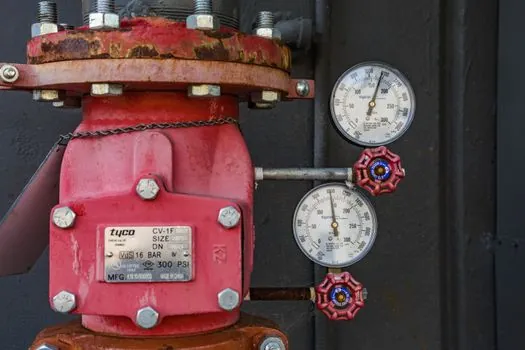
Configuration should be selected against drainage, cleaning, pressure, and flow-path requirements. The comparison below distinguishes the main options documented for pharmaceutical duty [S2][S4][S5].
For utilities, the same selection logic changes. Heating, cooling, steam, compressed air, nitrogen, cryogenic liquids, sodium hydroxide, chlorine, and other sanitizers can dominate corrosion and temperature constraints, so utility valves should not inherit product-contact assumptions without review [S2].
Size the Bore Against Pressure and Product Risk
Valve sizing begins with the line size, required flow rate, pressure drop, fluid properties, and whether full-port flow is necessary. A 2-piece valve may offer a compact installed length, while a 3-piece sanitary design provides better access to seals and seats, but the final choice must be based on the actual piping envelope and maintenance plan rather than component count alone. [S2]
Pressure rating and temperature must be checked together. Documented XLB options include ASME Class 150, PN16, and JIS 10 ratings over -29°C to 204°C, with half-inch through 6-inch full-port sizes, reduced-port sizes from 1.5–8 inch, and availability up to 12 inch/DN300 [S4]. These values apply to that documented family and cannot be transferred automatically to an unquoted sanitary model.
Cleaning flow, pressure-drop limits, and product recovery require confirmation during line design. A full-port bore may reduce velocity at a given flow, but it does not prove drainability, CIP effectiveness, or suitability for shear-sensitive products. For a related mechanical trade-off, see Full Port vs Reduced Port Ball Valve: Bore, Flow, and Trade-Offs.
Sealing, Emissions, and Cycling Reliability
Seat selection must balance chemical compatibility, bubble-tight shutoff, operating pressure, temperature, and the number of actuation cycles. Virgin PTFE seats and seals are documented for Bray sanitary valves, but a 2-way, 3-way, or 5-way configuration changes the number of seats and the load path at each port [S2].
Fugitive-emissions performance can change after thermal and mechanical cycling. The documented XLB family is ISO 15848 and TA-LUFT 2021 compliant, with under 20 ppm fugitive emissions after 4 thermal cycles and 2,500 mechanical cycles, and its pressure-assisted SX stem seal is designed to move with the floating ball [S4]. This is a specific test claim for the XLB family, not a universal rating for every pharmaceutical ball valve.
For pneumatic or automated operation, the actuator must suit the valve’s fail action, cycle frequency, instrument air quality, and allowable torque. The electric ball valve reference covers this added actuation layer, but actuator certification does not replace validation of the valve, seat, stem seal, and product-contact assembly as one assembled system.
Cleanability, Drainability, and Sterilization Evidence
Sanitary valves are intended to prevent debris accumulation in body crevices, pits, and grooves where microorganisms can grow [S2]. A tube-bore port, polished internal surface, controlled weld finish, and drainable geometry are therefore inspection items, not simply options to be left as generic adjectives in a valve datasheet.
Pharmaceutical equipment must support cleaning and sterilization operations, including clean-in-place and service-in-place duties where applicable. Bray states that its sanitary valves are designed for Service-in-Place operation and lists CIP-related features including quick-clamps, tube ends, and internal micro-polishing [S2]. The completed system still needs an approved cleaning recipe covering concentration, temperature, contact time, flow, and drain verification.
Product-contact material claims also require a defined basis. Bray lists FDA-approved materials, BPE approval, NSF-61 approval, virgin PTFE seats and seals, and electropolished internals [S2]. These claims should be tied to the exact material, component, model, and application because regulatory status does not make one valve configuration suitable for every drug, excipient, solvent, or cleaning regime.
Where Ball Valves Fit, and Where They Do Not
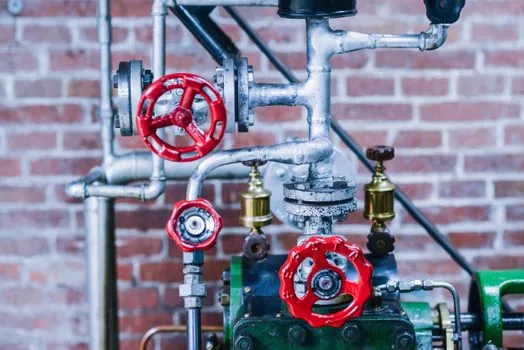
Ball valves fit straight isolation, product diversion, transfer, sampling, and multiport routing when their bore, seat, end connection, cleanability, and actuation package match the process. They are less suitable where throttling accuracy is required, because a ball valve’s opening area is not designed to provide controlled throttling. Precise metering duties are better assigned to rotary control valve packages [S2].
For backflow prevention, a dedicated check valve is the direct device. For large-bore, low-pressure throttling, a butterfly valve can offer a different installed-envelope and pressure-drop profile. Diaphragm valves remain an option for aseptic applications where their isolation design is better suited to the process than a ball valve [S1].
High-purity water also needs specific review. Ultrapure water serves as a raw material, ingredient, solvent, and processing medium, and its treatment path commonly includes reverse osmosis followed by polishing. Bray identifies PFA-lined butterfly valves and PTFE/PFA-lined ball valves for this application, so material and surface-finish selection should match the actual water quality and contamination controls rather than only the nominal line size [S2].
Qualification File Needed Before Purchase
The minimum engineering record should identify the fluid, concentration, viscosity, temperature, pressure, flow rate, pressure drop, suction conditions, duty cycle, pipe size, end connection, and clean-in-place or sterilization requirements. LibertyCES lists those inputs, together with the equipment being connected or replaced, as the required basis for model selection [S4].
The procurement file should also identify product-contact material grades, seat and seal materials, internal surface finish, drain orientation, actuation, fail action, certification scope, test reports, cleaning validation responsibility, and required accessories. For XLB, the documented record includes ASME Class 150, PN16, JIS 10, -29°C to 204°C, and a 1/2–6 inch full-port range [S4].
Two trackable signals should close the selection: one, confirmation that the chosen model has cleanability, surface-finish, and material evidence appropriate to the specific product; two, evidence that stem sealing remains compliant after the required thermal and mechanical duty rather than only at the factory test point [S2][S4].